
Ash Wednesday Reflection
This Ash Wednesday Reflection, Written in 2019 by Sr. Mary Stuart, DW, remains as relevant today as ever, its meaning deepened by the passage of time.
Reflection by Sr. Mary Stuart, DW
As I listen to the news these days, the words of our Ash Wednesday scriptures seem to mirror a sense of darkness, gloom, and bleakness in our world. Leaders of our country seem to have lost their way. Families struggle to keep food on the table. Victims of violence and poverty are turned away. There is unending injustice, violence, and pain in our world.
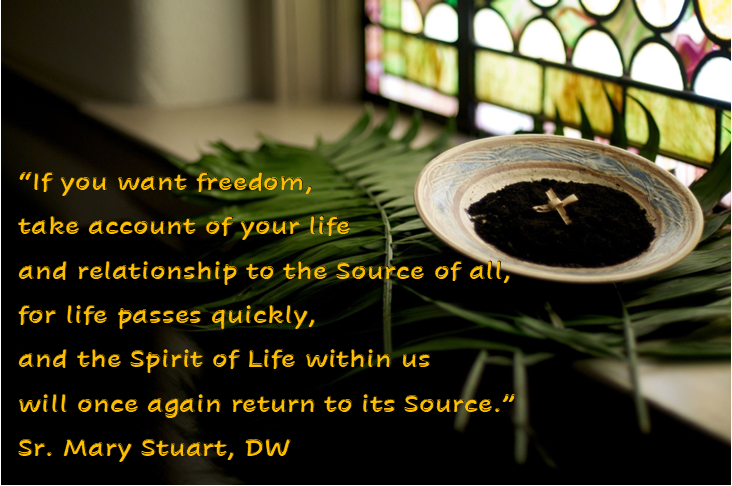
Yet, we also witness incredible acts of love, mercy, and forgiveness. And, as is often the case in our scriptures, we are faced with a paradox that is exceedingly challenging to embrace - our sinfulness and God's limitless love. I wonder what the world would be like if we accepted the truth that we are unconditionally loved, breathed into existence moment by moment by God through no merit of our own and despite our worst inclinations and limitations? Is not the essence of sin our refusal to accept God's gratuitous love and to share it?
Knowing God's love and focusing not on our limitations but on the Spirit of Life and love we all share, we would feel impelled to participate with one another in shaping a world of justice and peace. We would not act to gain God's favor, to look good, to avoid punishment, or for a reward in a life beyond death. Rather, our eyes would face suffering, our own and that of others. We would allow our hearts to break open, and our spirit would respond "as Christ" ... to lose the bonds of injustice, shelter the homeless, share bread, see that the oppressed go free.
“This is the fast that is required,” we are told with urgency by the scriptures. “Sound the alarm! Call a solemn assembly.” If you want freedom, take account of your life and relationship to the Source of all, for life passes quickly, and the Spirit of Life within us will once again return to its Source.
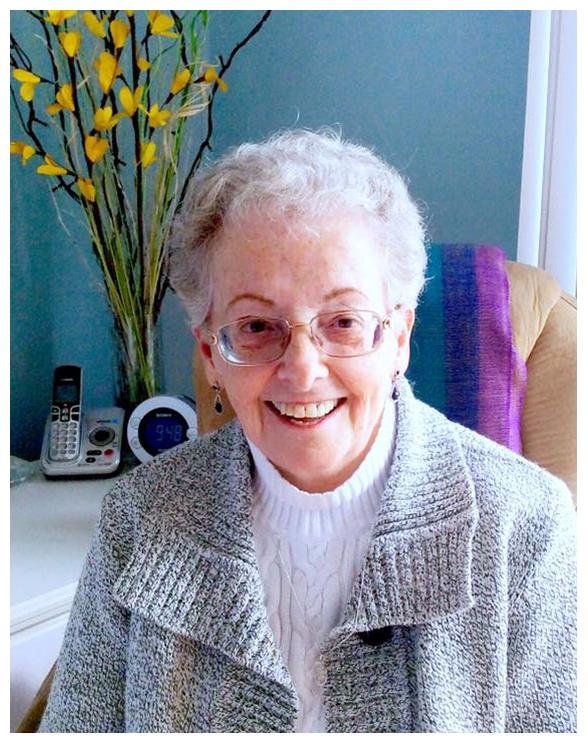
Sr. Mary Stuart, DW
In the news recently, there was a story of a 13-year-old girl who was abducted for nine months, her parents murdered, and a nation rejoicing at her safe return. I wonder, will she and her loved ones be able to forgive the horrendous acts of her abductor? Can they ever reconcile such acts and their hearts regain freedom from pain? Can we extend such unconditional forgiveness and love for those who have deeply wounded us?
And yet this is an essential meaning of the call to loosen the bonds of injustice - to reconcile such wounding within ourselves and with the other. So, today, now, let us resolve to be reconciled and a reconciler. Then will light shine in the darkness, and our world will "know" God's presence.
(March 2019)