
Wisdom and the Arts
A Ministry of Artistic Creation Guided by the Spirit
This year, we will be featuring how Wisdom is visible through the arts by showcasing the sisters’ creations. In the form of poems, crafts, photography, painting, cooking, and more, we’ll be sharing visual representations of how Wisdom has influenced their lives. Keep an eye out here and on our socials for updates and inspiring artwork in its many forms!
September 2026
"Without music, life would be a mistake."
— Friedrich Nietzsche
Sr. Maureen Hurley’s Music & Bongos
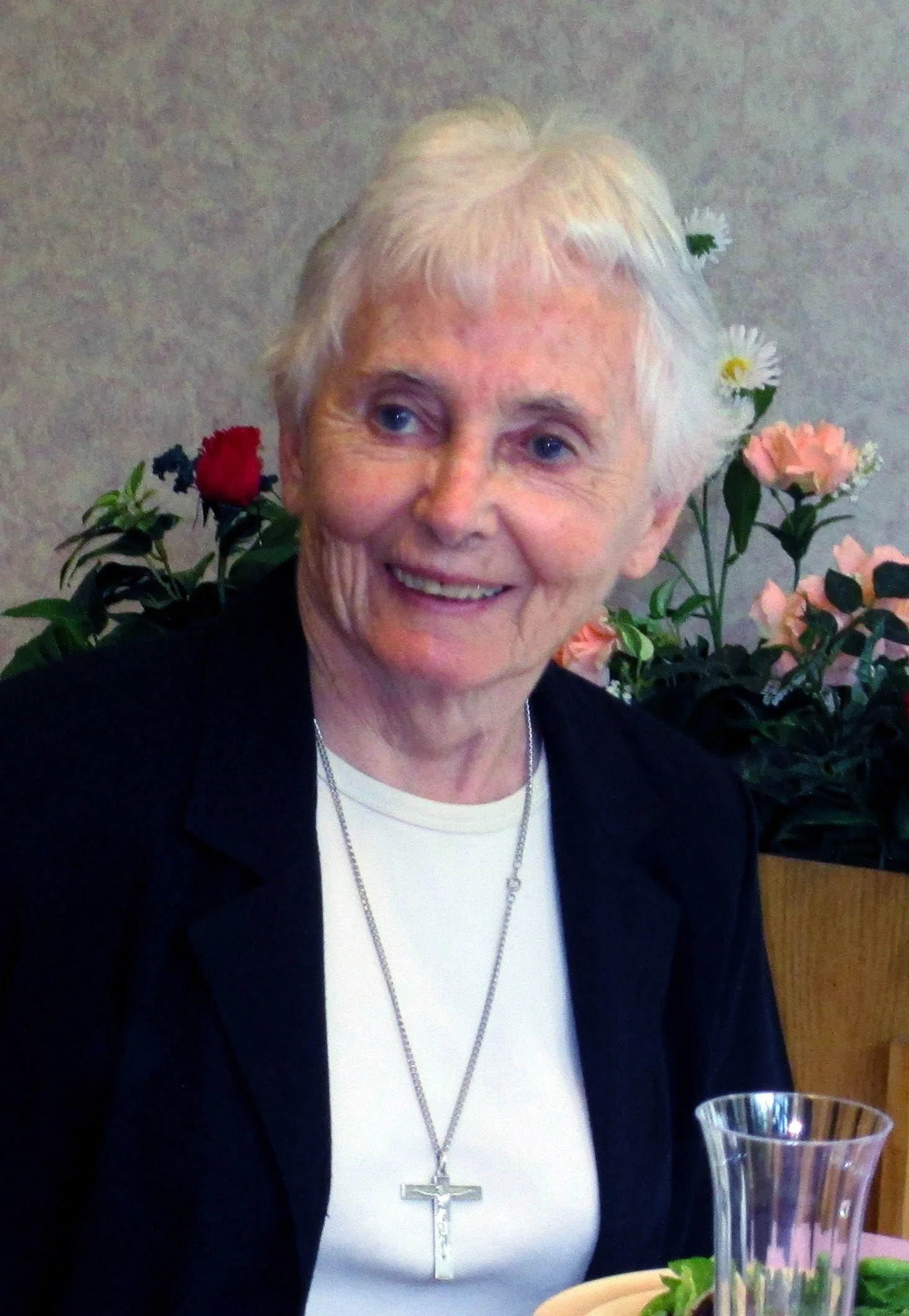
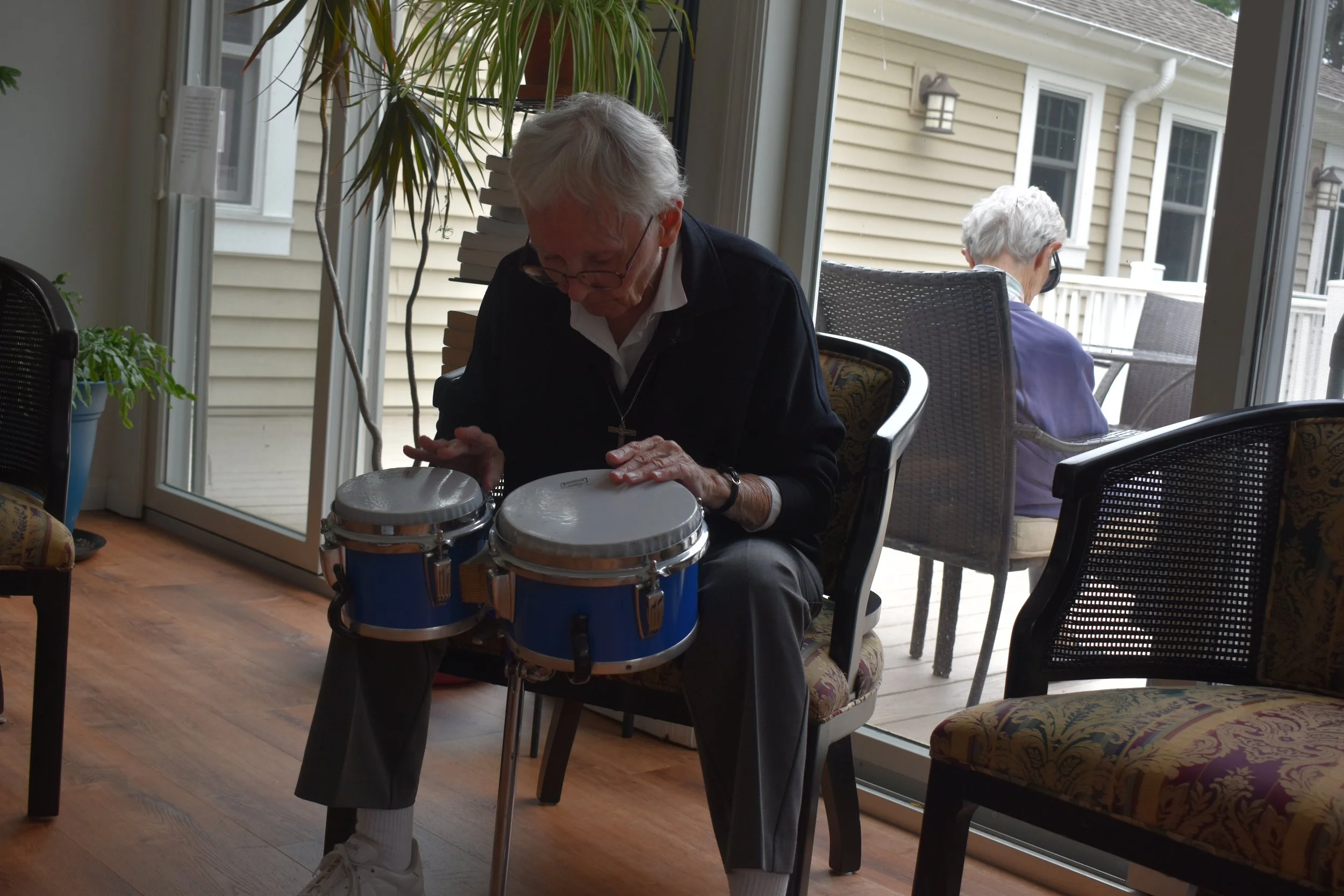
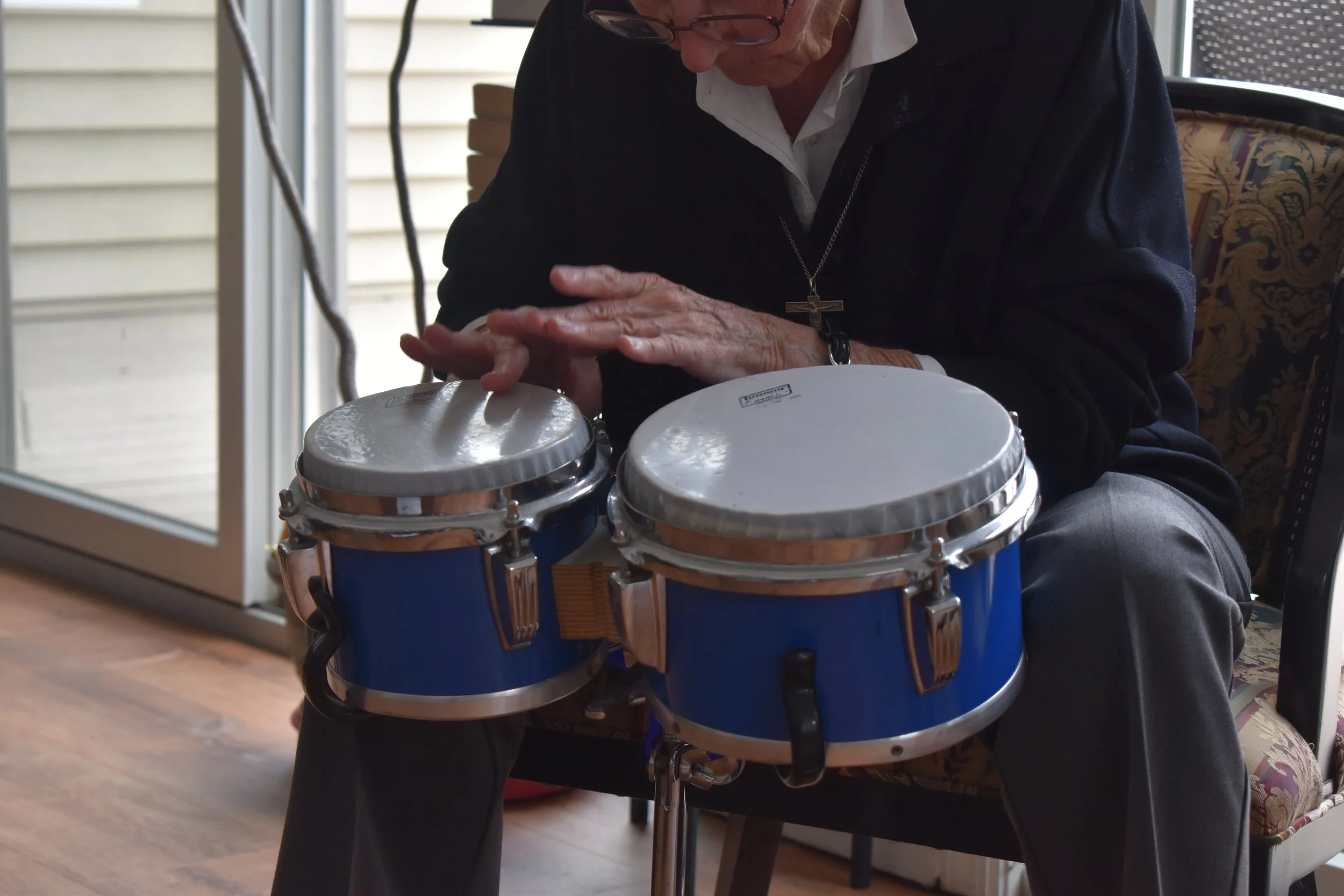
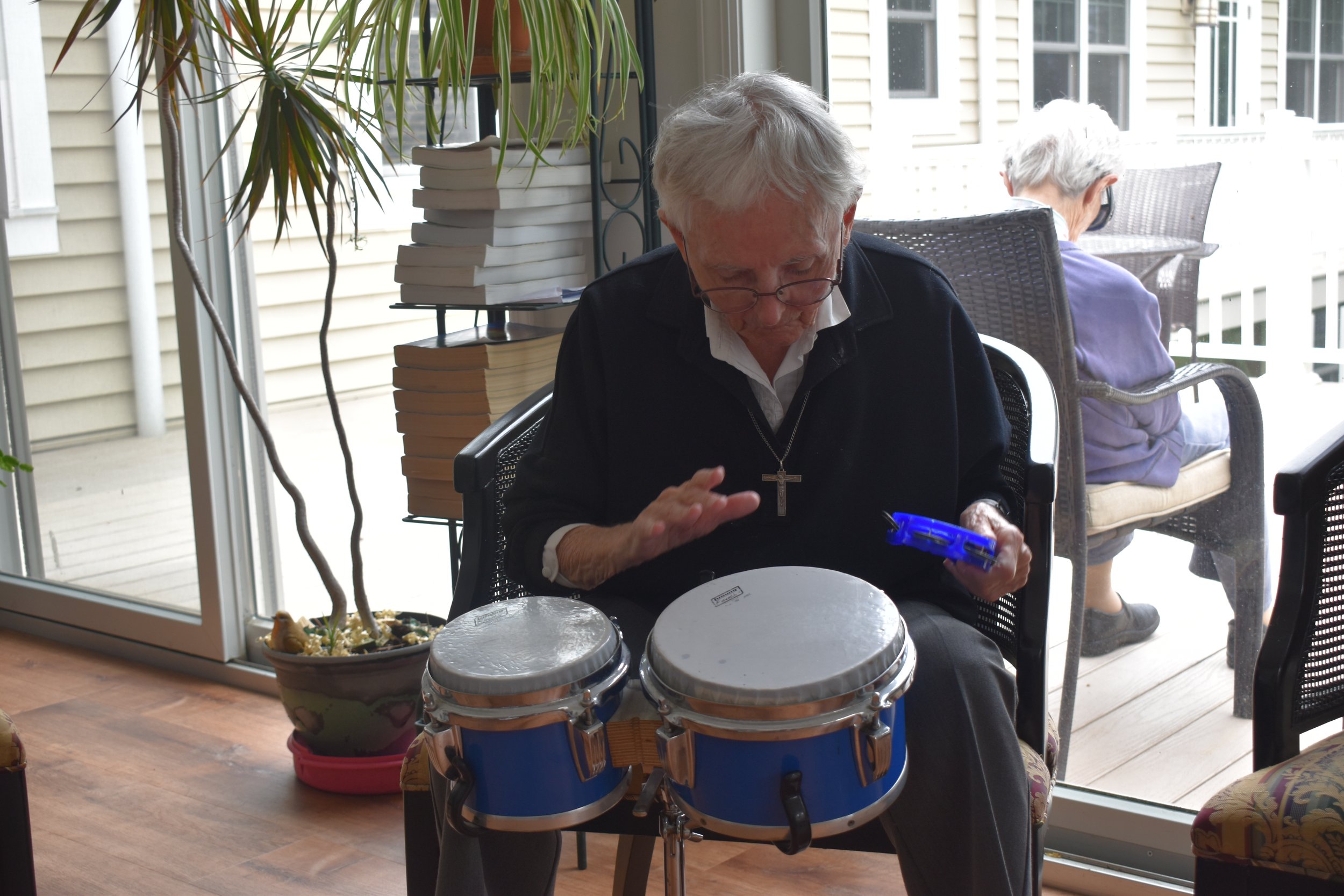
Sr. Maureen Hurley grew up in a musical family; her sister sang, and her brother played the harmonica. Sr. Maureen played drums all her life, starting in the school marching band.
“I played the snare drums in high school,” she said. “We'd march, and I'd play the snare drums.”
She played in “numerous parades” during this time.
She attended Hempstead High School, graduating in 1949. She then went on to higher education at Hofstra College, earning a Bachelor of Science degree in music education, a Master of Science in secondary education, and a Master of Arts in religious studies from Catholic University.
While at Hofstra, she played in the orchestra band.
Sr. Maureen worked as a music teacher, and as the music director at St. Mary’s in Simsbury, CT.
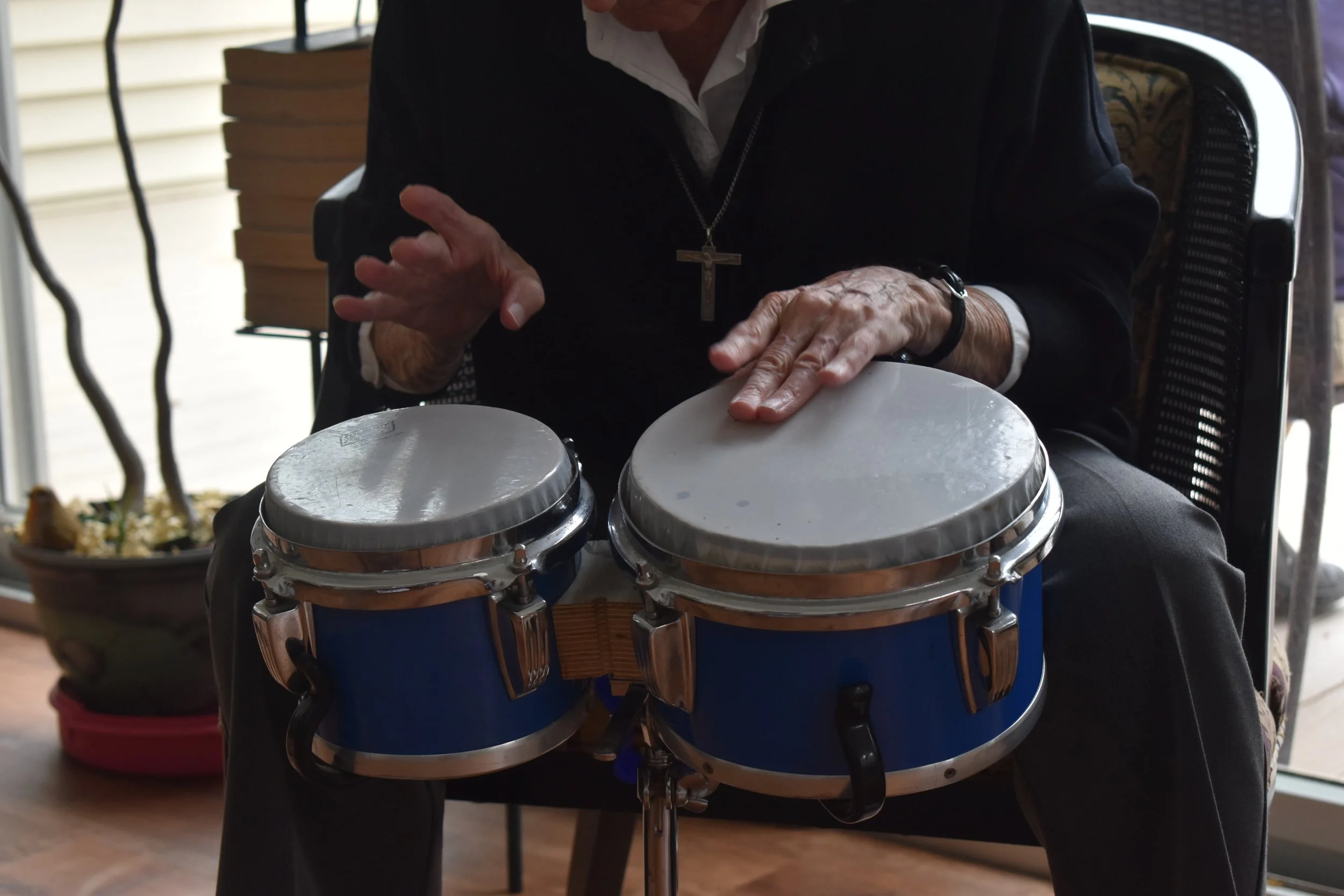
At 94 years old, Sr. Maureen now plays the bongos. At Our Lady of Perpetual Help Convent, she plays every few days — something that comes naturally to her.
“Especially if nobody is listening,” she joked.
Sr. Maureen Hurley playing the bongos at OLPH.
She used to have a set consisting of a snare drum, a bass drum, and cymbals, but has since downsized her collection at OLPH. Now, she has her bongos and tambourine, which she began playing around ten years ago.
She likes to figure out the beats while playing. “I just enjoy doing it.”
Sr. Maureen has also played the piano, fiddle, and guitar.
She’s gotten to show off her bongo skills at various OLPH events, including the Pizza Bongo Show in February 2026 and the 2024 Christmas show.
August 2026
All good things came to me with her, and I took joy in them because of her.
– Wisdom 7:11
Sr. Irene Arsenault’s Clay Sculpting & Woodwork
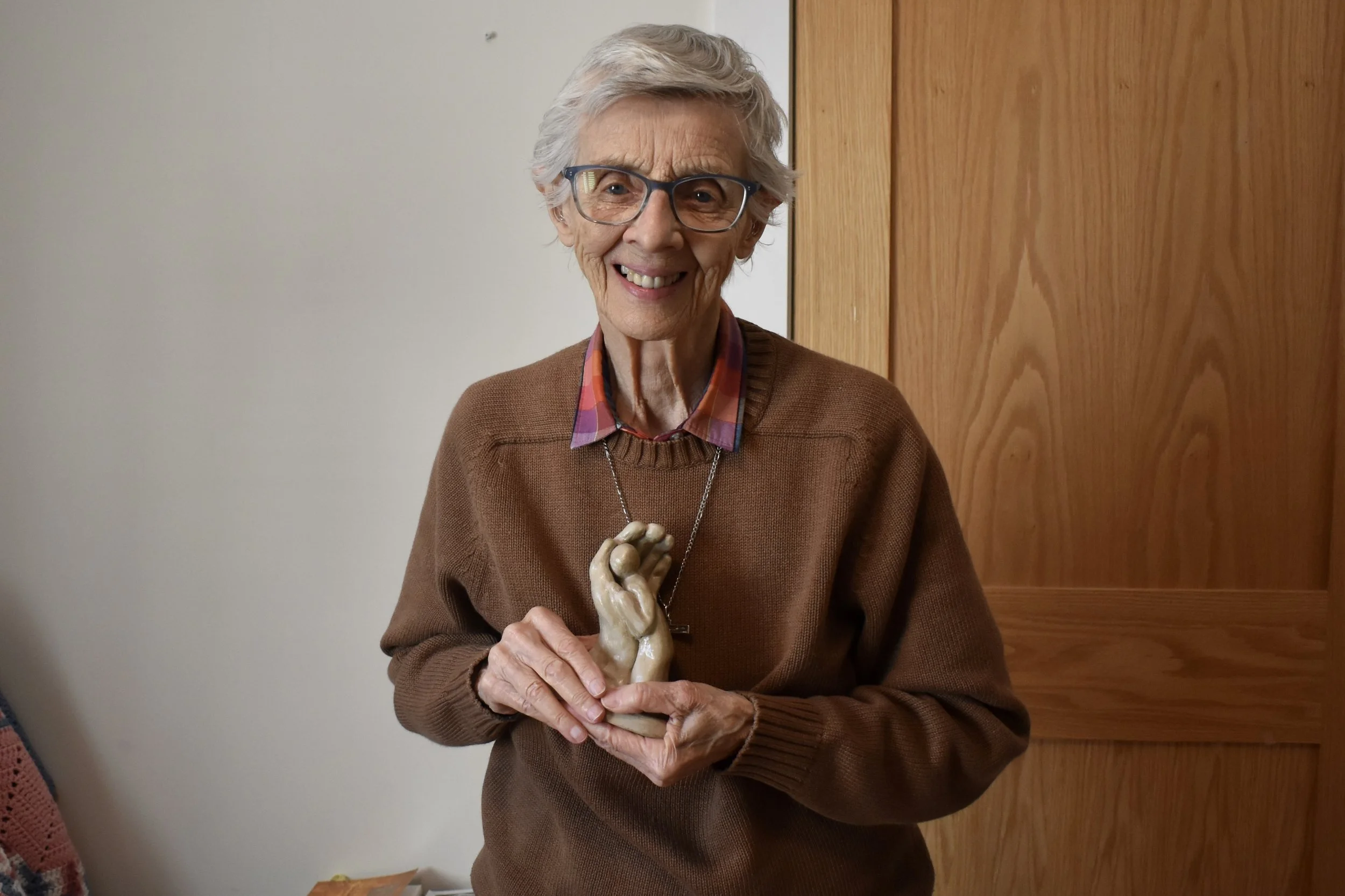
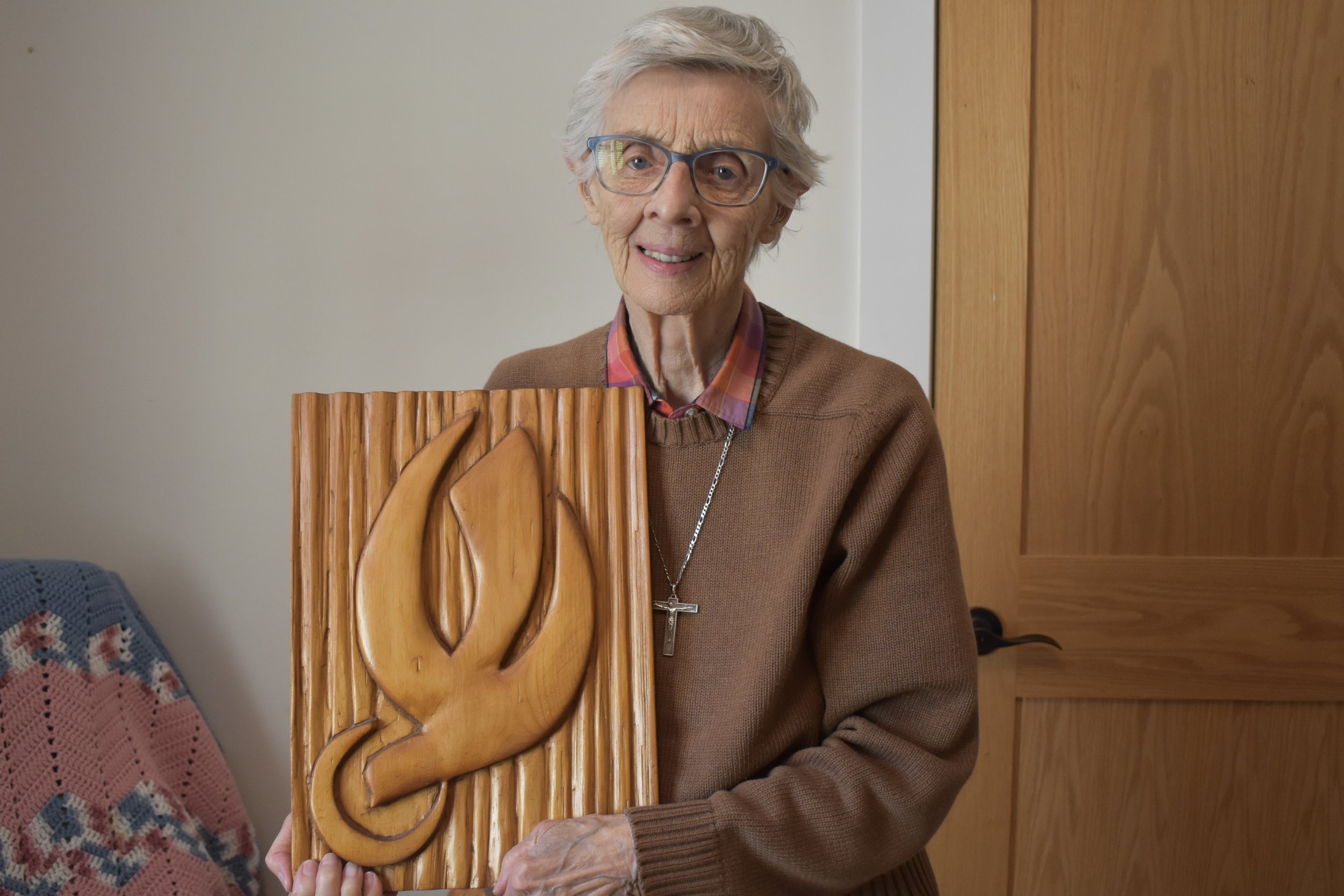
“My mother, [she was] very creative,” Sr. Irene Arsenault said of her family growing up.
“She would take something and turn it into something new, almost. And I was always impressed with that,” she said.
After joining Daughters of Wisdom, Sr. Irene was busy with religious life with little free time, but around 20 years ago she began pursuing creative endeavors again.
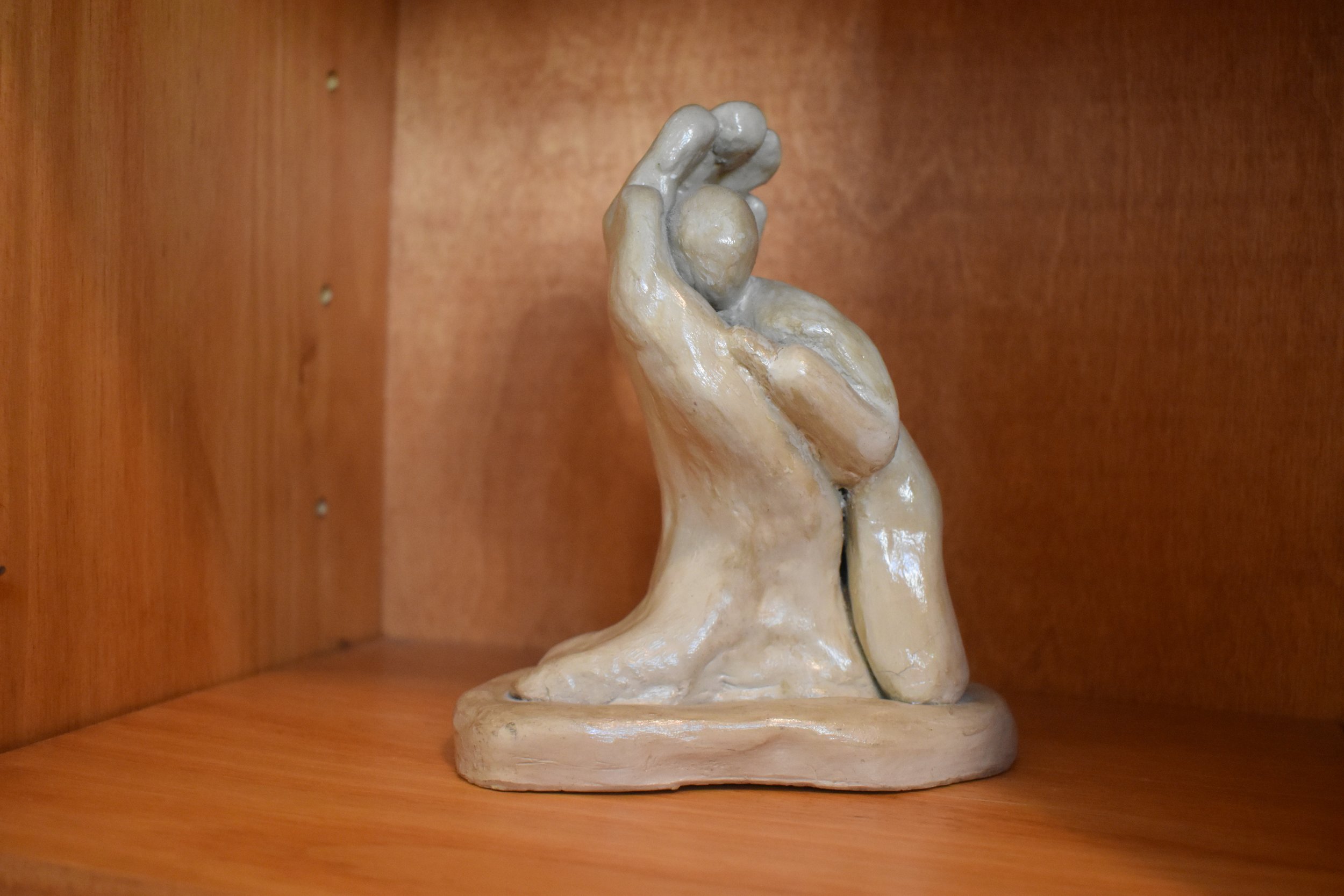
She came into possession of a pound of clay and began sculpting with it. It was important to her to create something meaningful, so she crafted a person leaning on the hand of God.
“I wanted not just to have God hold me up; I wanted to lean on God. And so that's why I made it [so] that there's a leaning.”
She didn’t have much equipment to work with, so the sculpture is finished with Elmer’s glue. It gave it a little shine, and allowed it to stay intact while moving from place to place.
Aside from sculpting, she also created woodwork. While working as a pastoral assistant, she gifted people who helped out with little woodwork pieces dressed as the kind of work they did.
“I got joy in being creative,” said Sr. Irene. “I want to guess how God felt when he creates. The joy — something there that represents something more than just ‘how are you, good to see you, take care of yourself.’”
She picked up woodwork on her own; originally wanting to make something for her family.
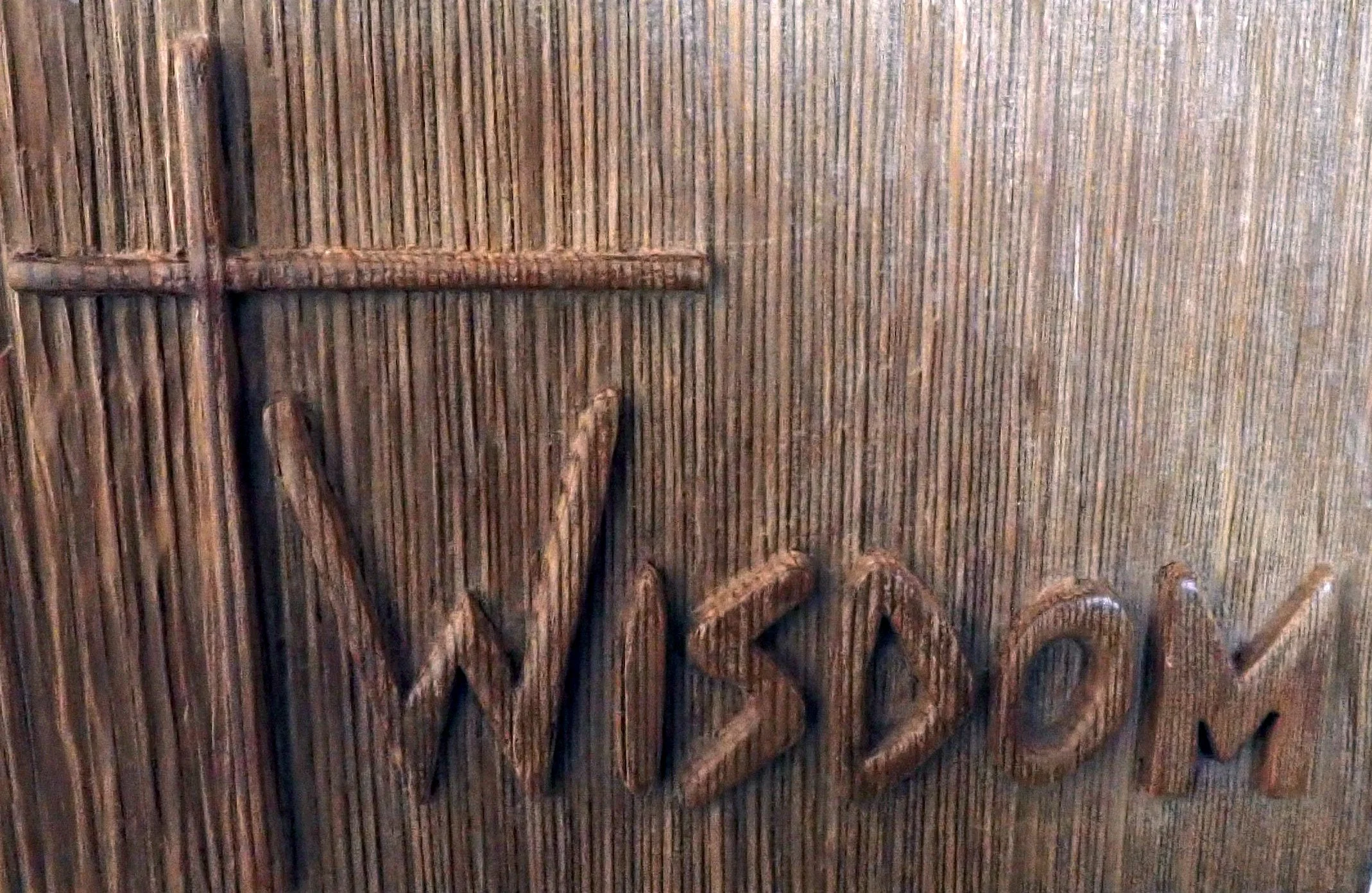
Wanting to create something meaningful later on, she made the word “Wisdom” out of wood, which now hangs in Our Lady of Perpetual Help Convent.
“That was a big challenge for me, and I think I really enjoyed that.”
She discovered in the process of making these pieces that she likes to do creative things.
“I think God in creating had joy. Not a selfish thing; not an ‘Oh boy, what a good job I did,’” she said.
“Creating something of itself, giving it away to somebody that you know means something to them. So, I said, that's a pleasure.”
Sr. Irene recently used her creativity in a practical way to fix her own slipper. “I guess I'm creative to a sense, but it's got to [make] sense to me to create.”
“I enjoy making do with what I have and making it work for me.”
Another creative talent of hers is singing.
“We sang as a family around the piano,” she said. “Mom would sit at the piano, start playing, and we'd gather around her and just sing and enjoy each other.”
“I consider myself lucky because I know there are some people who do not have such a good fortune,” she said of her family.
While Sr. Irene didn’t have any intention of joining Daughters of Wisdom originally, she ended up being the Administrator of New Ministry, Wisdom’s Center in Lewiston, ME. She was also the Director of the Dietary Department at St. Charles Hospital in Port Jefferson, NY.
“Life, like everybody else — the good things, the bad things. You make choices. You do, we all do,” she said. “There's no charm for me. It's just an honest-to-goodness opportunity.”
July 2026
"I have set you an example that you also should do as I have done for you."
- John, Chapter 13:15
Sr. Sara Proctor’s “Spiritual” Foot Washing
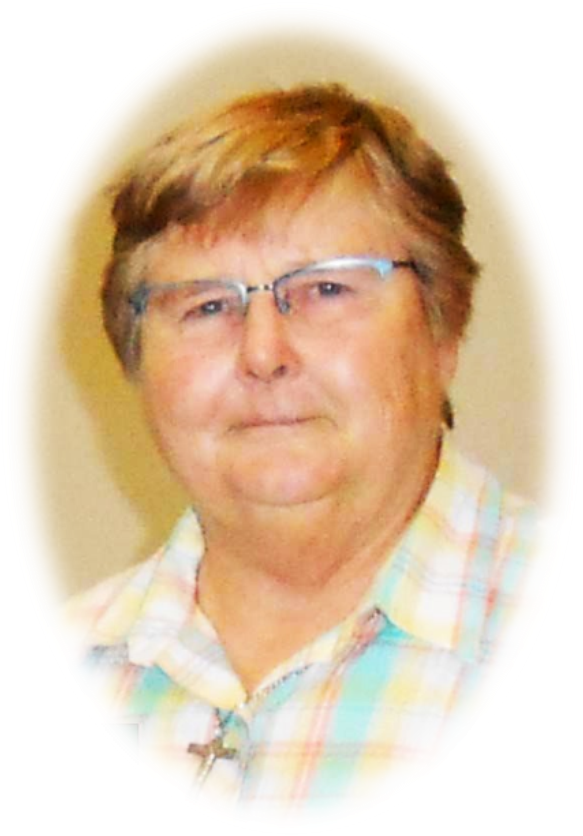
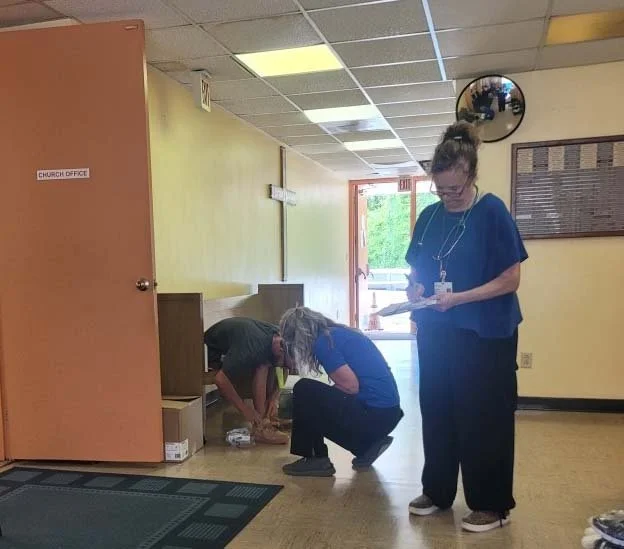
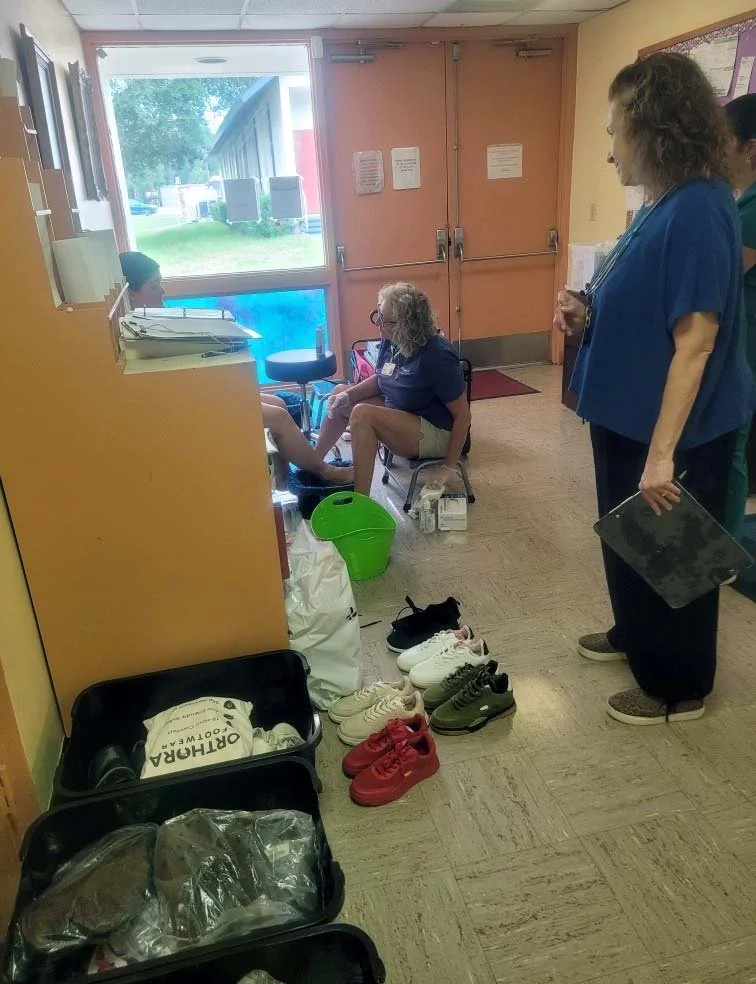
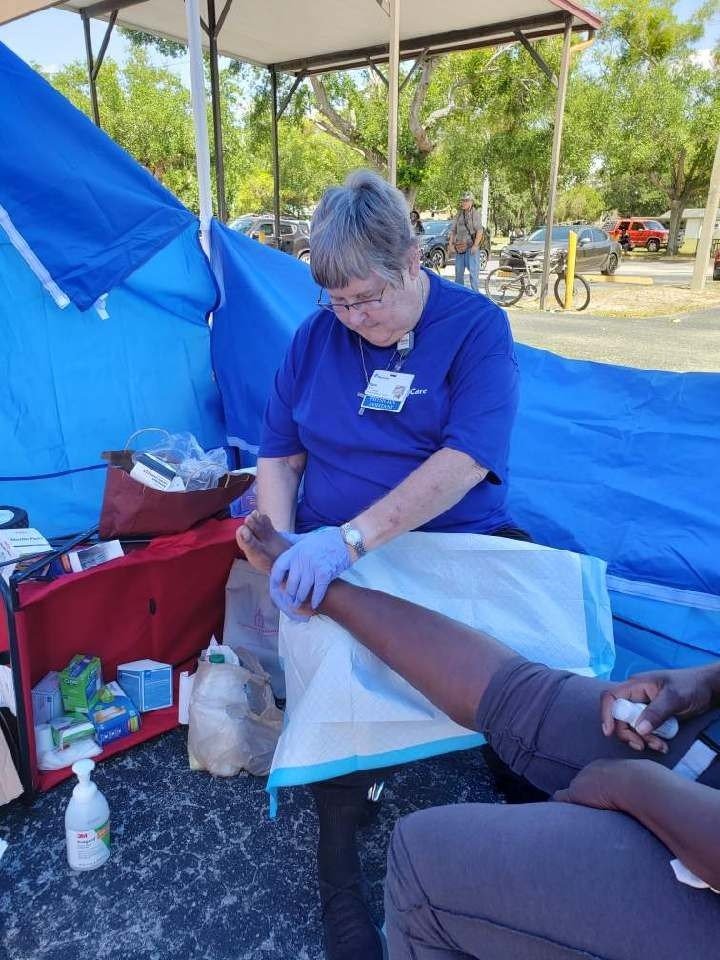
Foot washing — a sign of humility, service, and compassion toward others.
Have you ever participated in a foot washing ritual or routinely washed anyone’s feet? Maybe you have experienced this tradition as a member of your faith community on Holy Thursday. During Jesus' time, foot-washing was common. Dirt-covered desert roads often left feet dirty, calloused, and tired. The practice was considered a sign of hospitality, welcoming guests and the weary. Later, Jesus used this ordinary practice as an example of selfless love and servitude.
"I have set you an example that you also should do as I have done for you." John, Chapter 13:15
Foot-washing for cleanliness coupled with religious practice is still common worldwide, including here in the United States. Foot washing stations can be found in churches, college campuses, and private residences.
Sr. Sara Proctor, DW, is involved in a ministry that provides “spiritual” foot washing and more, where she contributes from the viewpoint of a physician assistant, acknowledging that your feet are crucial to your overall well-being. Her part of the service includes a foot exam, foot-care advice, and the application of foot lotion. After her consultation, those served are sent off with a new pair of socks donated by BOMBAS.
Initiated in 2023 by BayCare Health System - St. Joseph's Hospital in Tampa, Florida, Sr. Sara, 80, volunteers with Faith Community Nurse Coordinator, Sharon Cesare and her team, along with the BayCare Faith Community Nursing Coordinators, Faith Community Nurse Volunteers, Congregational Health Promoters, and students from Rasmussen College of Nursing, in this collaborative effort where hundreds of people have been served through the foot washing ministry. The ministry is not only provided during Holy Week but is a monthly offering these days. It draws people from the community, as well as those who are homeless, or lack access to showers, laundering, adequate footwear, or medical care, and many who rely on walking as their main form of transportation.
In 2024, to address ongoing needs and expand outreach, the ministry partnered with Soles 4 Souls, a foundation providing shoes to vulnerable individuals. As a result of this partnership, they have already given over one hundred people new shoes. When possible, the ministry also supplies items such as hygiene kits, laundry pods, prayer books, and nail brushes.
As we reflect on the impact of this ministry, we extend our heartfelt gratitude to everyone who has dedicated their time and talents to it. Their unwavering commitment and compassion have been the foundation of a shared mission, and together, they continue to be a blessing in the lives of those they serve.
June 2026
“God is my source, and I am his first creation.”
– Proverbs 8:22
Sr. Mary Jane Cashin’s Crochet & Sewing
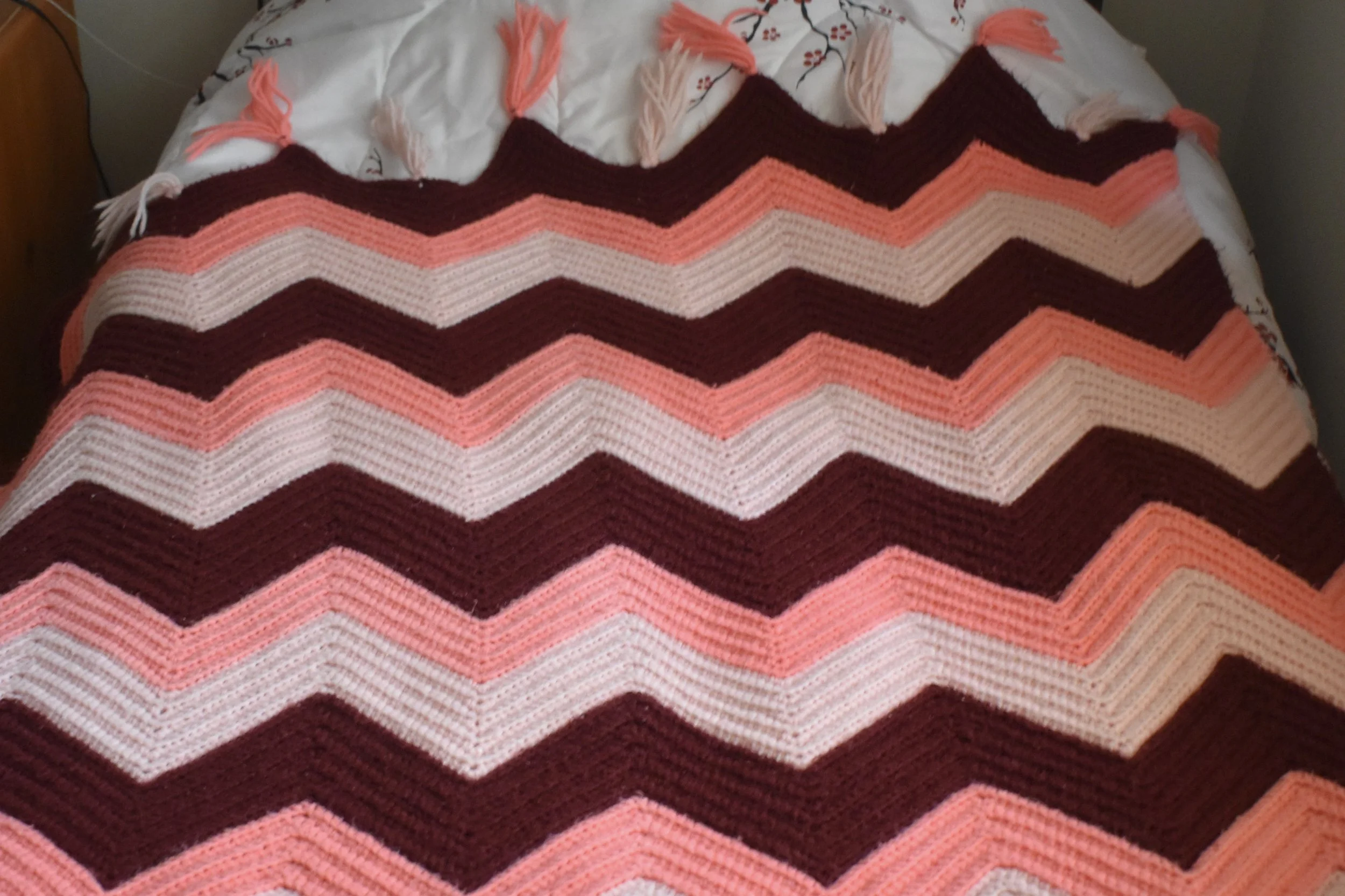
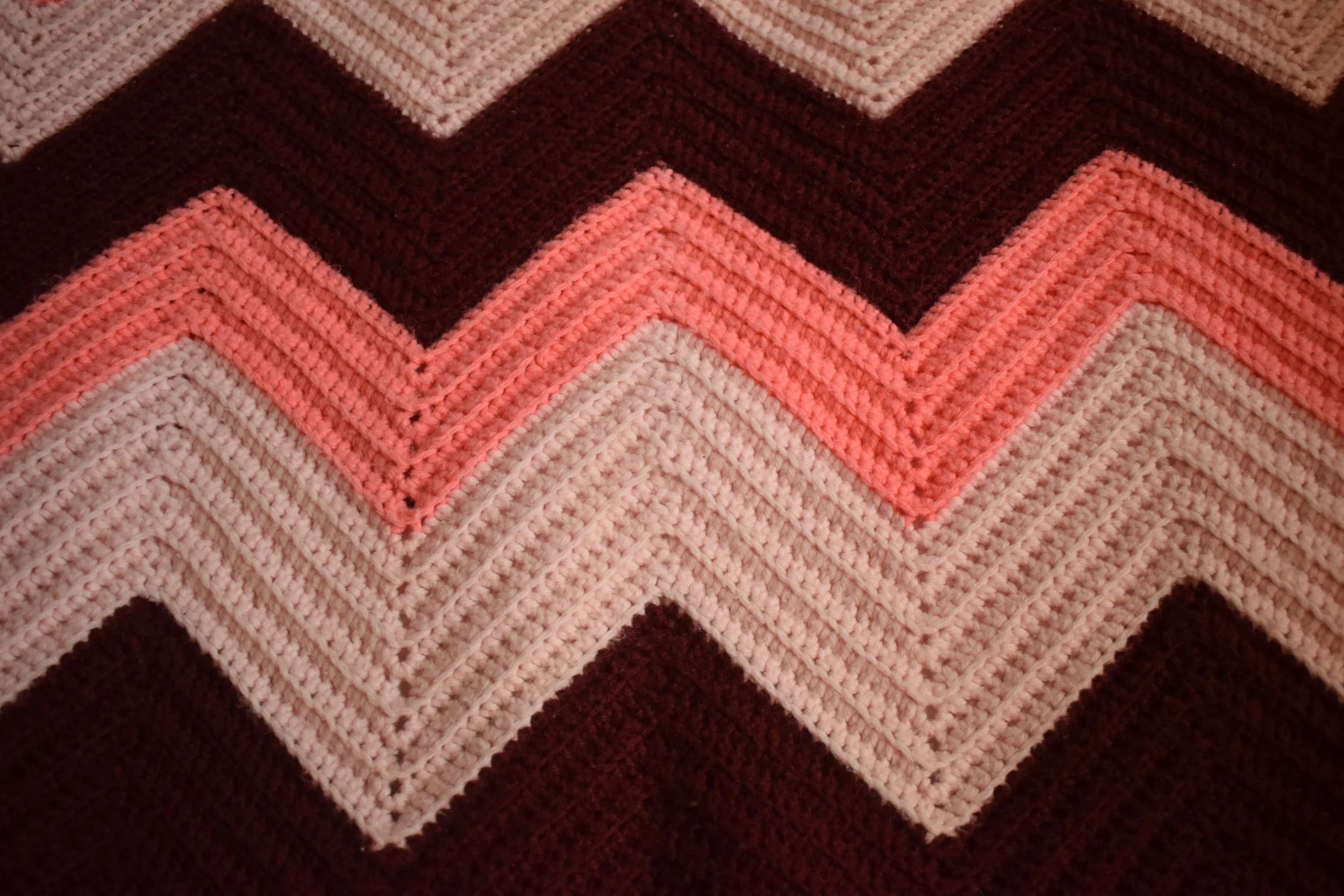
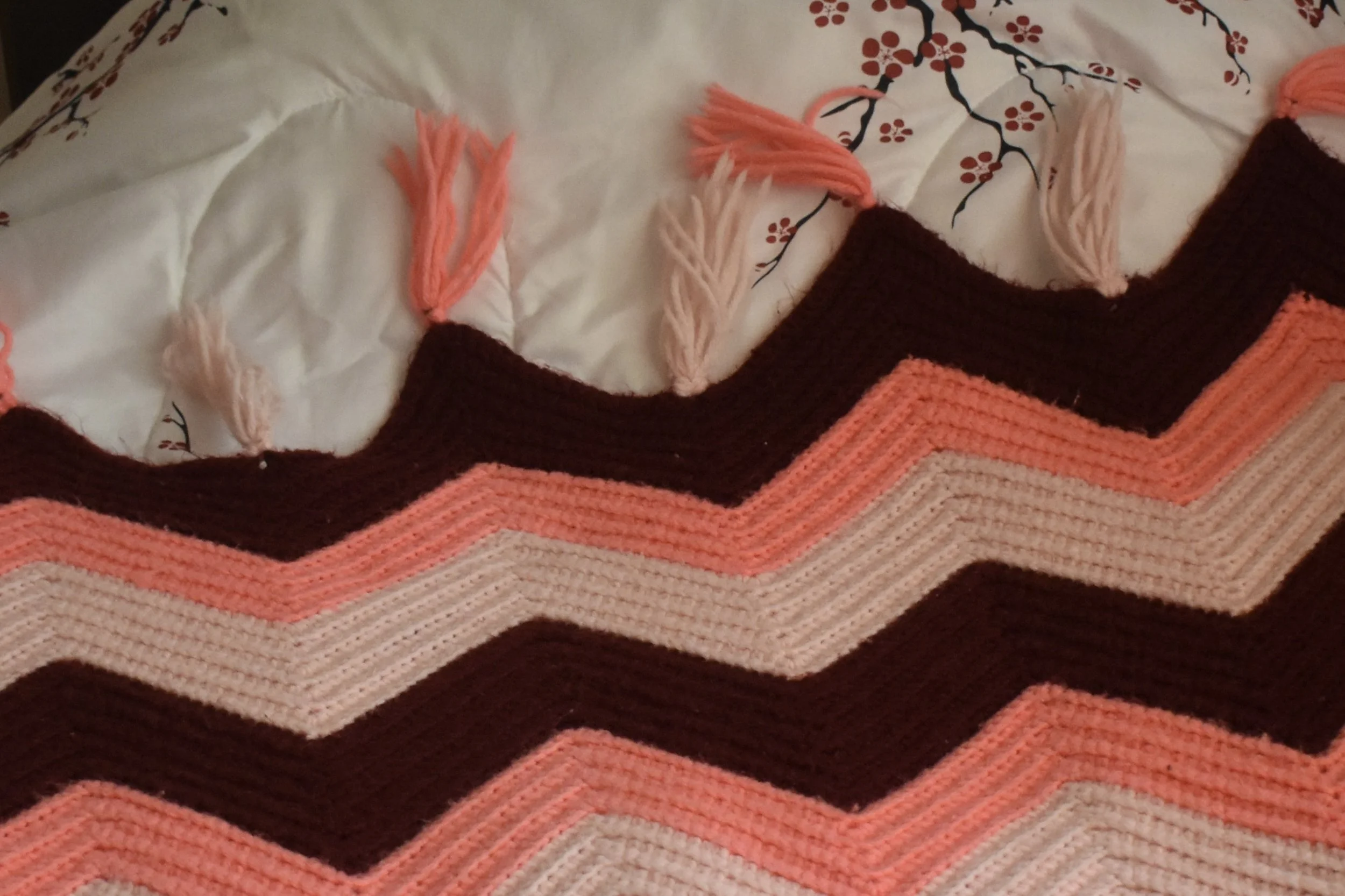
Sr. Mary Jane Cashin shared her hobby of crocheting and sewing. She learned to sew first, and then picked up crocheting while living in a convent in Brooklyn.
“It was just an opportunity to do something,” she said. “A creative outlet.”
She even crocheted a bedspread for her mother over 40 years ago, which she now keeps in her room at Our Lady of Perpetual Help Convent.
“It was two colors, and I learned how to make tassels. You know, I like learning things,” she said. “I learned from people, and I enjoyed it.”
As for sewing, she made her own graduation dress in high school.
“We started in the seventh grade getting a pattern and making the same dress, but in regular cotton clothes,” she said of sewing while in school. “Then in the senior year, you had to make your graduation dress [in] the same pattern.”
She also made a blue velvet dress for her mother’s birthday.
Growing up, her mother had a second-hand sewing machine where she made many of Sr. Mary Jane’s clothes for grammar school.
After graduating high school, Sr. Mary Jane knew she wanted ot enter the convent, but her mom wanted her to experience life after school first.
“My mother said you shouldn't leave the world till you've been in it, because I was just graduating from high school.”
She ended up earning a scholarship to Maryview Hospital School of Nursing in Virginia.
“I wanted to be a nurse, so that worked out for me,” she shared.
After a year and a half at Maryview, she asked her mother for permission to enter the convent, and it was granted.
Sr. Mary Jane also graduated with a Master's in Nursing Education from New York University.
She worked as a nurse for many years, holding positions at North Shore University Hospital, Good Samaritan Hospital, and Maryview Hospital, among others. She also worked with dialysis patients, explaining organ donation and how to support someone once they come back after surgery.
She was a missionary nurse in Malawi from 1965 to 1966 before returning ot the US to work at Good Sam, where she worked for a cumulative ten years.
While working at North Shore, Sr. Mary Jane lived with the Dominican Sisters because the commute was closer.
“I was there for 22 years. It's amazing to think of it now, but at the time [it] went fast.”
Even though she wasn’t living with the Daughters of Wisdom at the time, she stayed connected.
“I was living my religious life,” she said. “But I still have the connection with the Daughters of Wisdom.”
“I went to any of the meetings and opportunities I got to be with them.”
Sr. Marilyn Soeder’s Watercolor Painting
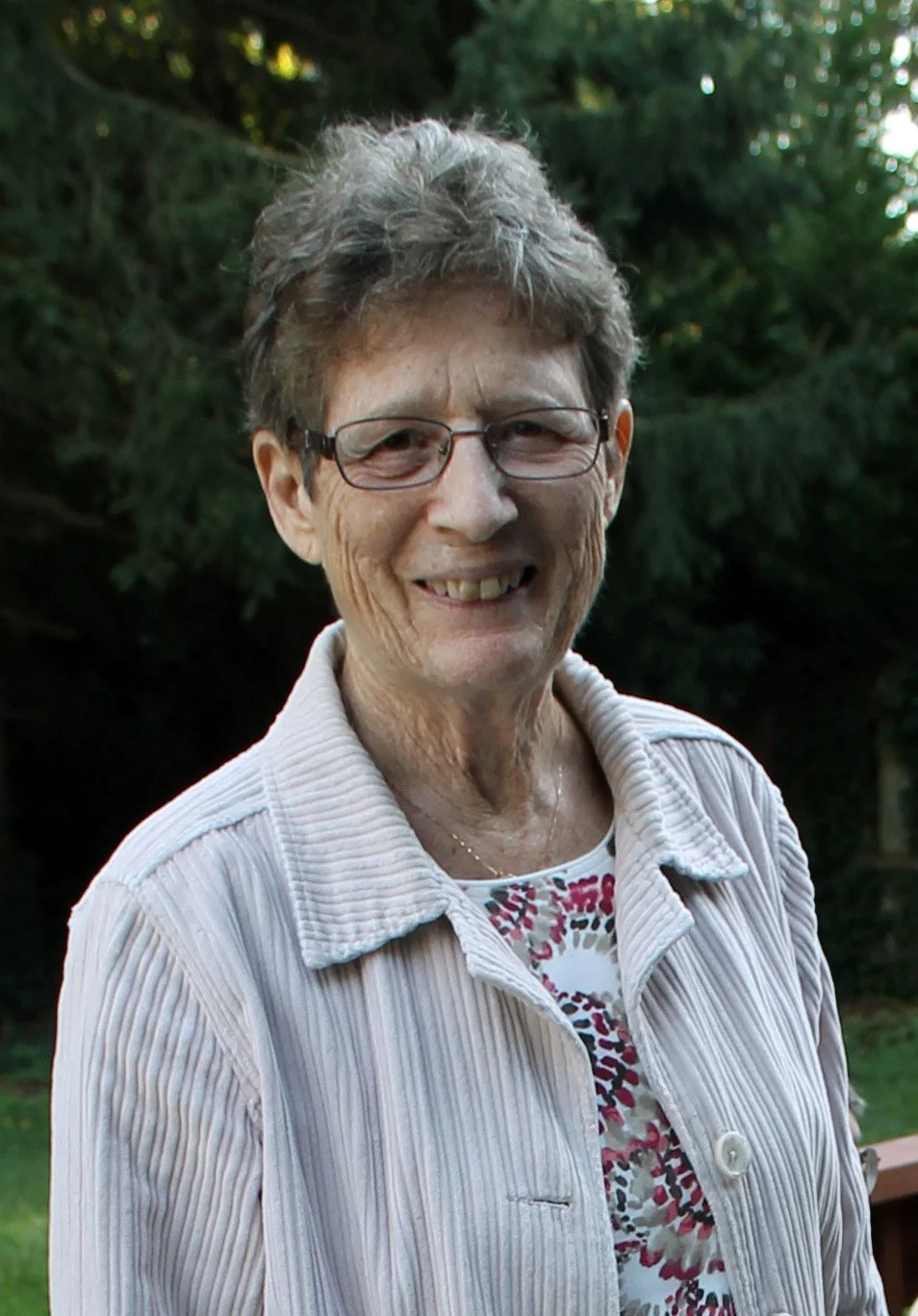
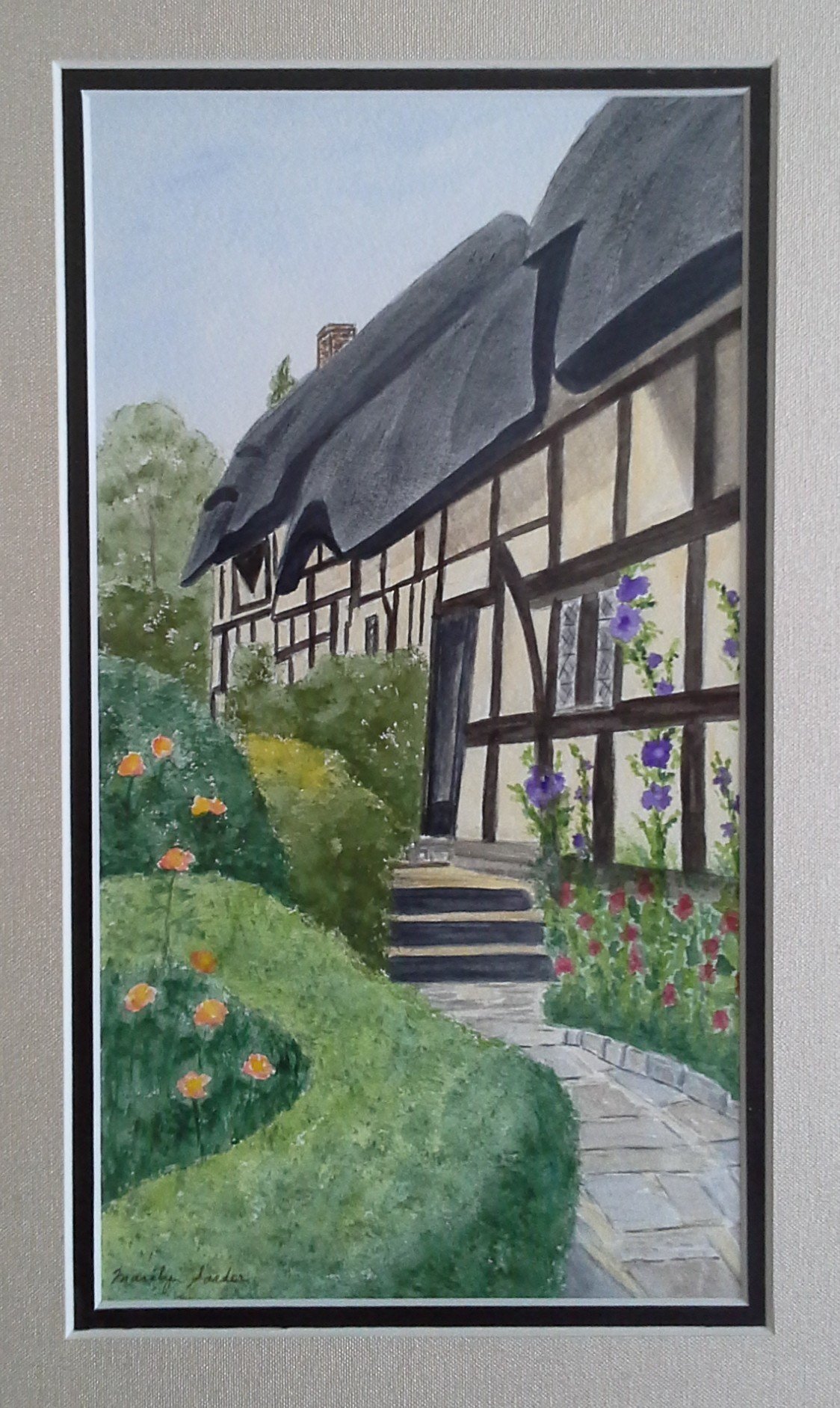
Sr. Marilyn Soeder, DW, recalls with delight how her watercolor painting of Anne Hathaway's cottage in Stratford-upon-Avon, England, sprang from a photograph she captured during an unforgettable 2019 adventure.
Accompanied by Sr. Ann Nielsen, she journeyed to reunite with an old friend and reconnect with Sisters they had served alongside in Malawi. Their days overflowed with joy-filled gatherings with the Daughters of Wisdom in Romsey, the thrill of witnessing a Shakespearean masterpiece at the Royal Shakespeare Theatre, wandering the storied halls of an 11th-century castle, and being utterly enchanted by the rolling hills and golden glow of the Cotswolds.
Each moment adds to a brushstroke in both memory and art in this beautiful rendering.
May 2026
St. Louis de Montfort composed over 160 canticles and spiritual hymns for "sermons in rhyme" to easily teach rural parishioners. He believed that singing brings joy, pacifies the heart, restores courage, and fills the soul with the Holy Spirit; and that spiritual singing is a godly secret for chasing demons away, stating that "holy song we sing makes our tempters flee."
Sr. Marie Sopr’s Organ Music
Sr. Marie Sopr learned to play the piano as a child; she took lessons beginning in fifth or sixth grade up until high school. She eventually took her love of music to college and earned a degree in liturgical music with a minor in the organ from the Catholic University of America.
The organ and the piano seem similar, but they are different instruments.
“It's different in the technique,” said Sr. Marie. “You see, if you're going to play the organ, you have to hold the keys. And the keys will only sound as long as you hold them. Whereas with the piano, you go up and down, and it's a whole different technique.”
She continued to explain why starting on the piano is actually helpful when learning the organ.
“The keyboard is the same,” she said.
“[I was told] that before you can start on organ, you need to be able to play the piano. Then you get the technique for the organ because you have to pull out the stops, when you want horns, you want strings, whatever you want.
And you also have to do the pedals back and forth.”
While in school, Sr. Marie worked with Dr. Robert Grogan, an organist at the National Shrine of the Immaculate Conception in Washington, D.C. The Shrine building is connected to Catholic University.
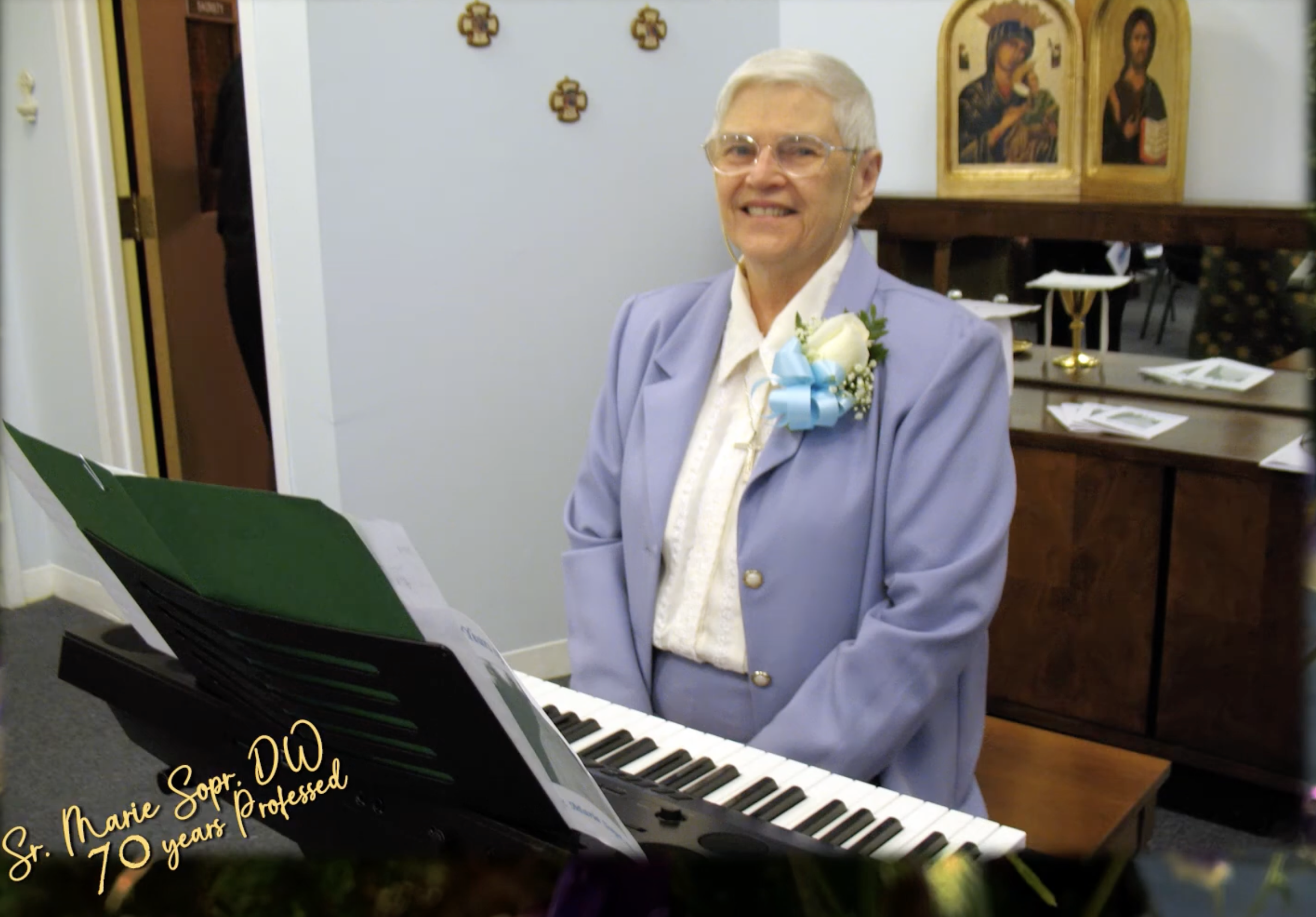
Sr. Marie at the piano.
For her university degree, she had to perform on the organ at the Shrine.
“I went to Catholic U for the courses and for the music lessons with Dr. Grogan. And that meant I had to practice on the organ, and I got to go into the Shrine. And oh, that was such a thrill, when I think of it.”
She was also a teacher and principal; she taught at a few different schools, including Our Lady of Mt. Carmel in Waterbury, CT, Holy Angels Parish in Chesapeake, VA, and St. Bernadette in Springfield, VA. The subjects she taught were English, music, and religion.
While teaching in Connecticut, she moved up from grades four through eight with the same students. “So they got to know me, but I got to know them, too. And I'm still in touch with some of them,” she said.
At St. Bernadette, where Sr. Marie also played the organ for the school masses, she started a girls’ choir at the request of one of her students.
“So [the student] comes in, she says, ‘Couldn't we have a choir?’
And I said, ‘Well, I don't know.’
‘Well, do you think we could? Well, maybe my mother would help.’”
The student’s mother was very involved in the school, and later worked as a secretary there. She was also a singer who went to Juilliard.
“So I said, ‘Okay, tell your mom to call me, and we'll talk.’
So that's how it started,” said Sr. Marie.
Sr. Marie also sang in a group, where she was a second soprano. “I’m more comfortable with an alto second soprano range.”
Her favorite songs to play on the organ were any of the hymns, which is what she got her degree in.
“My purpose in getting that degree was so that I could help out at church with the liturgical music, with the mass. So you don't want to play something that's for mass that's not a hymn or in approved liturgy.”
At Our Lady of Perpetual Help, she’s in charge of intentions, which organizes what prayers will be focused on based on requests.
April 2026
“She is a breath of the power of God, and the pure expression of God’s glory.”
Wi 7:25
Sr. Ann Nielsen’s Translations & Music
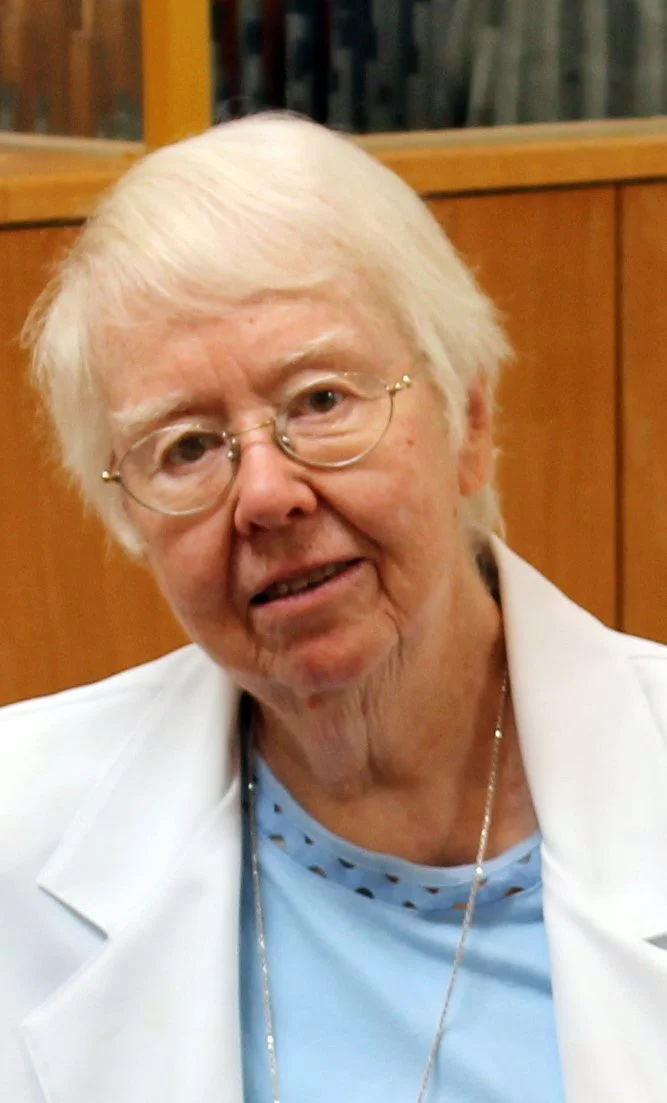
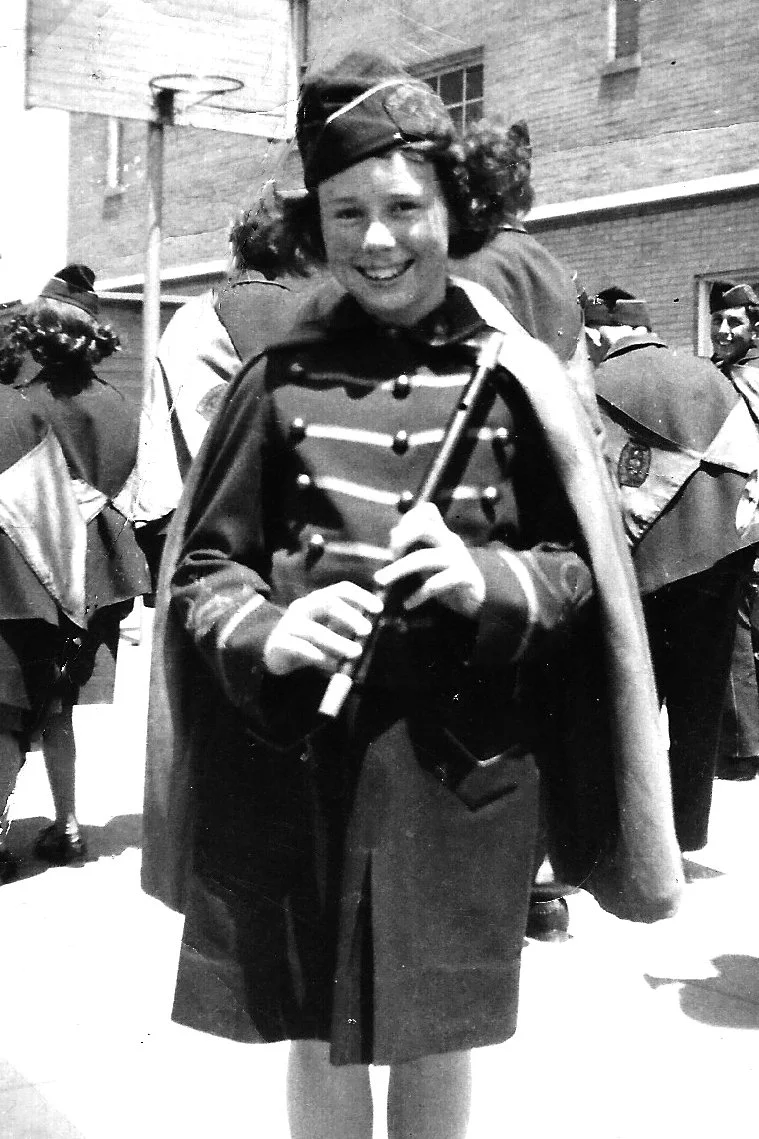
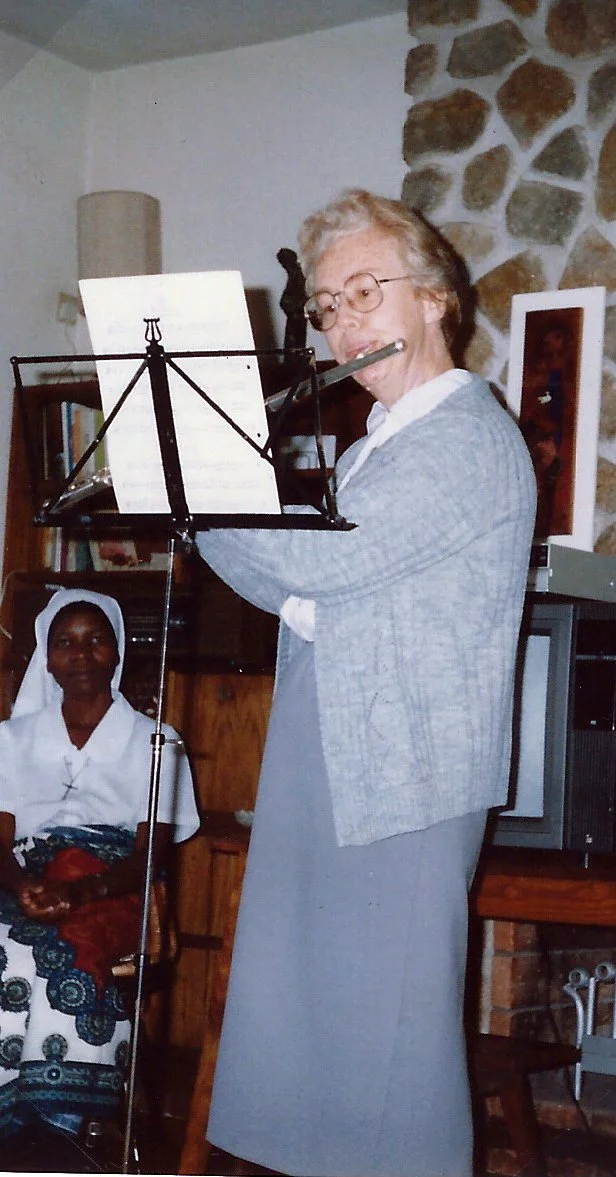
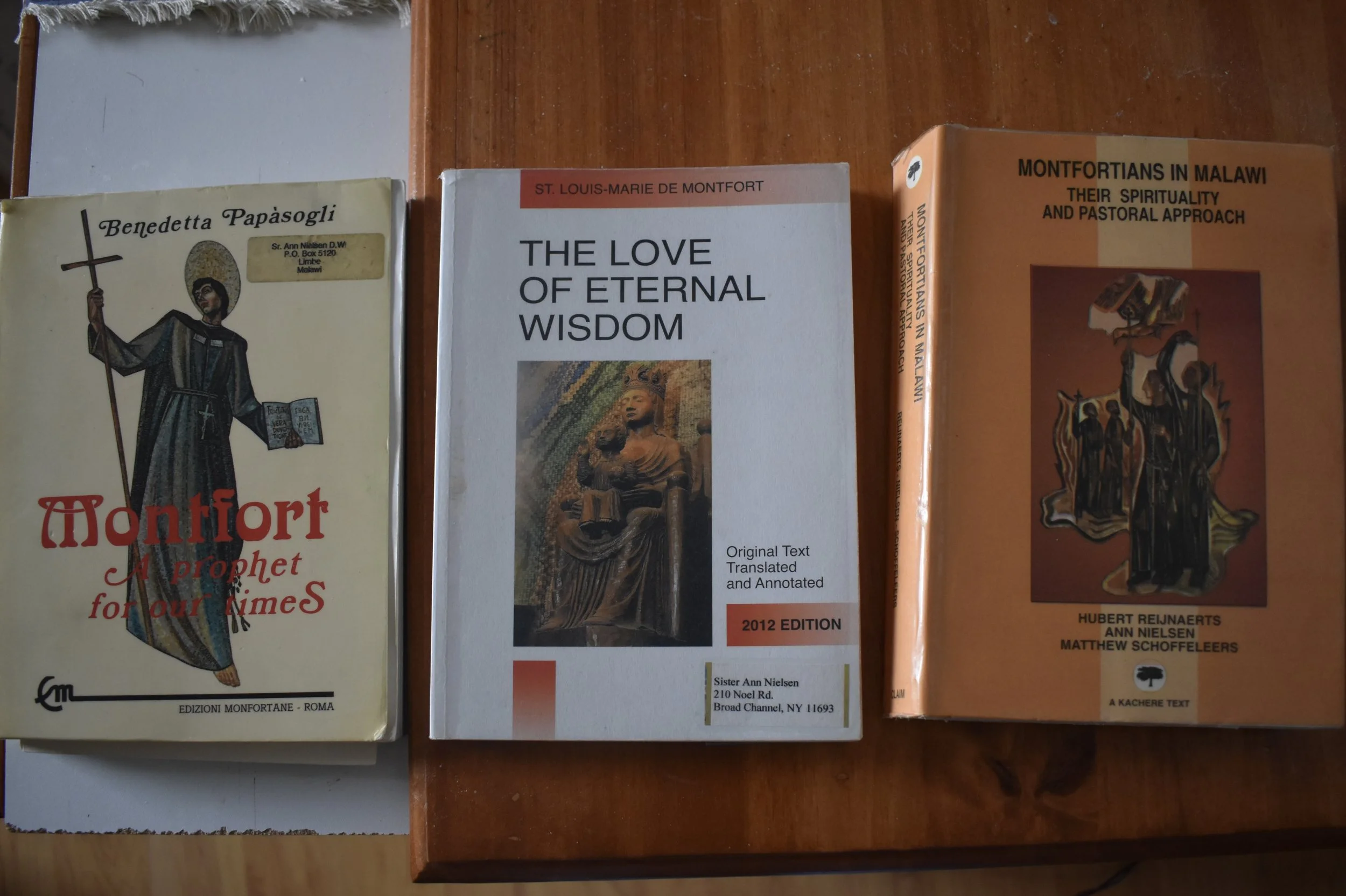
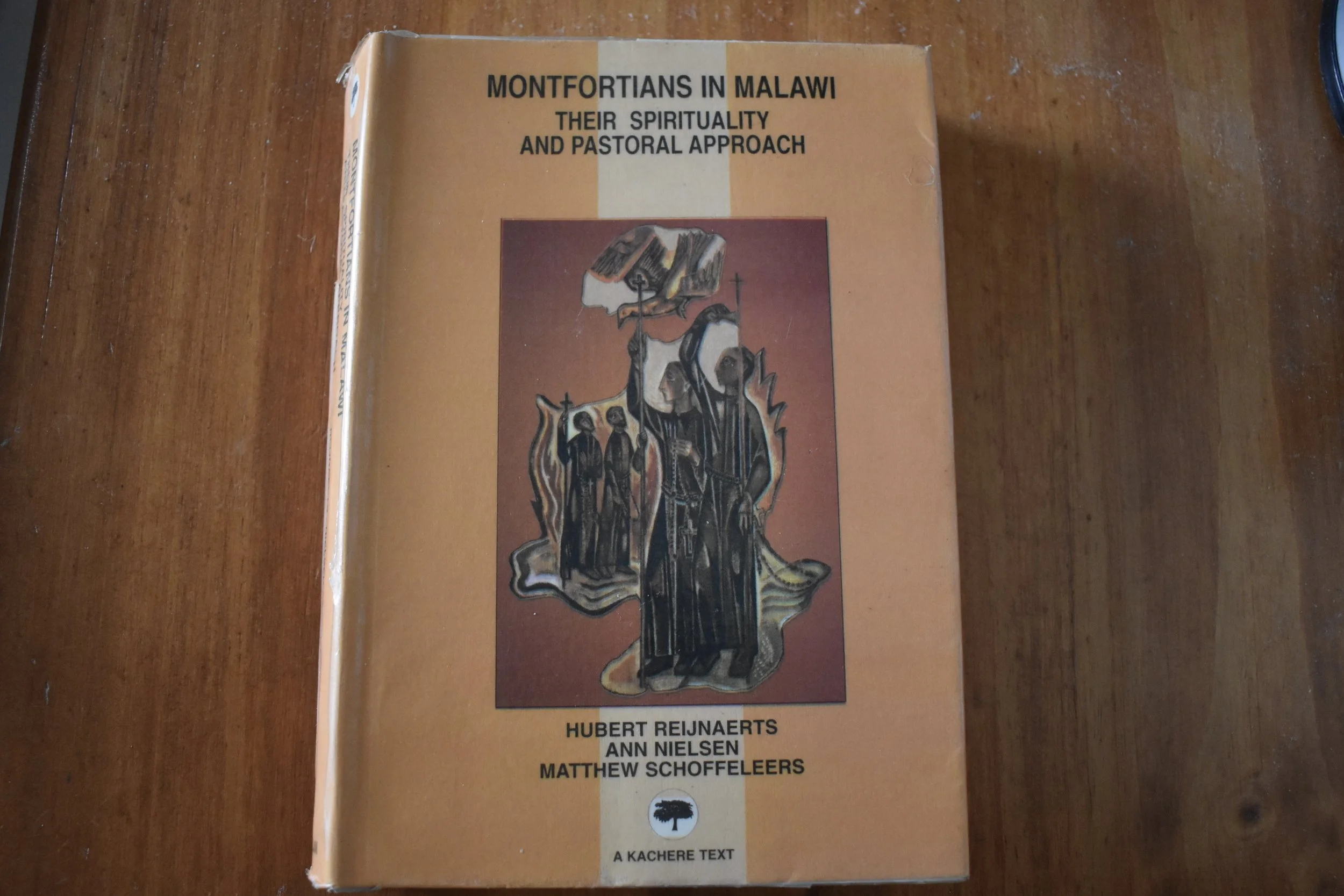
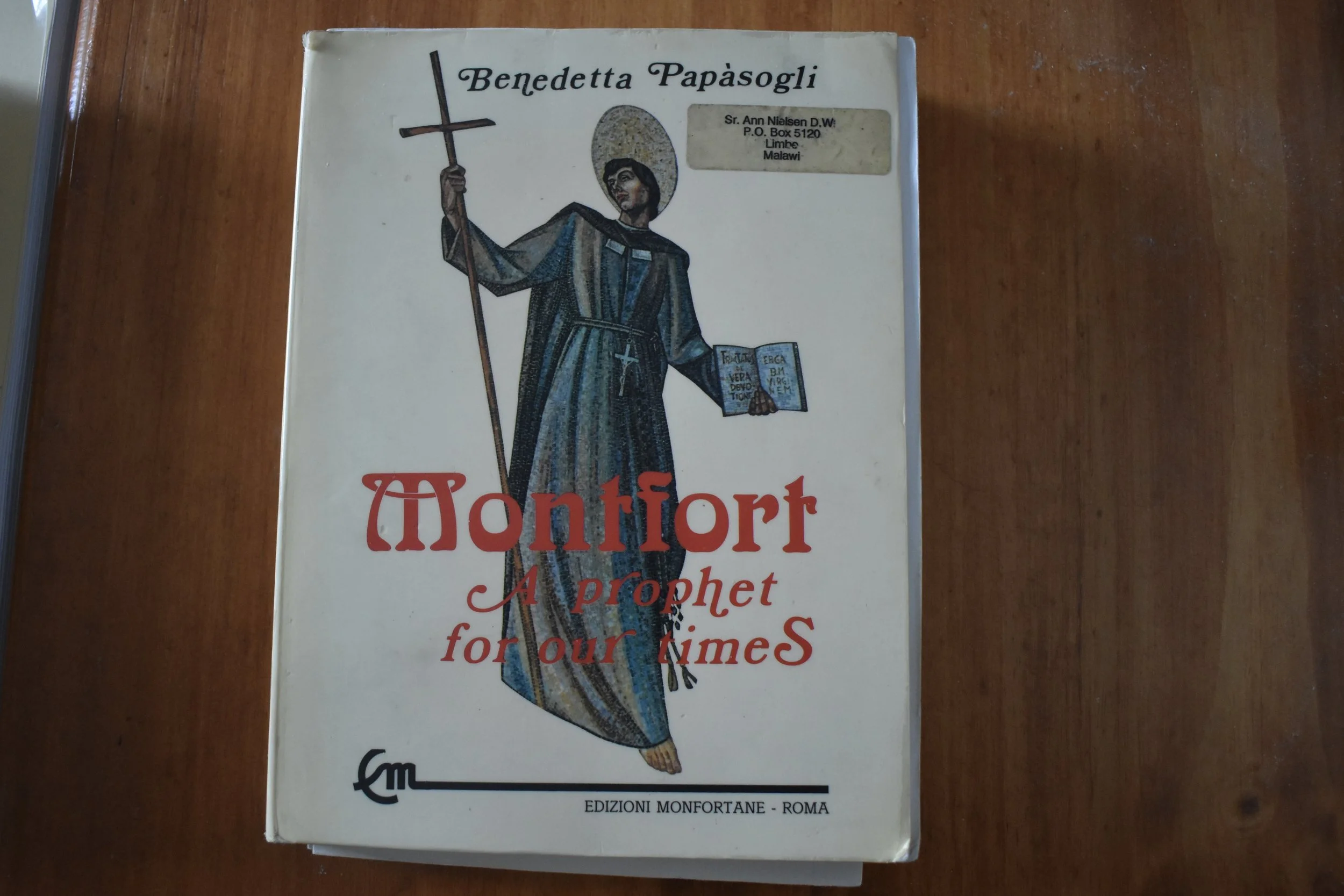
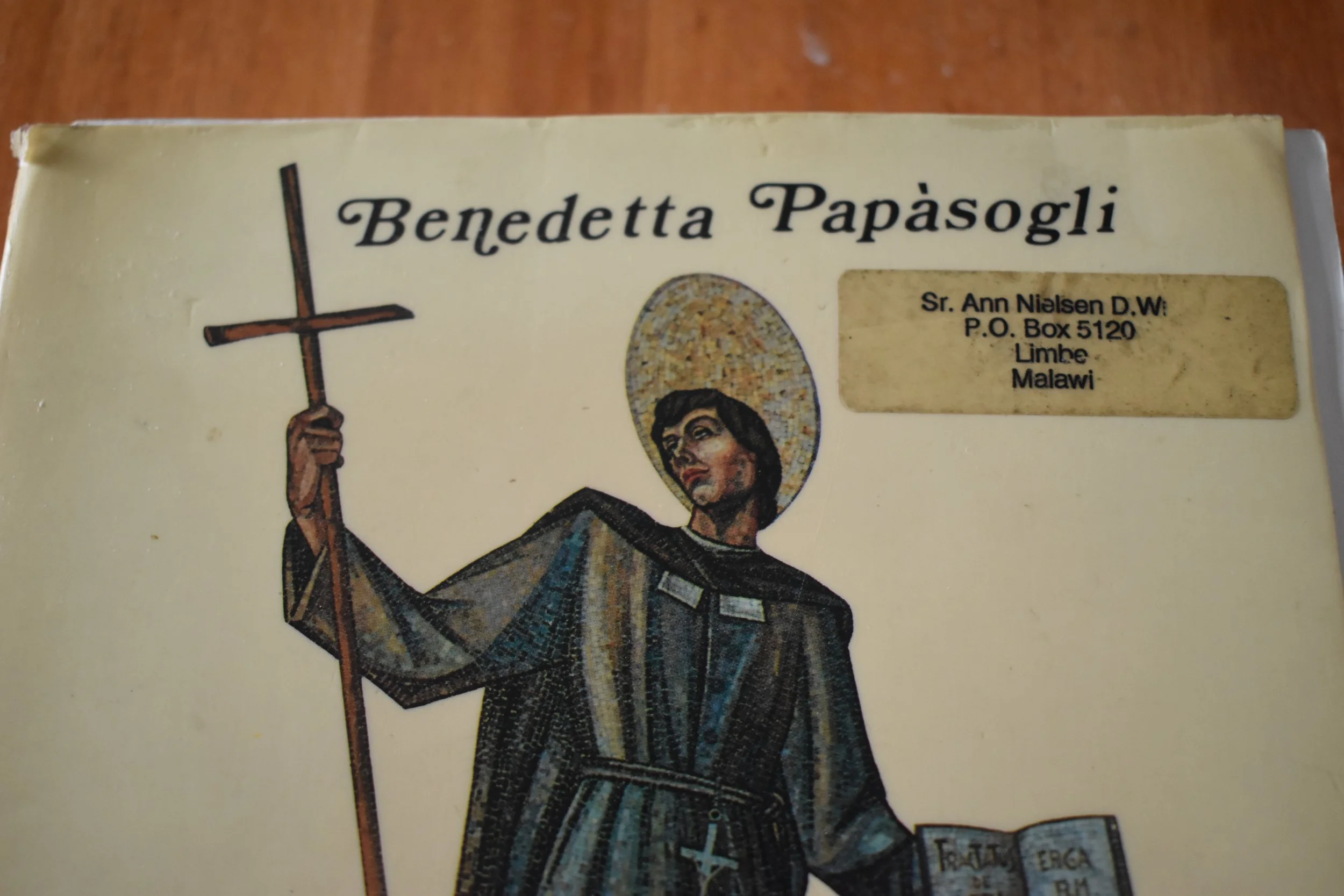
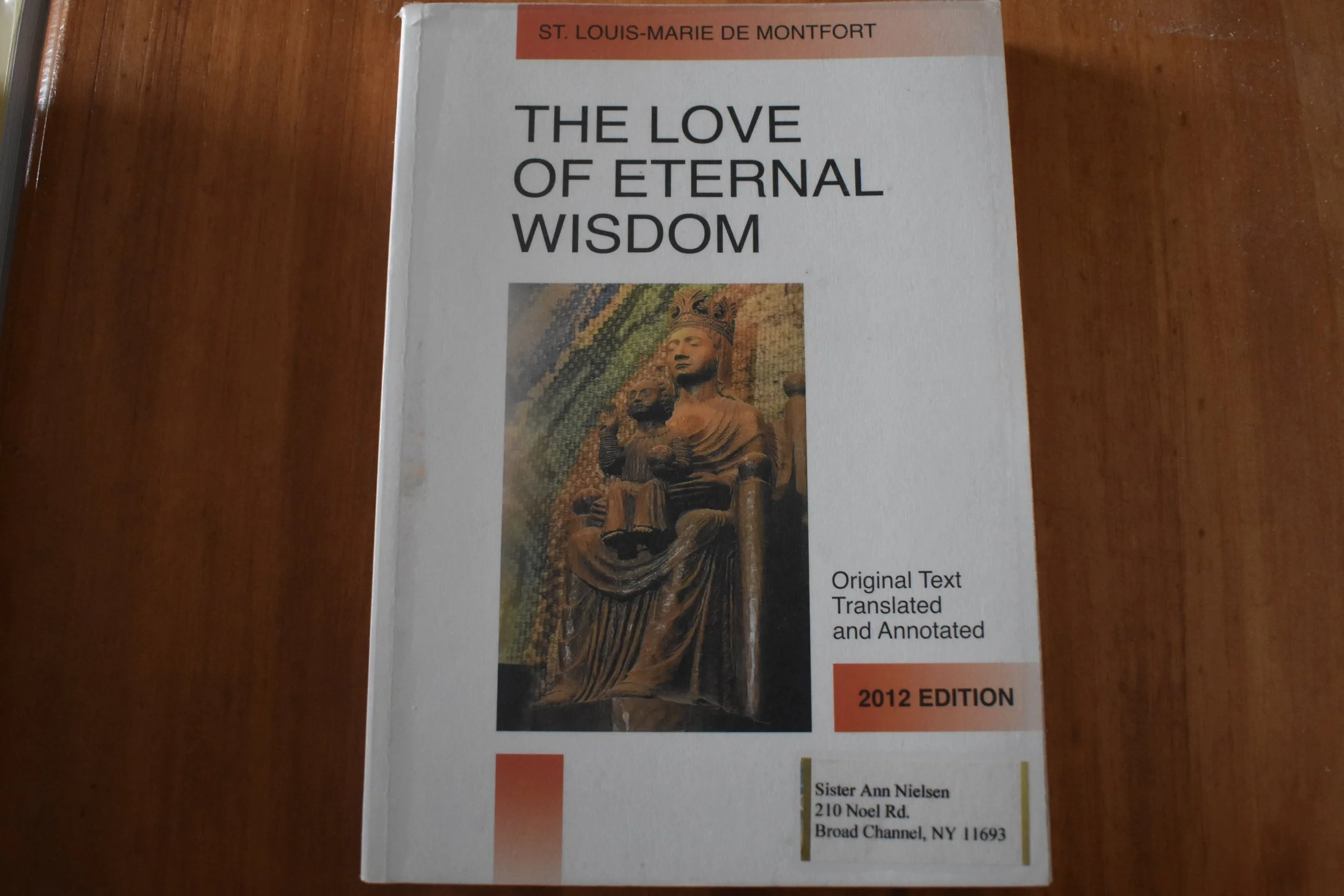
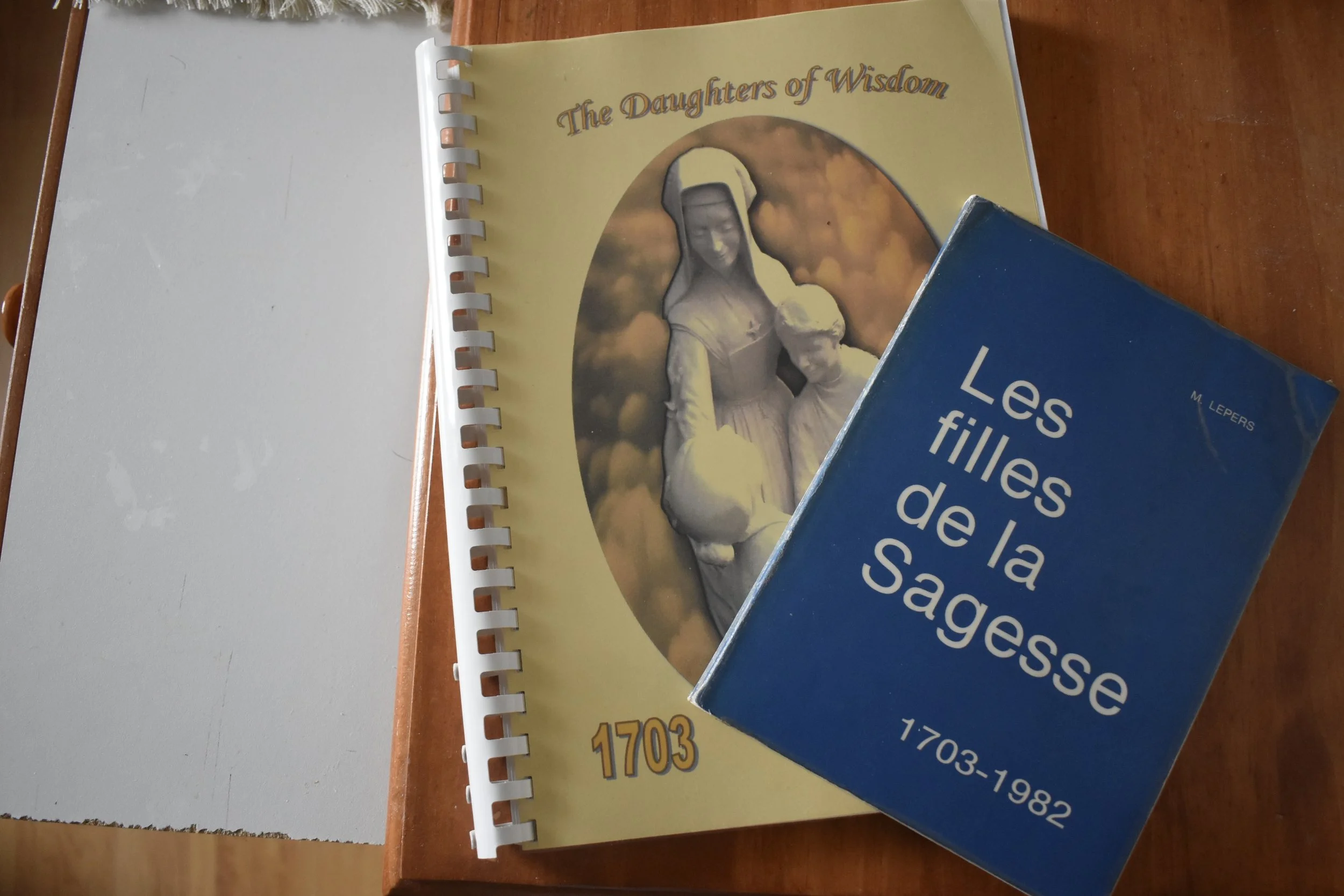
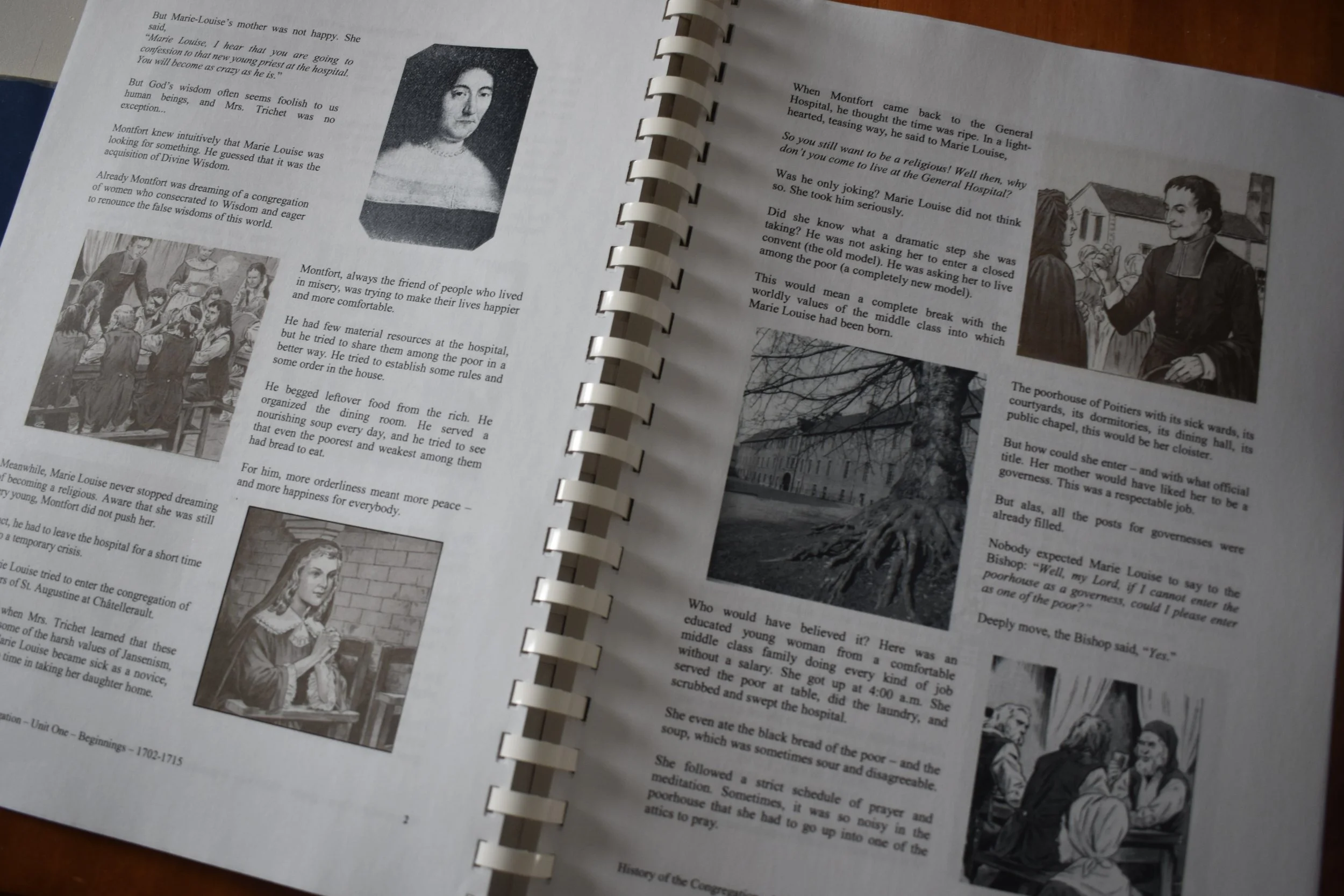
Sr. Ann Nielsen has many talents, including playing the flute and fife, but writing and teaching have always been her greatest passions.
“I would say writing and teaching are my main gifts,” she said while discussing her Wisdom and the Arts contribution.
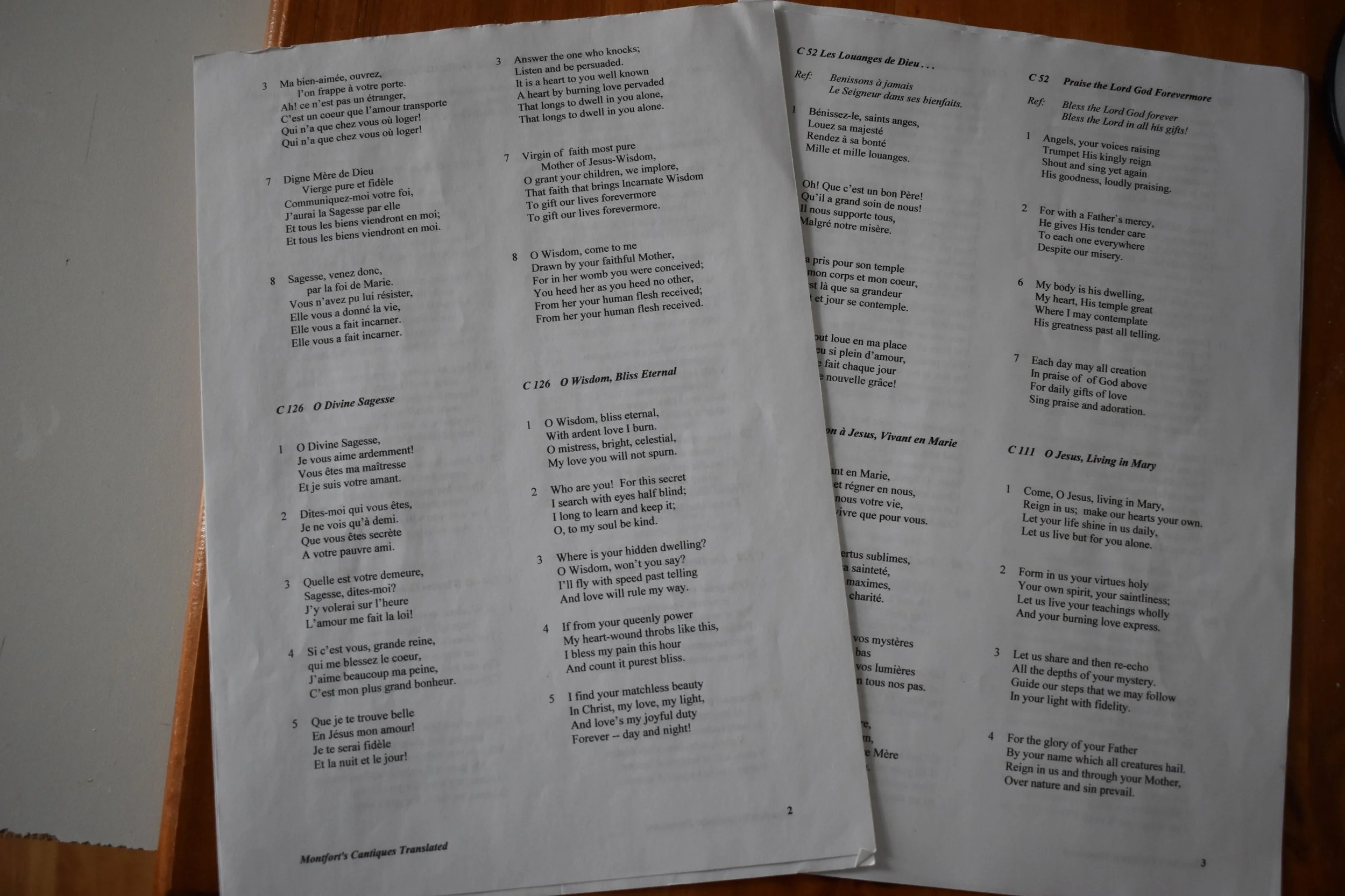
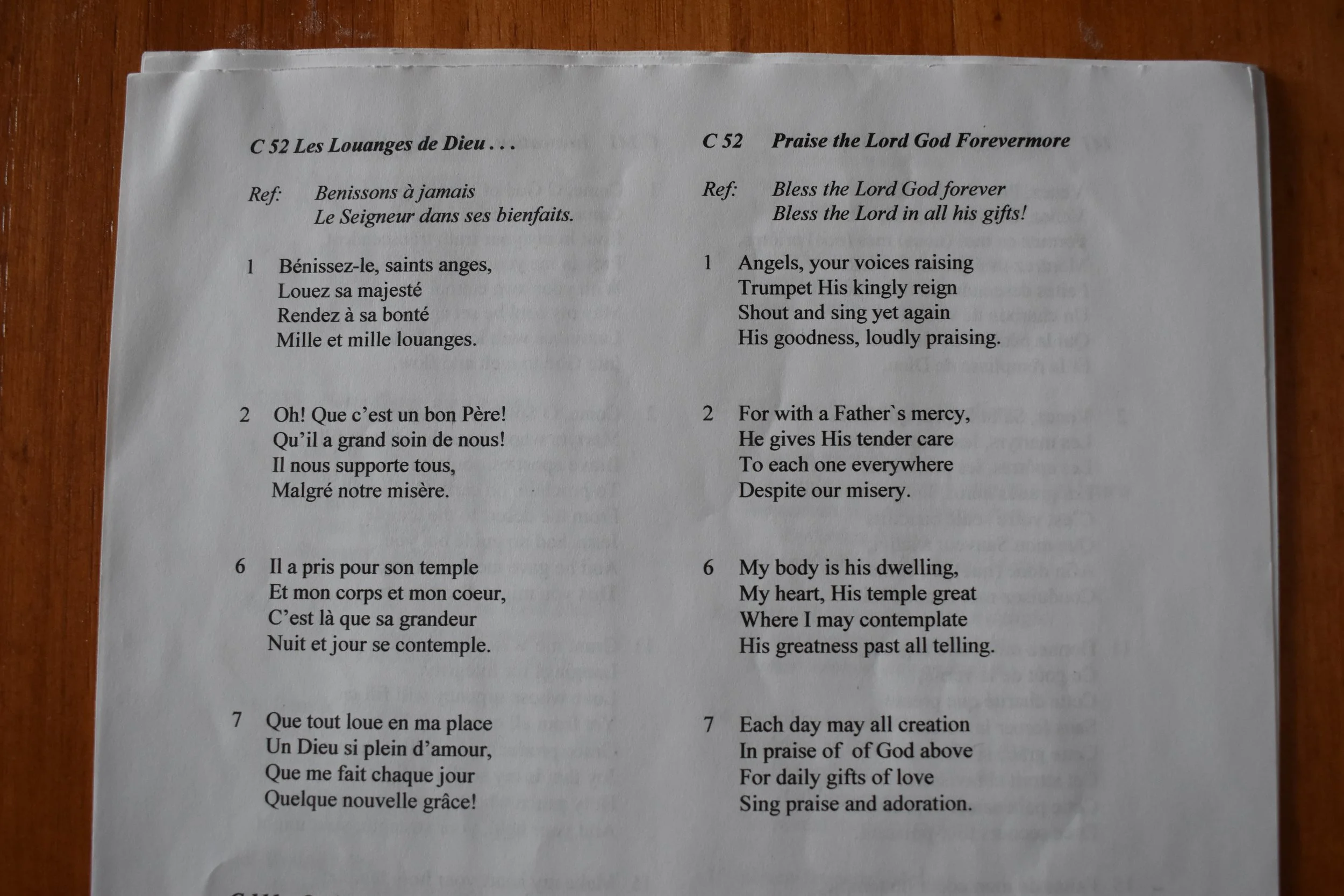
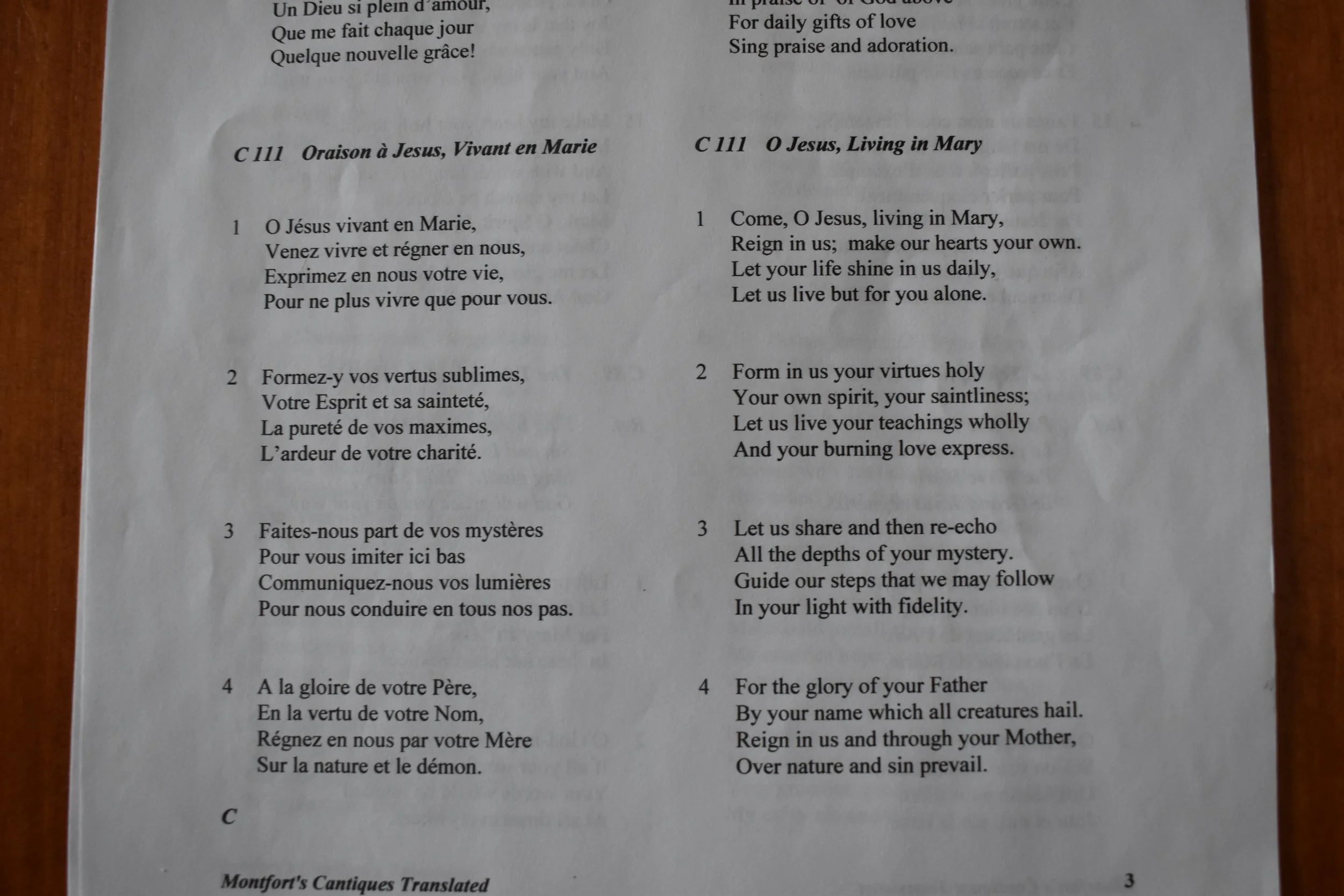
One of the main projects she worked on was translating a book on the life of Montfort, known for his spiritual writings.
The book was originally written in Italian as Luomo del Chiesa Ultima (A Man of the Ultimate Future Church). It was later translated into French by Canadian Sisters as Le Venu De Vent (The Man Who Came Out of the Wind). Sr. Ann did the English translation of these two versions over the course of about six months.
She can read both French and Italian after spending four years in Rome, but she worked more in French.
“So basically it's a life of our founder,” she said of the book’s contents.
She also did the English translation of the Montfort missionaries in Malawi and spent 33 years teaching in Malawi.
“I've taught a lot of things, but I taught English language and literature in the United States and also in Malawi. But I also taught Bible knowledge [for] many years in Malawi.”
She was also thrown in anywhere they needed a teacher, including subjects like earth science, biology, and mathematics. Before this, she earned a Master’s degree in English from St. John’s University.
She left Malawi at 65 after serving as provincial superior, but went back later on to teach in the seminary.
Among her many translations, she also worked on an English version of Les Filles de la Sagesse (Daughters of Wisdom), which was originally written in French by Sr. Simone de Marie. Sr. Ann also added pictures and used the book while teaching in Malawi.
Many of her translations were more influential in countries outside the US, and she had the opportunity to teach Les Filles de la Sagesse via PowerPoint presentations in India, the Philippines, and Malawi.
Sr. Ann also translated hymns and played music. When she was 11, she learned to play the fife, a woodwind instrument that's used in drum corps and marching bands. She also learned to play the flute at school.
When she was around 35, her sister bought her a flute that she used in Malawi for years.
As for the hymns, she translated around 20 of them from French to English so they could be sung. She was able to translate them within the same rhyme and rhythm scheme as the original work.
“That's something that I do intuitively,” said Sr. Ann. She shared that her sister had the same gift.
Musicality runs in her family. “My grandfather played the accordion. My father played the mandolin. And his brother Henry played the guitar. And his other brother, Harold, played the banjo. That was my father's side of the family. My mother's father played the accordion. And one of his sons played the violin. So it comes from both sides,” she said.
She also wrote original poetry and a song while in Malawi in the 80s.
“I wrote one original piece, but only one. I'm not a music writer. My strength is more in teaching and writing in English.”
She even performed with the flute while in Malawi, and sang as an alto.
“Malawi was a British colony. And where the British were, they taught music in primary schools, and they had a music society. So we had one in Zomba, where I lived — the Zomba music society,” she said.
“And we had another one in Blantyre, which was, when I was away, the biggest city in the country. And they had a music society, and I played with both of those. I also sang with both of those.”
Beyond music, Sr. Ann also loves Shakespeare’s work.
“I like Shakespeare because the language is just such a delight,” she said. “He had such a gift for language. It's just a joy to say it out loud.”
March 2026
“For we are his workmanship, created in Christ Jesus for good works, which God prepared beforehand, that we should walk in them.”
–Ephesians 2:10
Sr. Grace Malonzo’s Crochet & Needlepoint Art
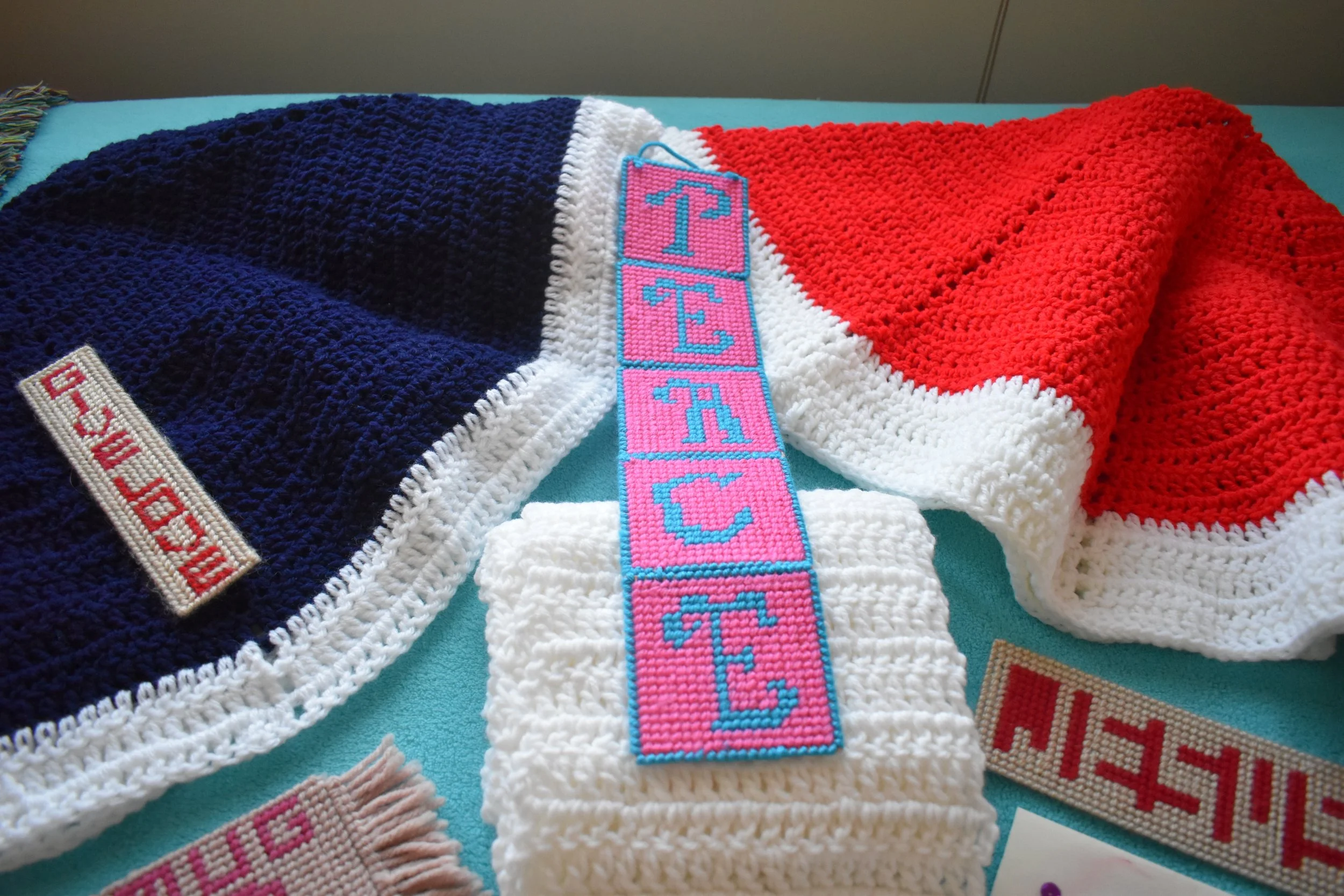
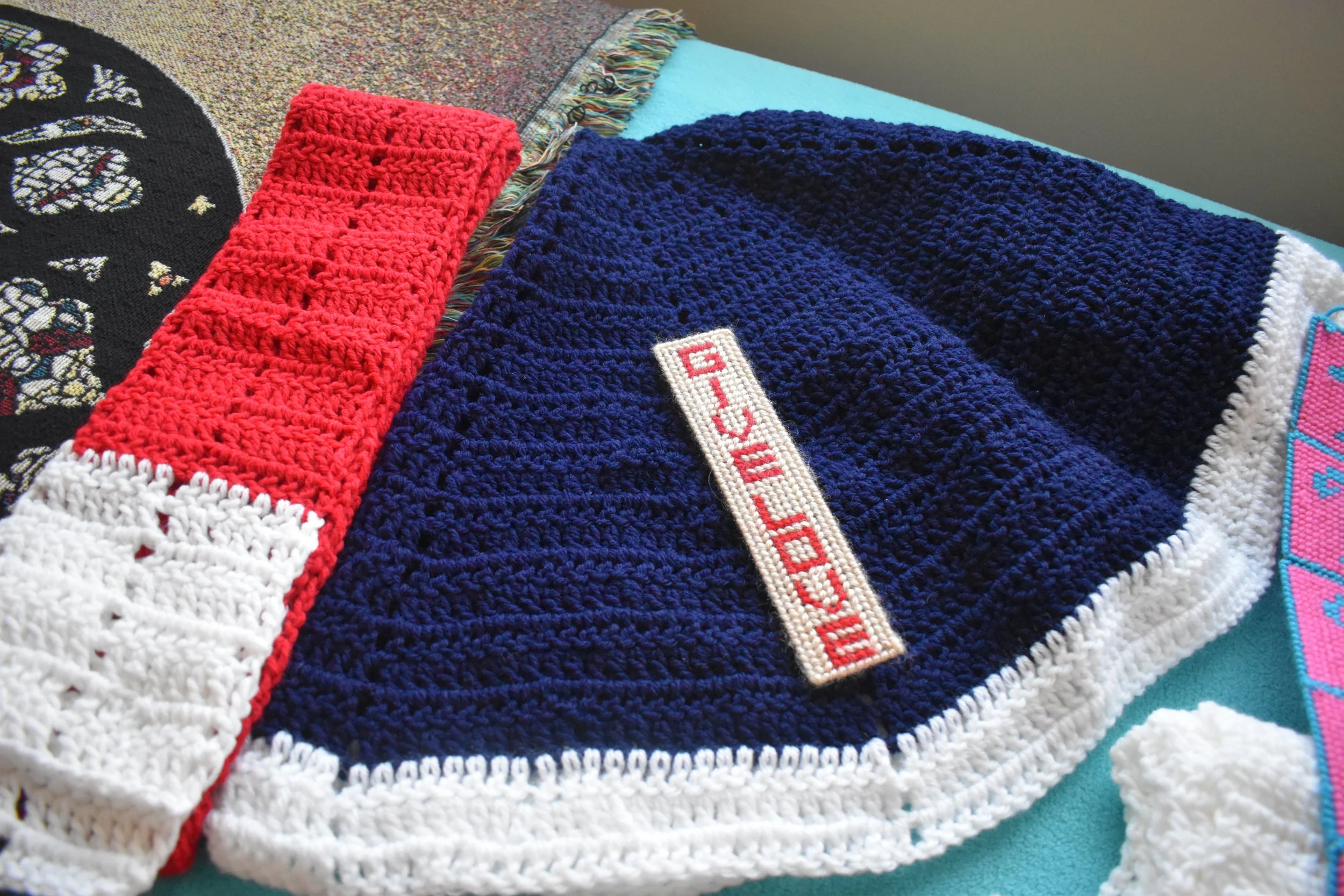
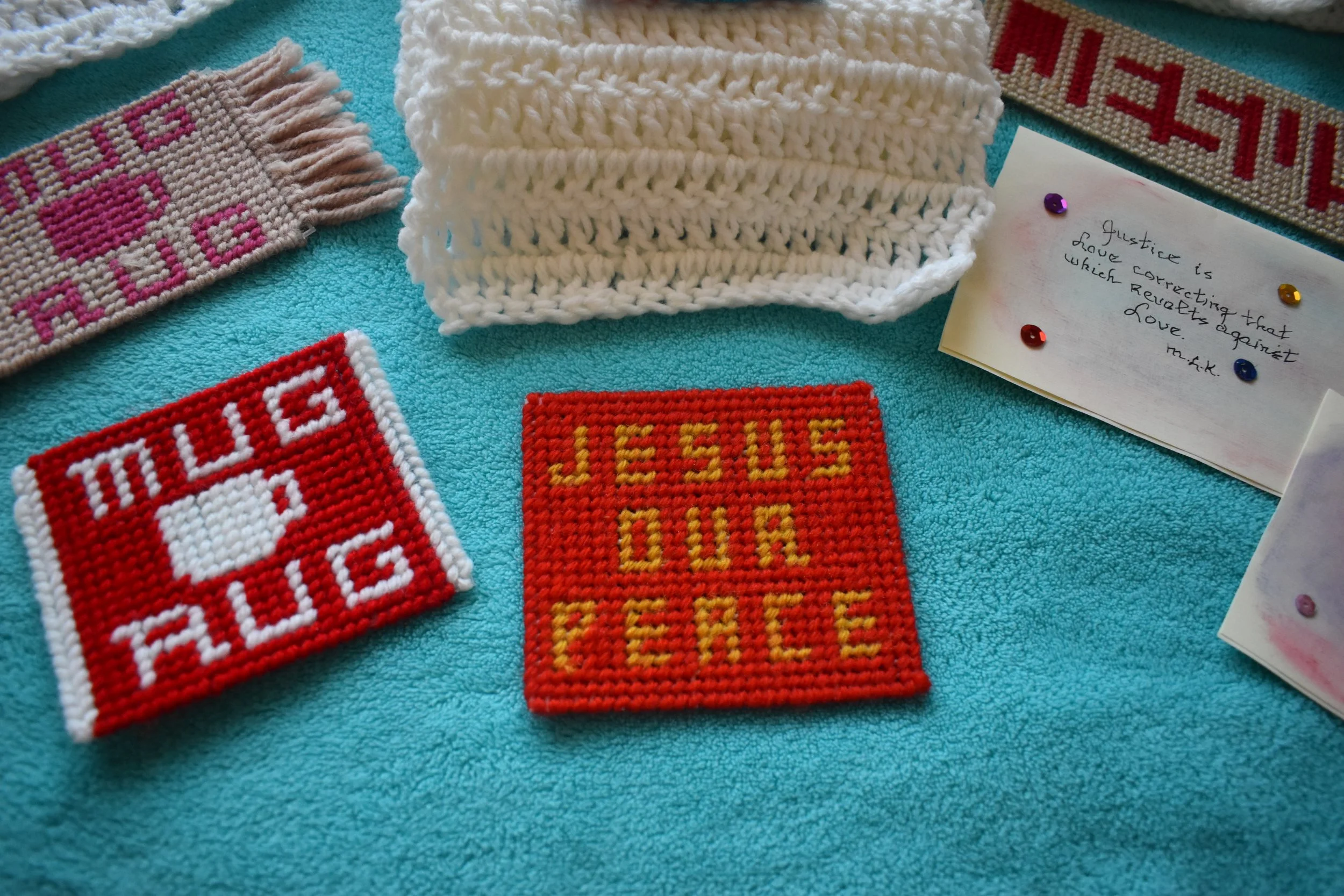
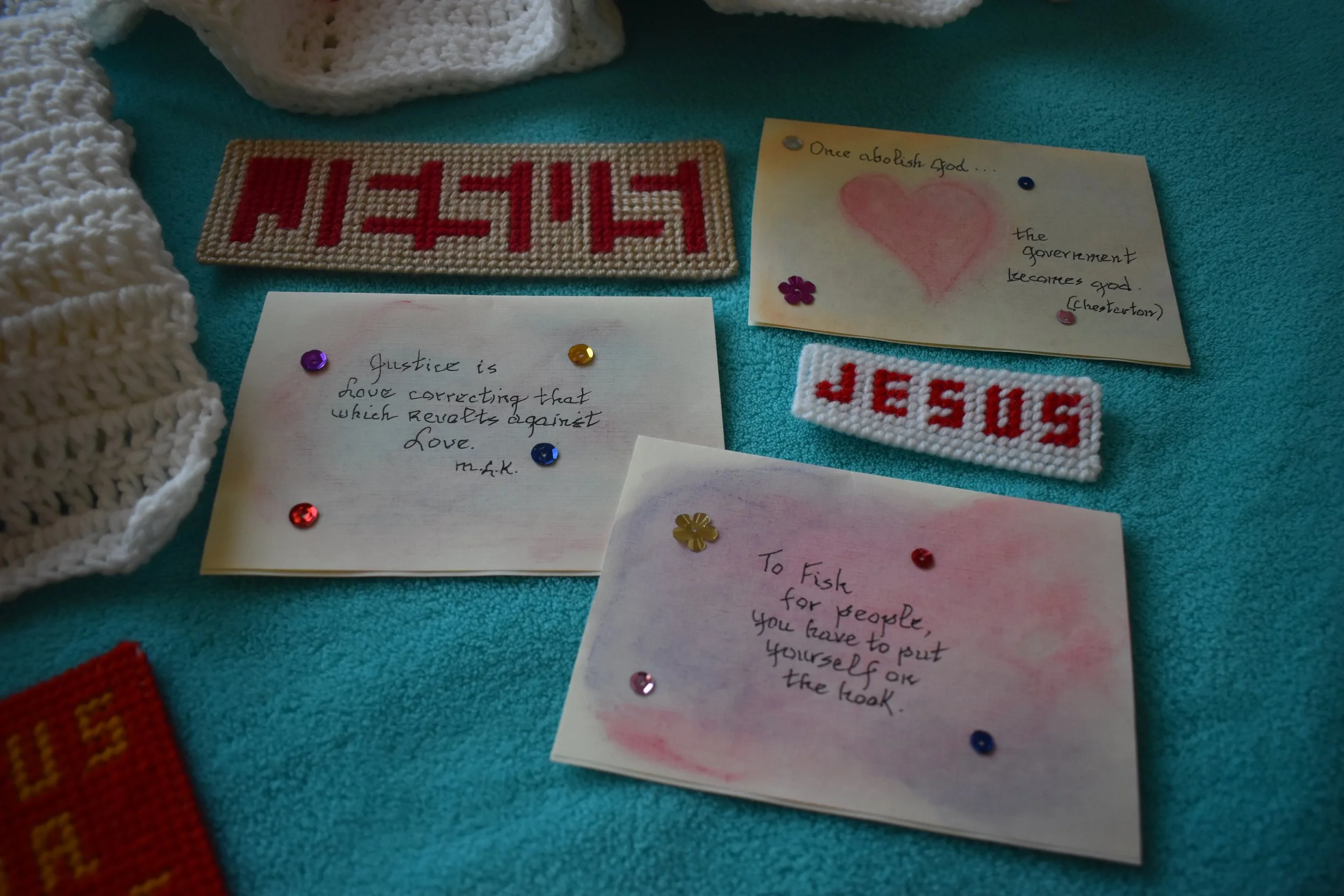
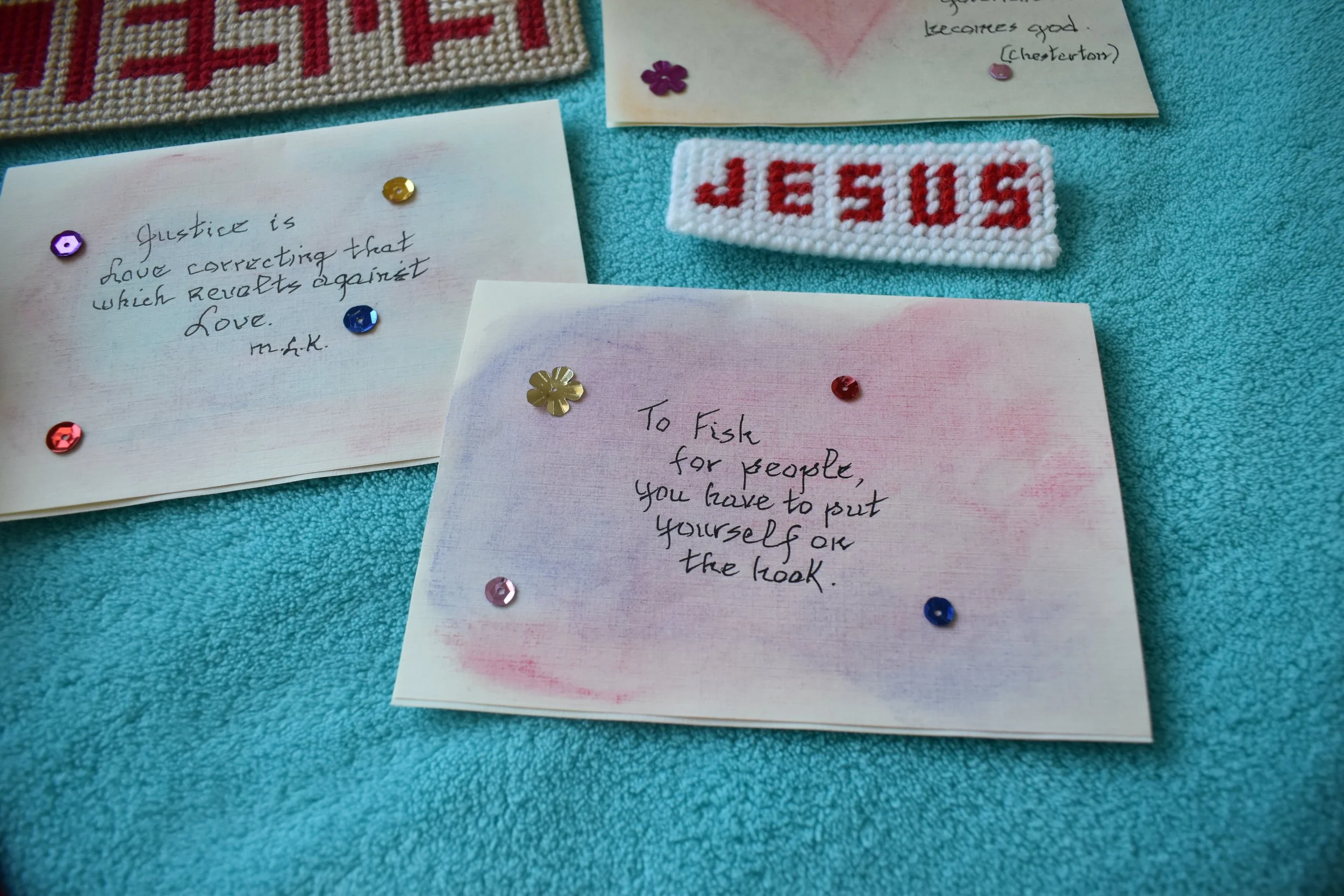
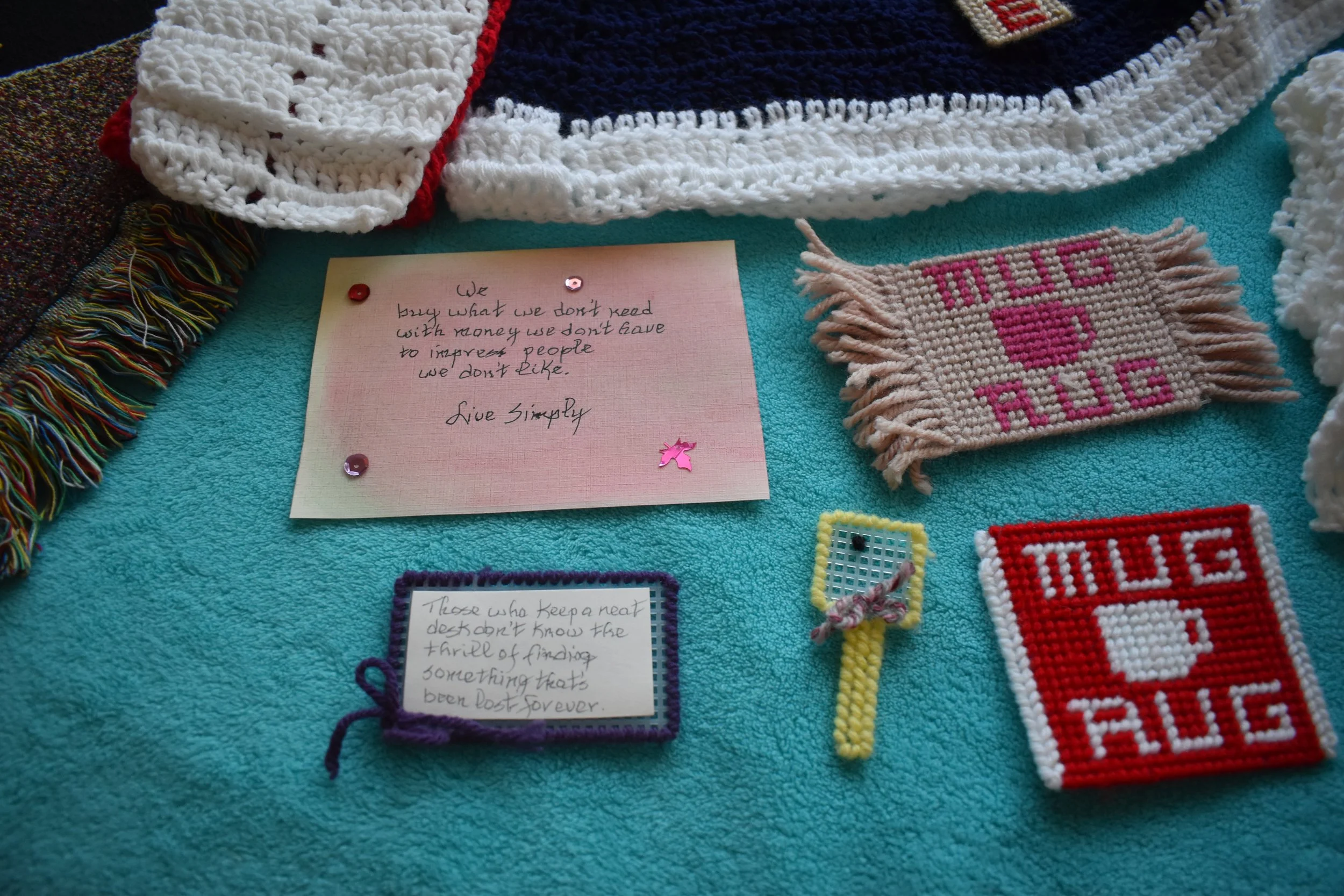
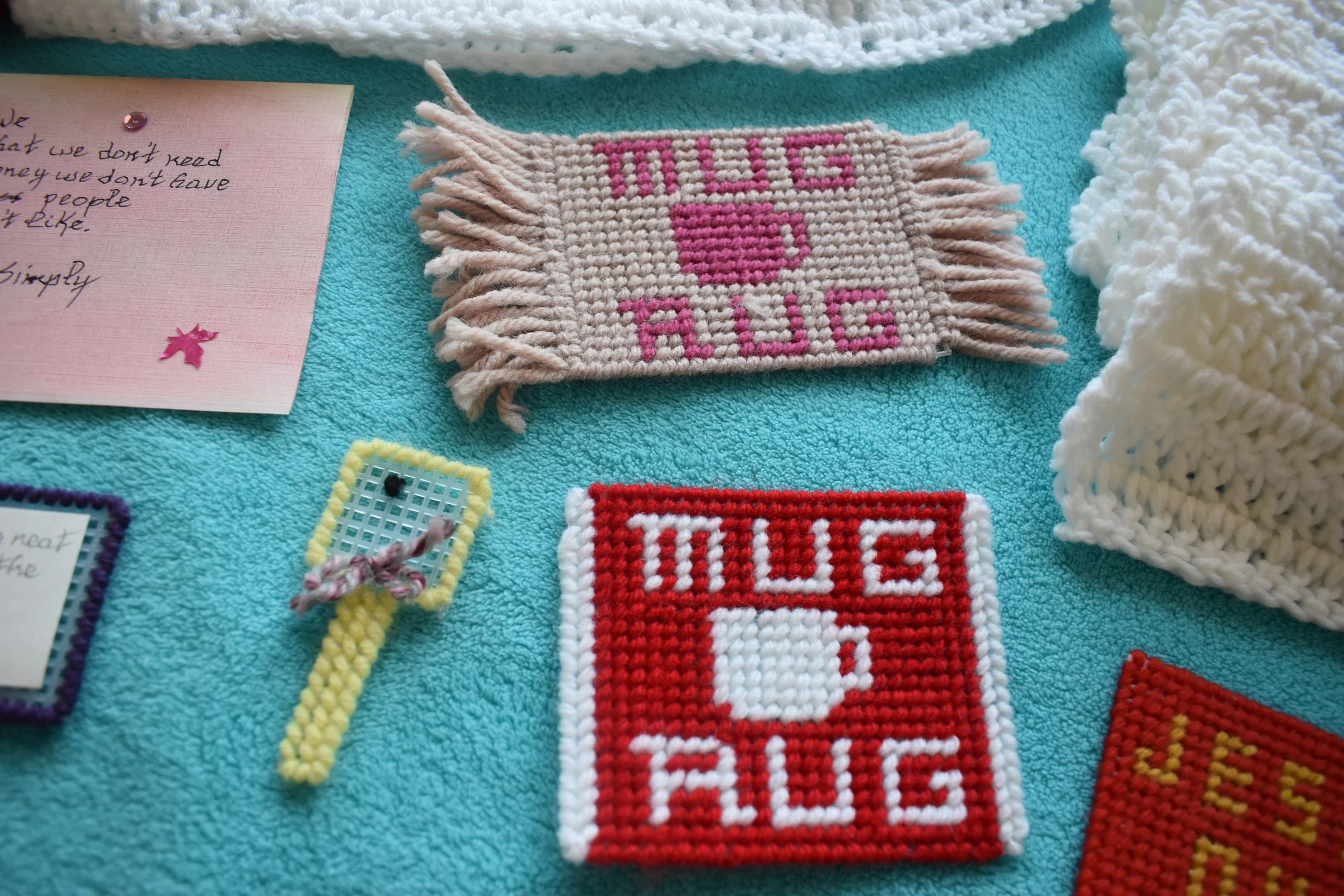
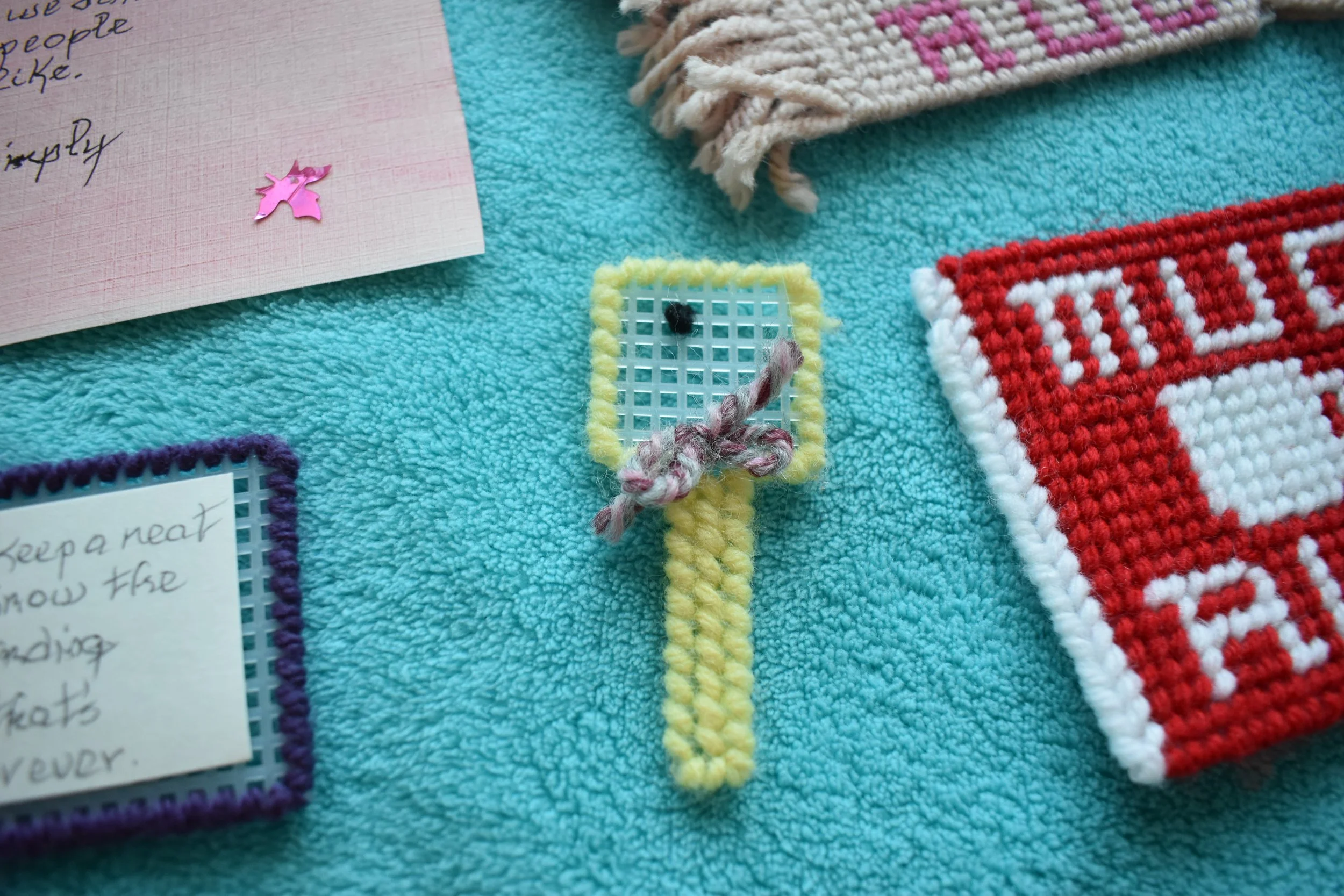
Sr. Grace Malonzo grew up in Portsmouth, Virginia, where she originally learned how to crochet.
“My mother taught me how to crochet,” said Sr. Grace. “She tried to teach me how to do the reading. It was like Chinese, I could never read. So I can't do anything by pattern. I just learned.”
In her room, Sr. Grace has photos of her mother, brother, and father, who was in the Navy for 32 years.
While she was still in the South, she joined a sewing group with other sisters at church, where she learned how to make prayer shawls.
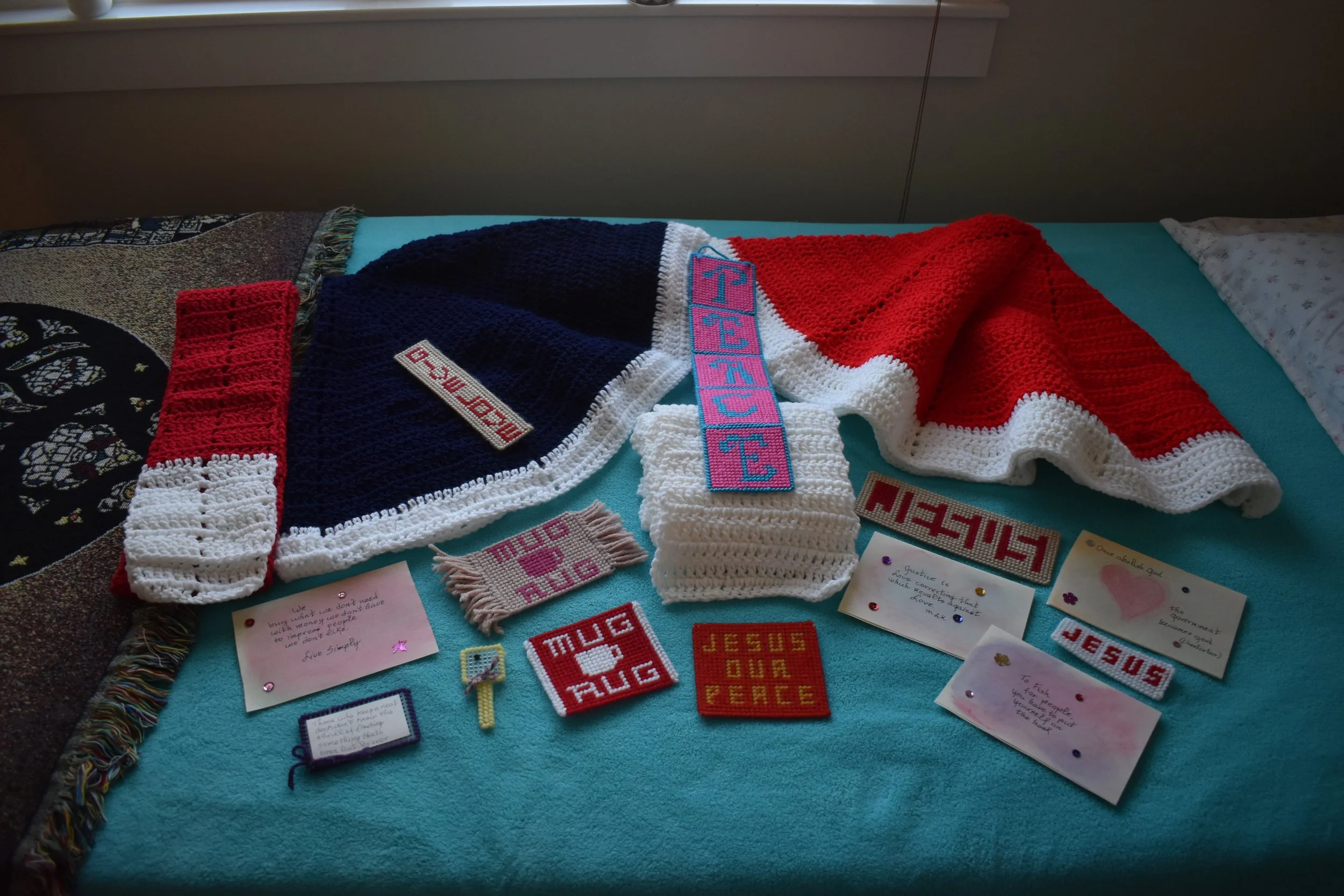
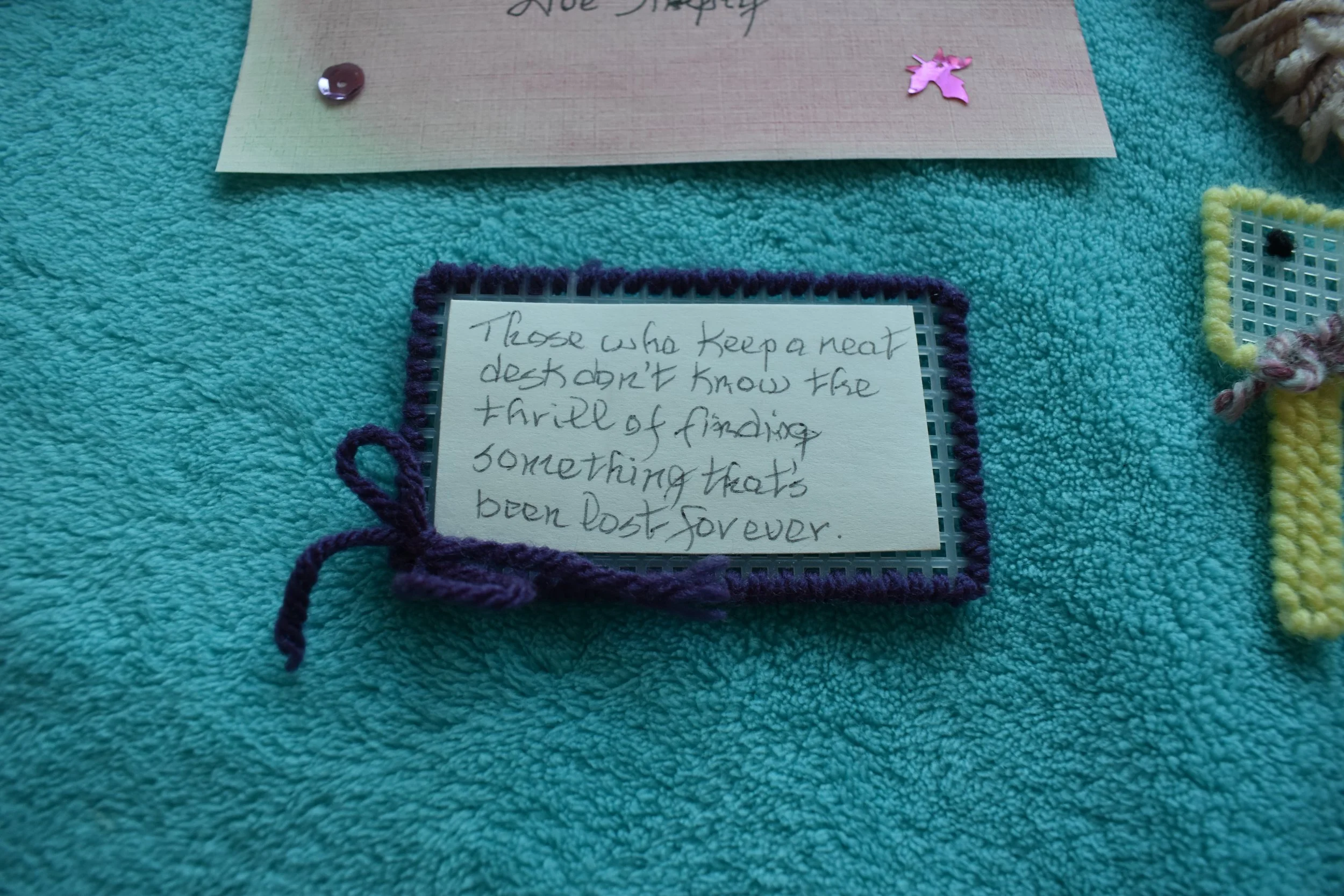
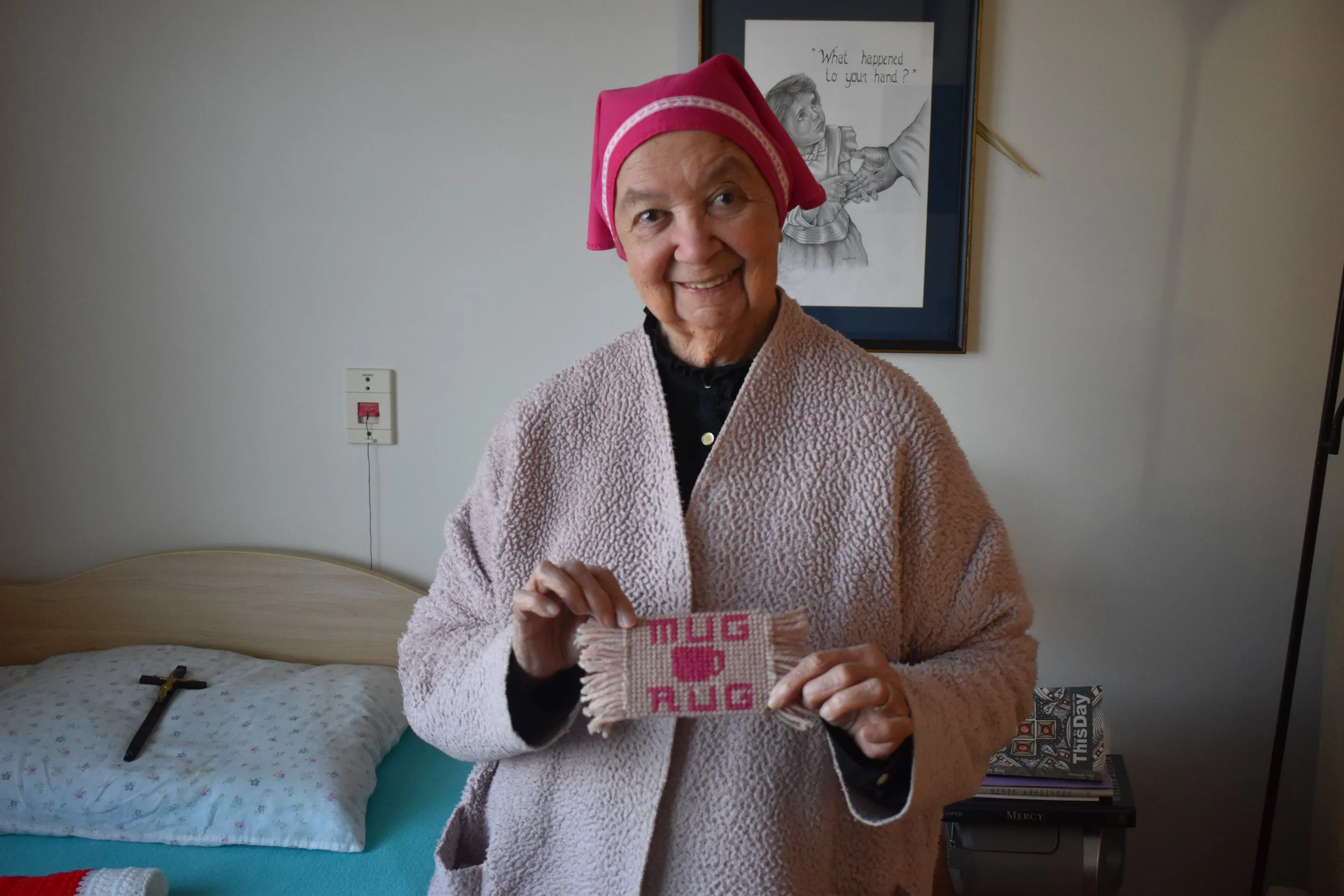
Her crocheted items include prayer shawls and scarves, along with needlepoint pieces like mug rugs and decorated letters.
“When I have time, [I] just sit and do it,” she said. “It’s a good pastime.”
She mostly single or double crochets instead of knitting, and gives pieces away as gifts for different occasions.
“I'm very close to the men of St. Joseph, it's a prayer group down South that I left,” she said. And I'd like to send all of them one of [the Jesus needlepoints] for Christmas.”
While she began crocheting earlier, she started doing needlepoint after entering the convent in 1953.
Some of the scarves and shawls that Sr. Grace makes are given to homeless people in New York City by one of the nurses at Our Lady of Perpetual Help, Donna.
“She says to the sisters, 'Give me anything you want, and I'll give it to them.’ And she takes a picture and has a name and then shows them to us. Really lovely,” Sr. Grace said about Donna.
“So that's what mainly the shawls are made for.”
Sr. Grace also creates by writing letters to her friends.
“I write to people. I like to keep it going and communication going,” she said.
The cards showcased in the Wisdom and the Arts photos are decorated with pastels and tiny sequins. The sequins were recycled from previous cards.
“It's so pretty and shiny. So I just used them on the cards.”
The card itself is just a piece of paper folded in half and then put into an envelope to send off.
She also made a needlepoint flyswatter featuring a tiny yarn fly that can be hung on the fridge. Another needlepoint work featured, “Those who keep a neat desk don't know the thrill of finding something that's been lost forever.”
The needlepoint art can also go in the washer.
Crocheting and writing letters aren’t Sr. Grace’s only passions, though. She earned an RN degree from Maryview School of Nursing in Portsmouth and worked as a nurse for many years.
She also worked in Malawi and had a photo of a baby she helped while there in her room.
“We transfused that baby's mother's blood. Because the baby had anionic incapillability. We saved that baby.”
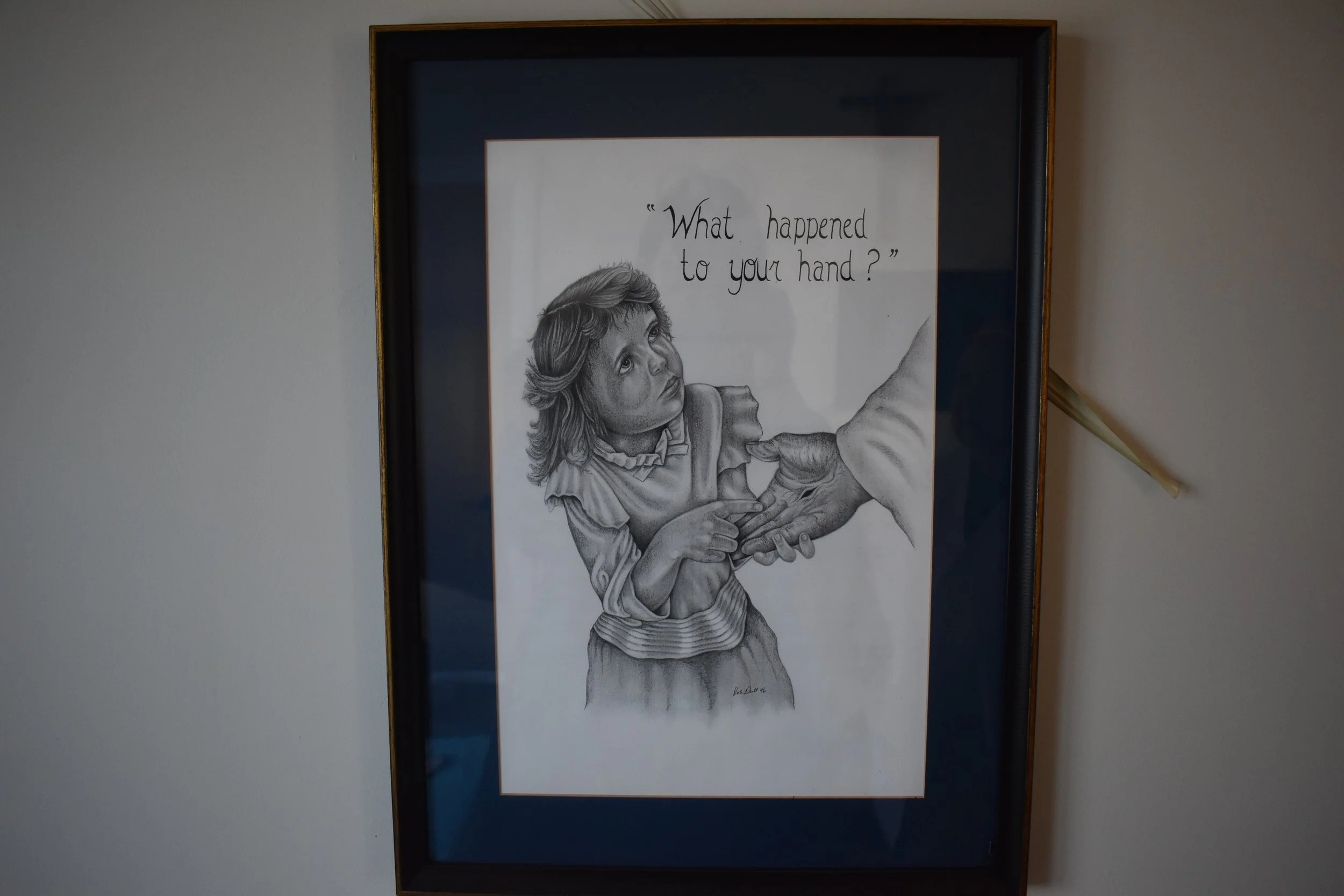
Another piece she had in her room was a drawing by her friend, Ron, whom she met while in the prison ministry. While Ron was in prison, he decided to give drawing a go for the first time.
“He was in prison. And he said, ‘When I was there, I saw another fellow draw,’” shared Sr. Grace. “And he said, ‘I think I can do it.’ He never drew, never, never, never.”
The framed drawing of the girl asking, “What happened to your hand?” was done by Sr. Grace’s friend, Ron.
Sr. Jackie Ayotte’s Prayer Shawls
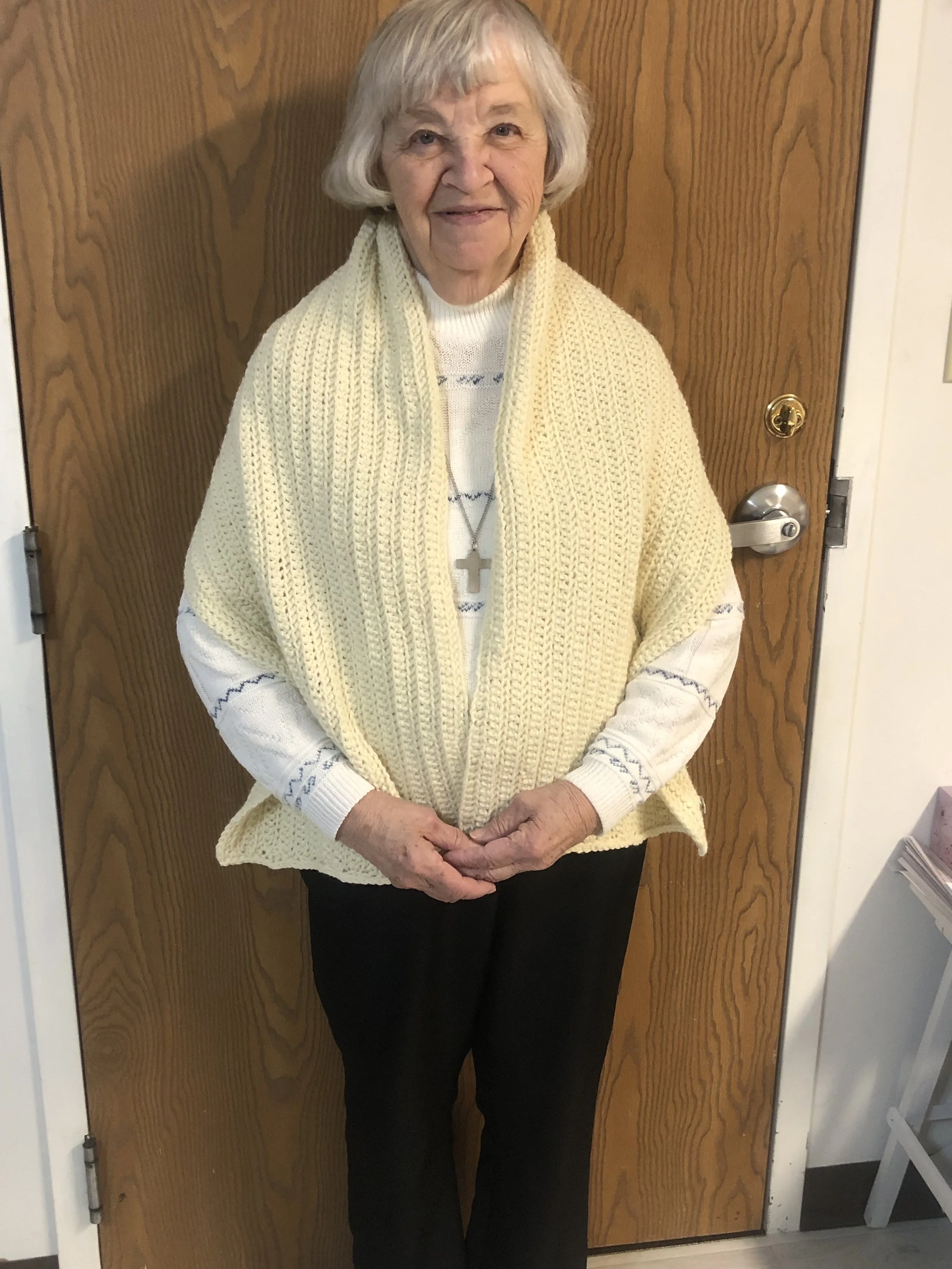
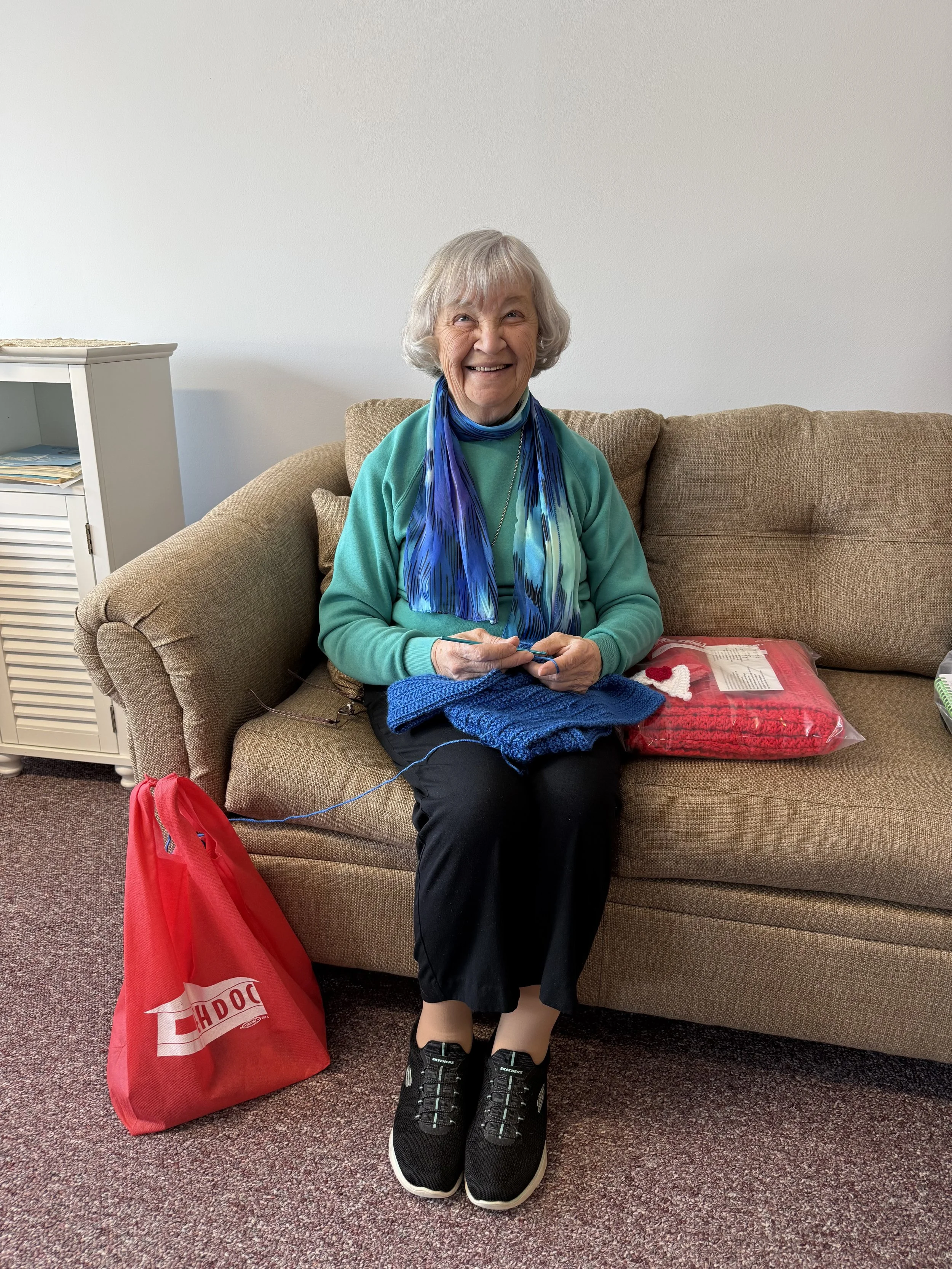
The Prayer Shawl Ministry, founded in 1998 by Janet Bristow and Victoria Galo after their experience at the Hartford Seminary in Connecticut, blends the care and love of knitting and crocheting with a spiritual mission to comfort those in need. Each handmade shawl is crafted with prayers and intentions for the recipient, spreading blessings and solace. The act of giving and receiving these shawls often inspires recipients to create and share their own, extending the ripple of kindness and support.
After she herself suffered an illness and found comfort through a prayer shawl that she received from a friend in New York, Louise Barrasi of Fort Kent, Maine, established a ministry through the Christian Life Center in Frenchville, Maine. The goal was to provide hand-knit and crocheted shawls to community members facing serious illness, to nursing home residents, and to other community members in need of healing and prayer.
Last Summer, the ministry found a new home at the Long Lake Public Library in St. Agatha, Maine, when Sr. Jackie Ayotte, DW, was contacted about space to host the already established group. She said, “Having learned to crochet and knit as a child, I was able to do it when I needed to. Last October, I decided to join this group, and I am enjoying it. I am now crocheting my 6th shawl. It allows us to reach out to people at a vulnerable time in their lives. It lets them know that they are seen by people who care. I have been very concerned about the invisible people within our parishes. This is another positive way of reaching out to them where they are.”
Over 100 shawls have been donated to those in need throughout the community. With each shawl, a special poetic blessing is attached and is often signed by the creator and a priest. The poem expresses the deep care, love, and spiritual intention woven into the making of a prayer shawl. Beginning and ending with prayer, each shawl is crafted to bring comfort, healing, and a sense of being loved to its recipient. The poem highlights the prayers and blessings embedded in every stitch, aiming to provide warmth, reassurance, and a reminder that the recipient is cared for—both by the maker and by the Lord.
February 2026
“I live with attention, obtaining knowledge and foresight.”
–Proverbs 8:12
Sr. Rosemary Connelly’s Eyeglass Cases
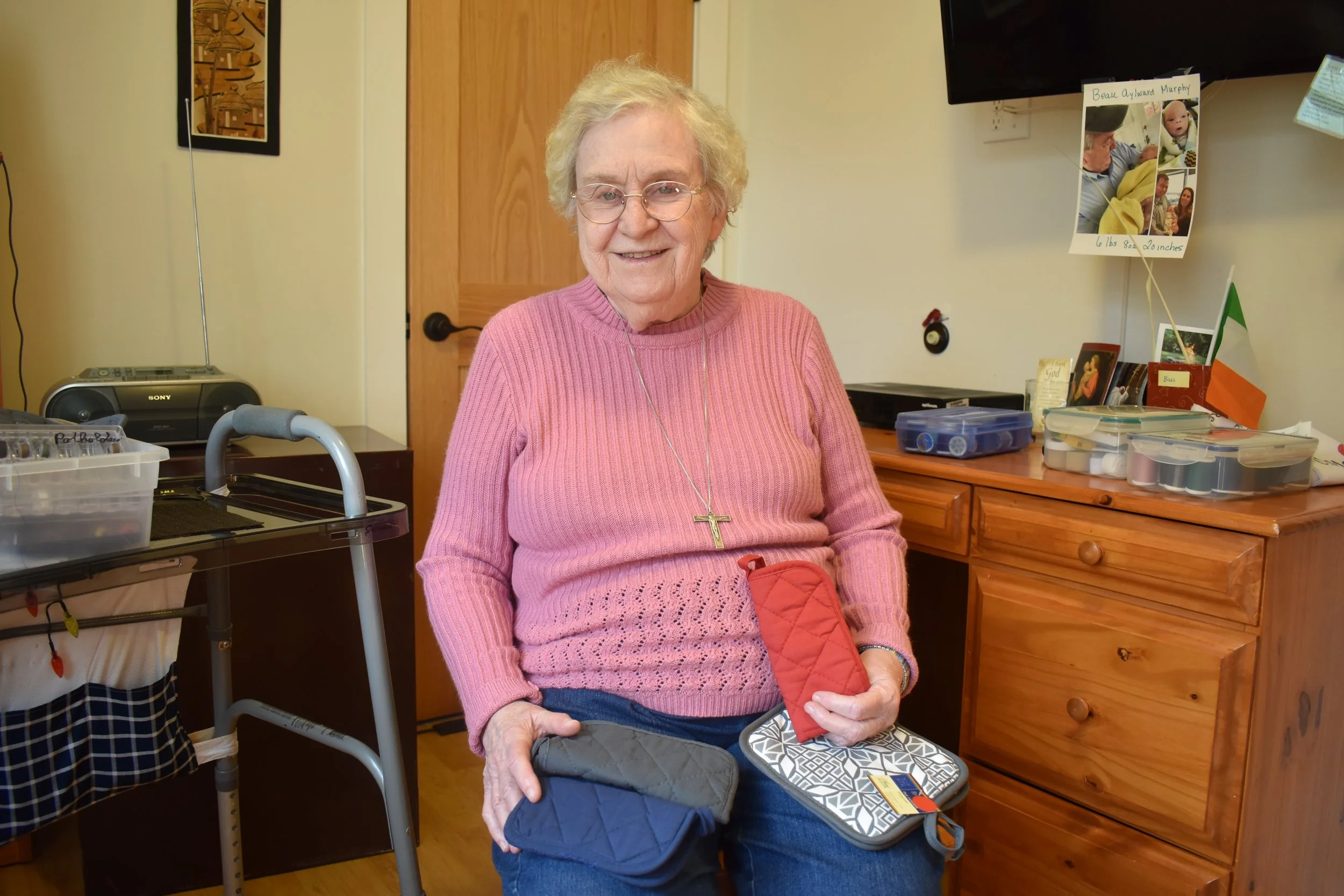
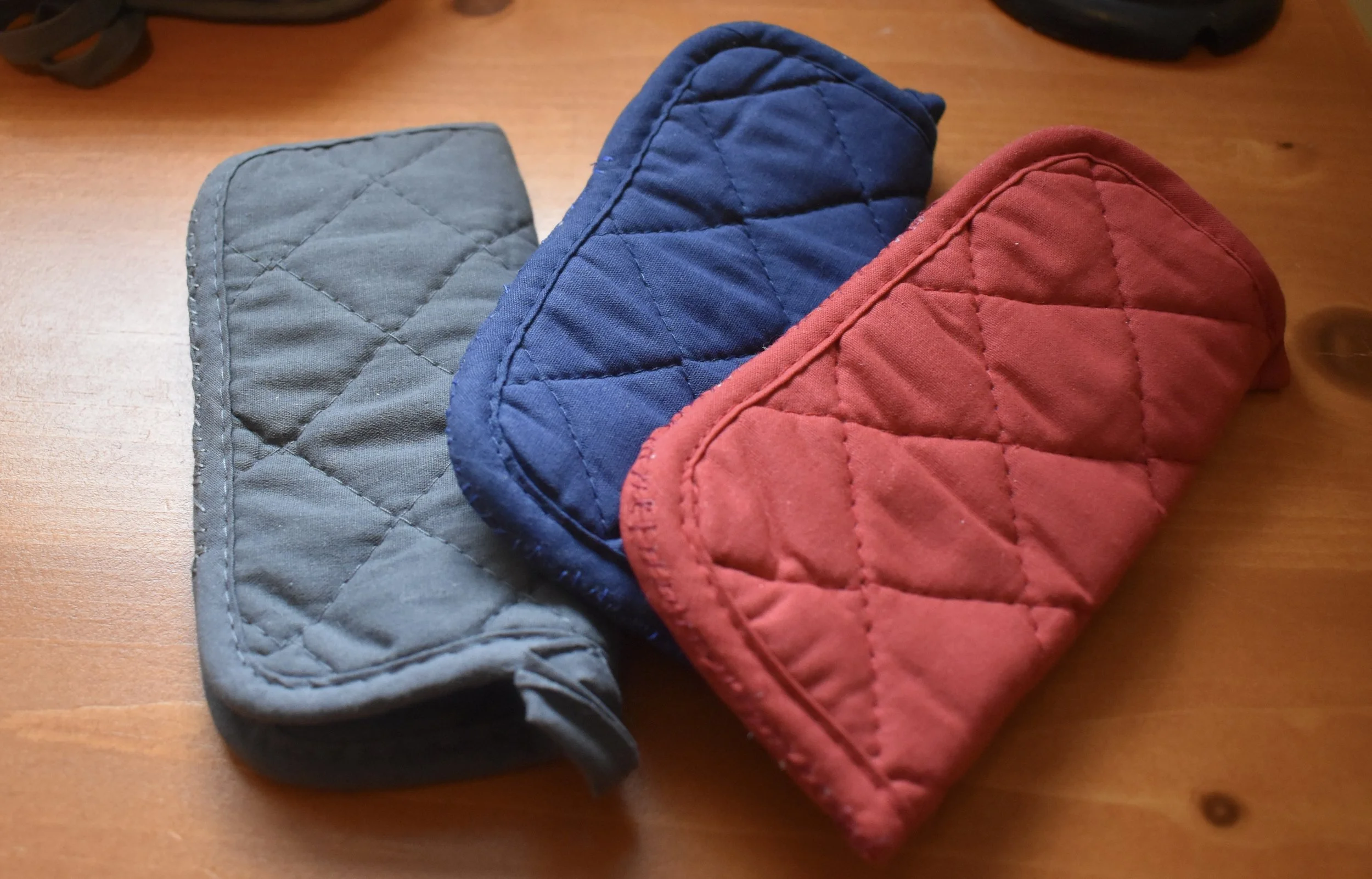
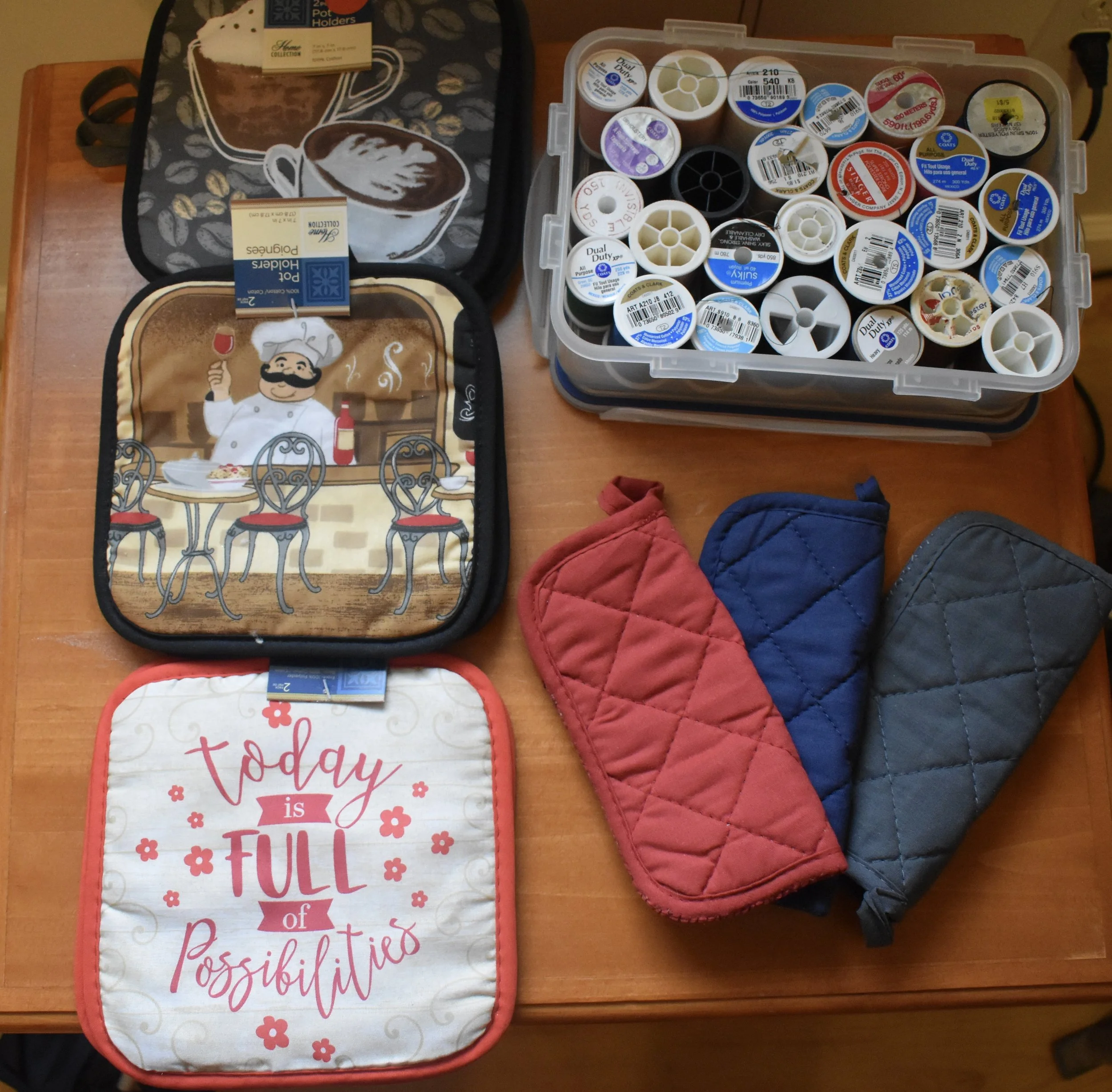

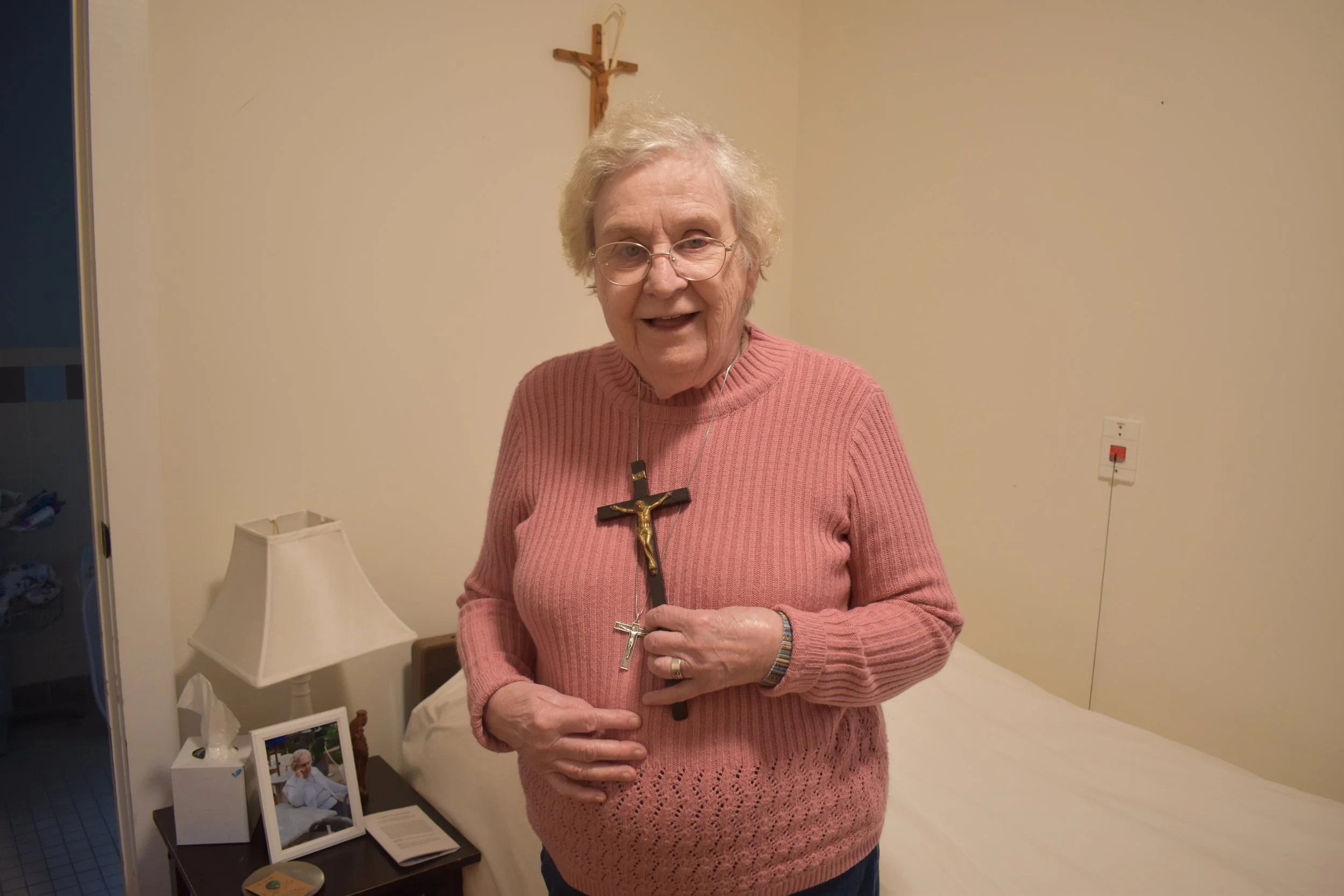
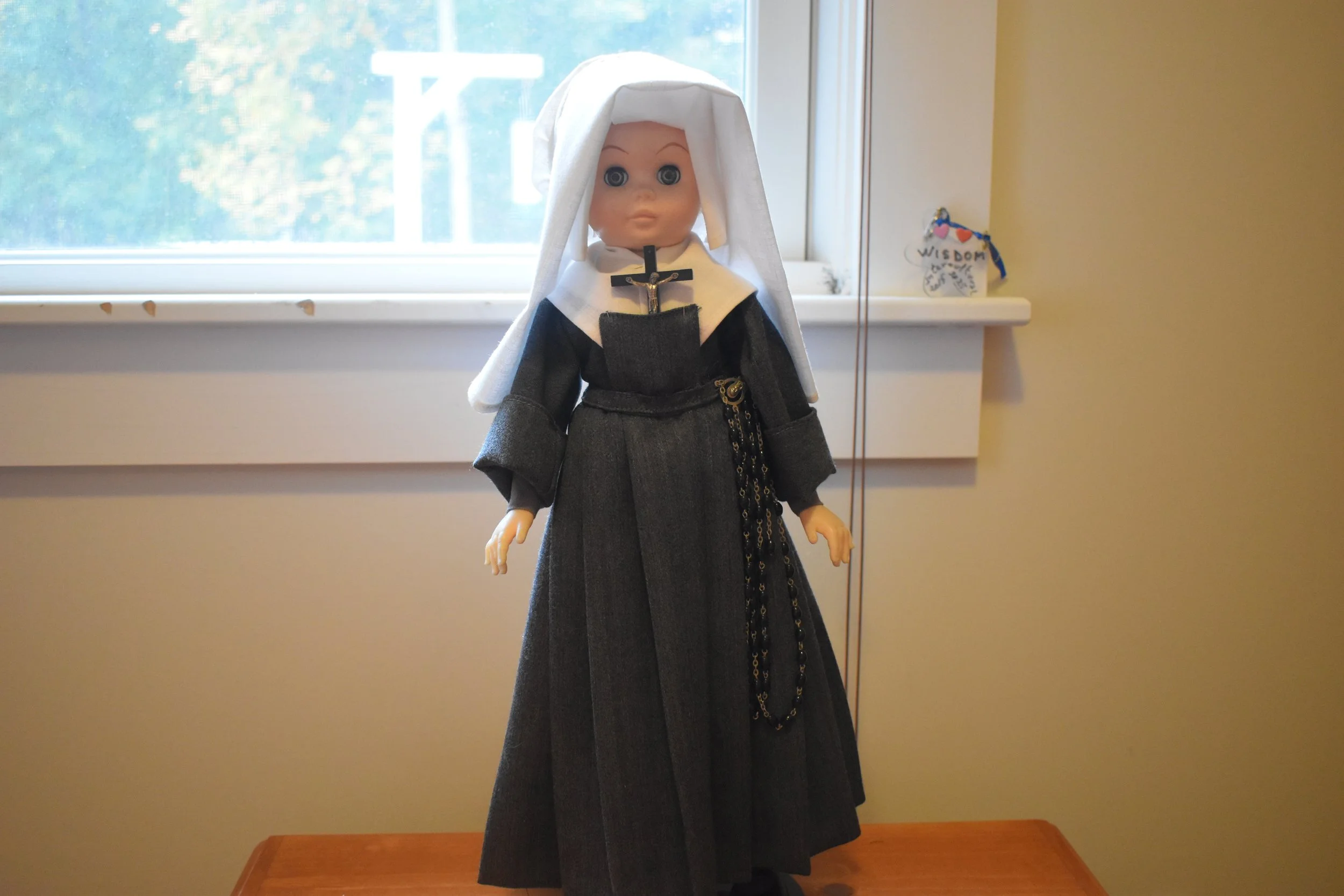
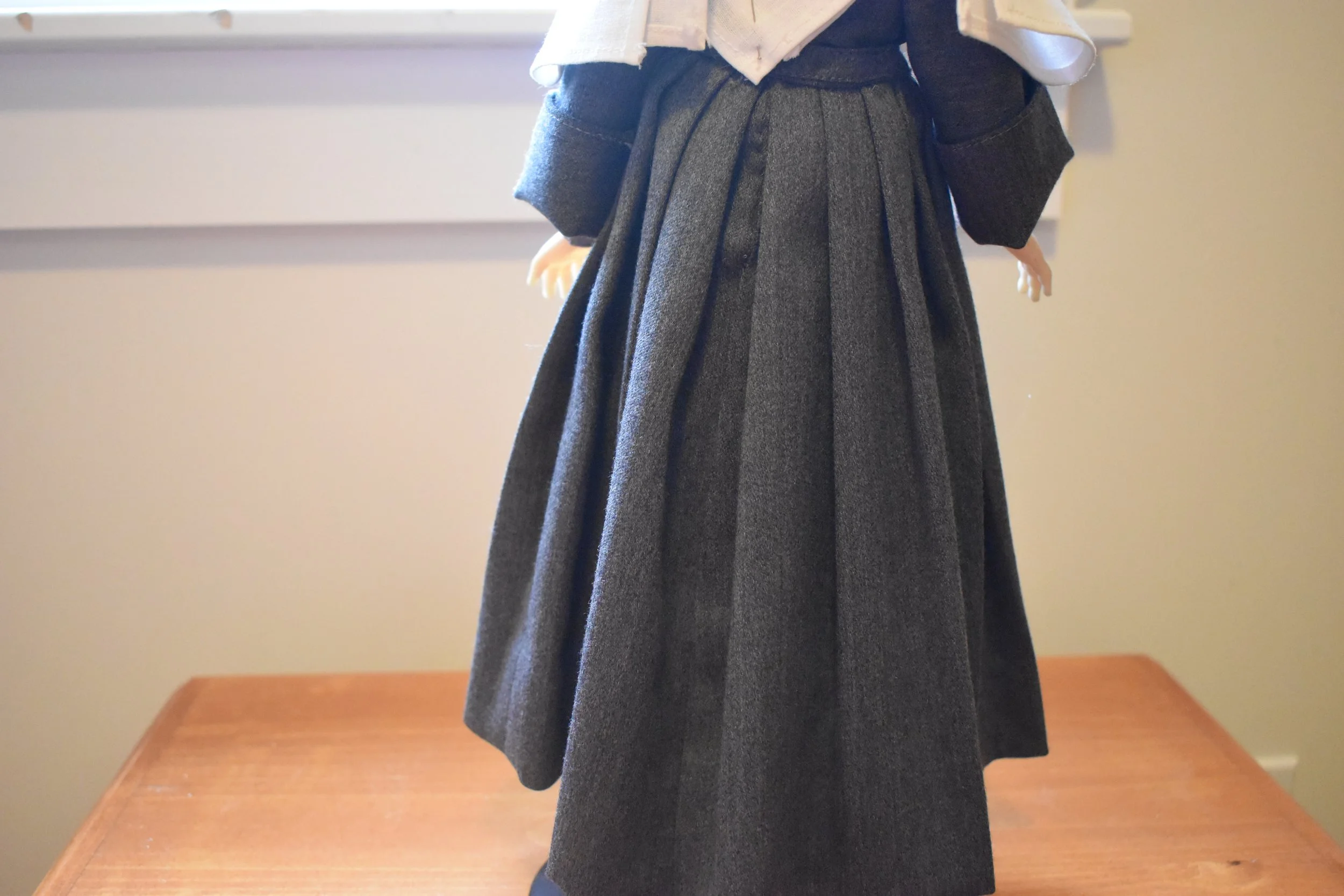
Sr. Rosemary Connelly began sewing when she entered the Daughters of Wisdom. She was sent to work at Maryhaven, a center for those living with special needs (then known as the Wharton Memorial Institute), to sew after she made profession.
“It was for boys and girls. And I was sent there to sew. My mother nearly flipped,” said Sr. Rosemary. “I never sewed at home. Never.”
Even though she hadn’t sewn when she was younger, it became an outlet for creation.
“I guess maybe I enjoyed creating. I think there was a creation in that. I was putting something together that I was going to wear,” said Sr. Rosemary.
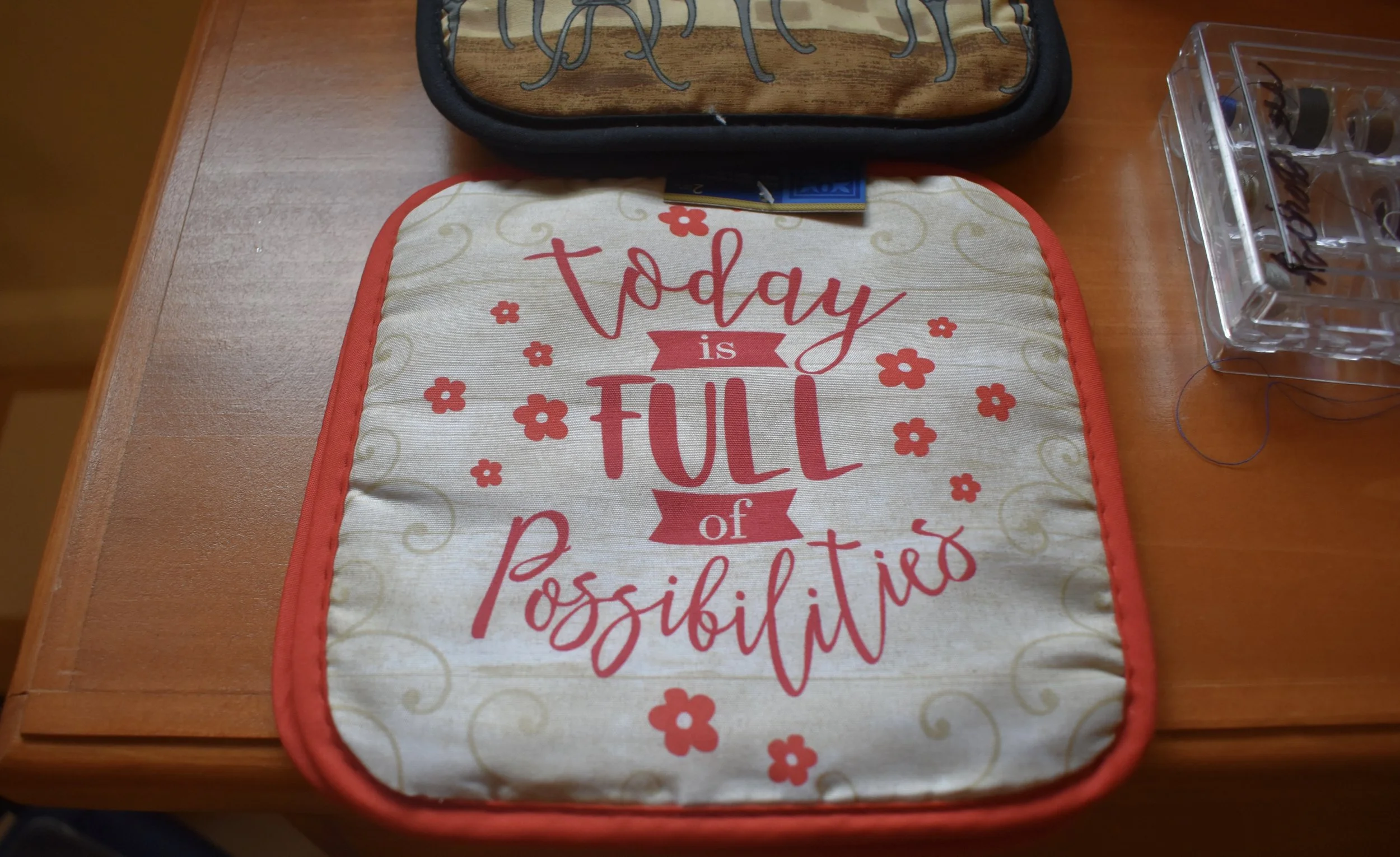
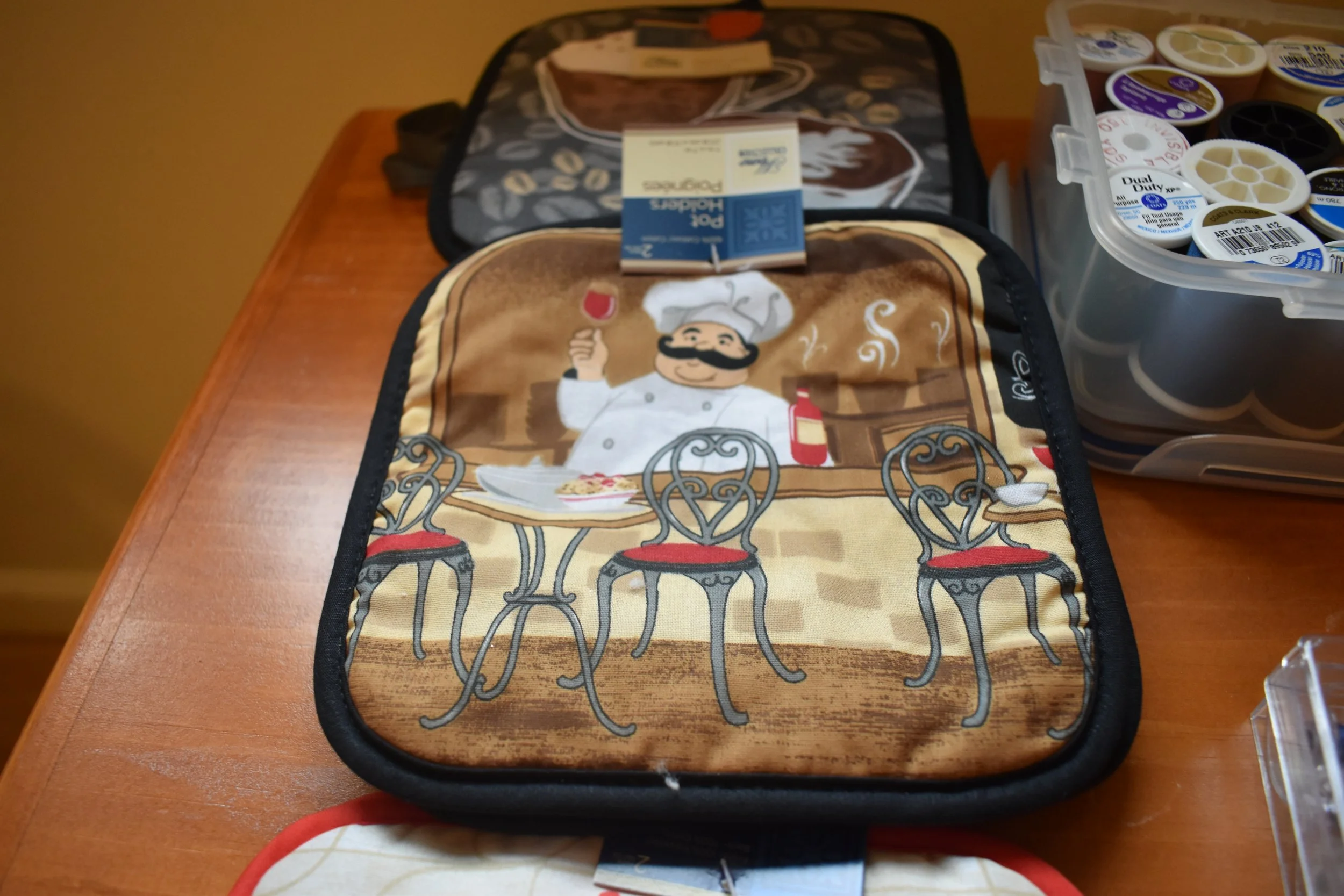
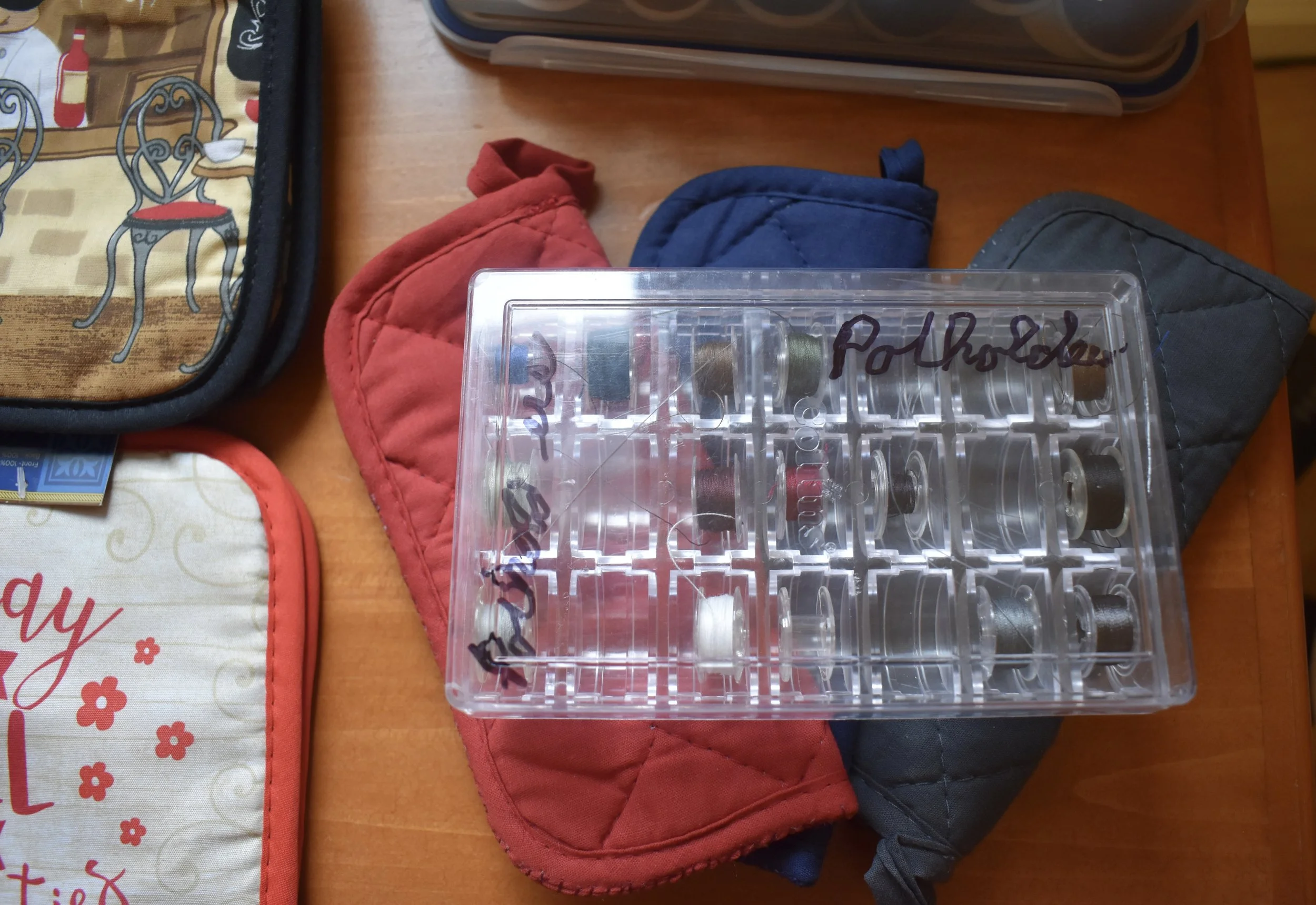
Later, she began creating reading-glass cases from cloth potholders. The potholders are folded and sewn up the sides, making it easy to slip a pair of glasses in and out.
“I can't remember where I saw it. But I just looked at it and said, gee, that's easy to make. There's no reason why it can't be done easily with a potholder because the potholder itself is already made.”
They were a hit with the sisters in Litchfield, Connecticut.
“[A Sister] was visiting us in Litchfield, and I had just finished making one of these, and she said, ‘What is that, Rosemary?’
And I said, ‘That's for reading glasses.’
And she says, ‘Oh, I like that.’
I said, ‘Okay, you can have it.’ And I gave her one. She's still using it.”
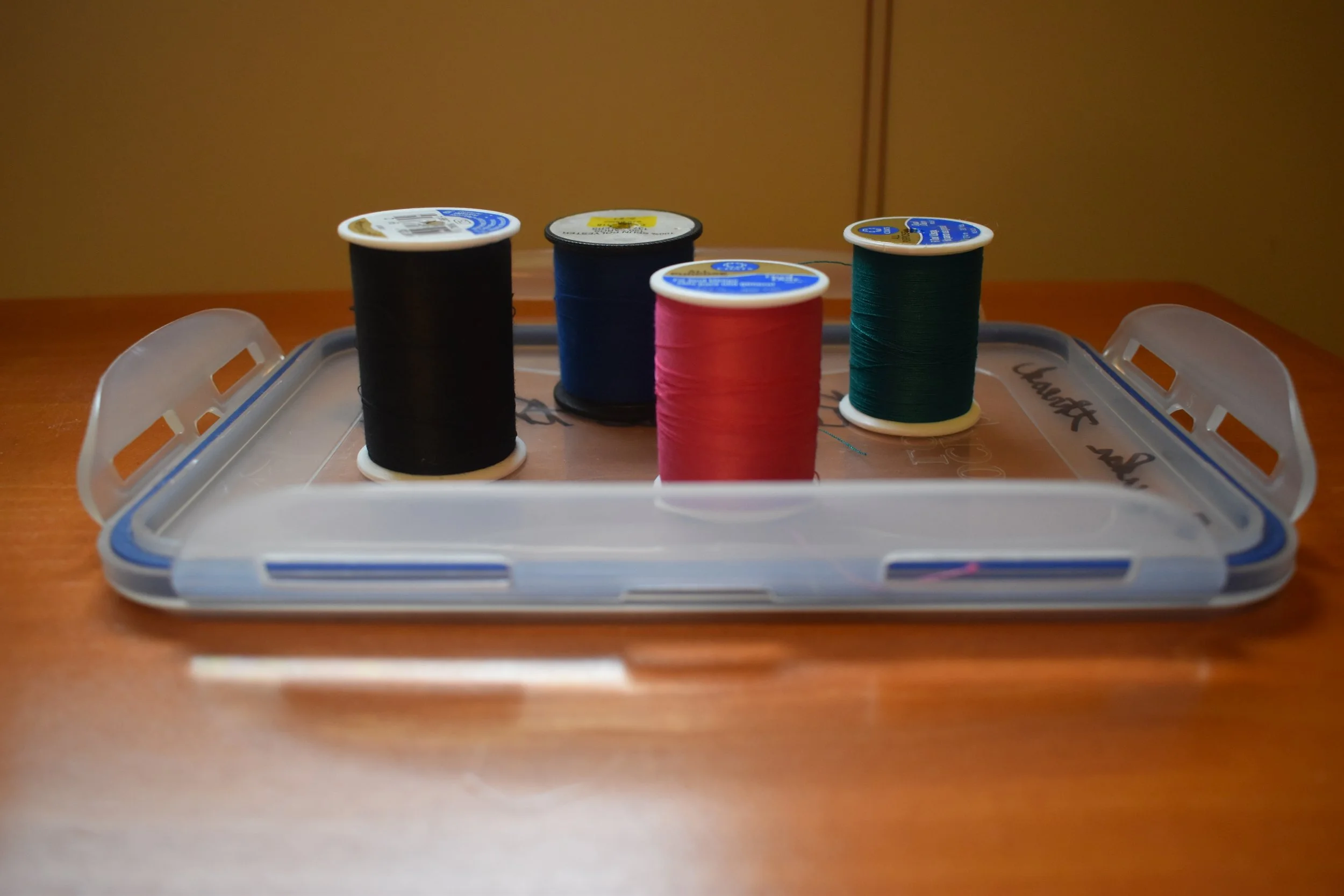
While living in Litchfield, she repaired buttonholes and collected a bunch of colored buttonhole thread on bobbins. The sewing machine she worked on eventually started to break down, and by the time she was leaving Litchfield, she was the only person using the machine.
Since there was no use in getting it fixed and the sisters at Litchfield weren’t going to use it, she took it, along with spools of colorful thread, with her.
She planned to make the eyeglass cases for other sisters for the holidays.
She buys the potholders from the dollar store, where she used to get three pot holders for a dollar, but now can only get two pot holders for a dollar fifty.
Sr. Rosemary also chooses both plain colors and patterns to work with. “I like the print ones. The prints have come out really nice,” she said. “In a purse, you can see them quickly.”
Sr. Rosemary talks about sewing sisters’ habits.
The eyeglass cases also hold up really well, and if the stitching comes out, anyone can sew them back together.
“Everybody has reading glasses. They don't have covers for the reading glasses. They don't get them with it. So that's why they come in handy.”
Sr. Rosemary unfortunately developed macular degeneration in her eyes, which meant she would eventually go blind. She was able to halt the blindness in one eye with treatment, but remains blind in the other.
“Because I'm getting the treatments, I can do a little bit of the hand sewing. So that's why I can do all of this here by hand,” she said of the eyeglass cases.
She chose a room at the Our Lady of Perpetual Help convent in Sound Beach, NY, that has good daylight, so she would be able to sew.
“The stitching is not perfect, but it'll do.”
While she stopped making eyeglass cases for a period of time, she began again to show them off for the Wisdom and the Arts project.
Her first ministry was as a sewing sister, which later became a hobby, and then something she took, and continues to take, with her throughout her life. It also wasn’t all she did as a Daughter of Wisdom; she was a teacher for many years and earned a Bachelor of Science and a Master of Science in Education from St. John’s University and Boston College, respectively.
Sr. Rosemary also sewed the sisters’ habits. She learned from other Daughters of Wisdom, one being Sr. Ubald from Canada, who learned to sew from a fashion designer. Because of this, Sr. Rosemary learned all the tricks of the trade from a professional, including how to fit things on people.
The habits’ skirts had pleats that lay flat, meaning they didn’t fan open even when they fell down. Not a lot of sisters’ habits closed in that way, so whenever other sisters saw Sr. Rosemary or Sr. Ubald fitting a habit, they would ask them to do theirs.
“Our pleats,” said Sr. Rosemary, “they stayed closed.”
The habit also included a white kerchief with a coif to cover their heads. The coif was stiff like a board, so learning how to style it was important. Litchfield recently redid a mannequin wearing a habit, and a friend of Sr. Rosemary’s stated the only one who could redo the coif is Sr. Rosemary herself.
The sisters called folding the coif “breaking” it because of how stiff it was to work with.
“If you broke it the wrong way, you had to redo the whole thing over again. It's like a piece of plasterboard, that's how stiff it is. And you wore that for a whole week,” said Sr. Rosemary. The coif consisted of different pieces, including one that you wore like a cap and tied in the back. On top of that was a cornette, which was a slightly starched piece that was pinned tightly on your head. On top of that was another big, starched piece, and then it was all tied with a string.
“So you didn't go out in the rain in that for sure.”
Sr. Rosemary also sewed people’s clothes that needed fixing. Along with sewing buttons back in place, when the priests asked the sisters for help sewing something, one sister would always tell them to “ask Rosemary.”
There was one instance where a priest who was in Litchfield with Sr. Rosemary walked up to celebrate Mass, and his pants were a little short.
“I remember saying this to Sister Ann. I said, ‘I hope I didn't shorten those pants,’” said Sr. Rosemary.
“And she went hysterical laughing. And all during Mass, every once in a while, [she] would start laughing, looking at him and his pants shortened up above his ankles. She was thinking of me saying, ‘I hope I didn't shorten his pants.’ And I didn't.”
Sr. Rosemary also talked about Sr. Jeannine Boutin, who passed away in 2024. Sr. Jeannine was a sewer of clothing, too, and she worked mostly with the Montfort Fathers. She made a lot of their vestments for Mass.
“She was a wonderful person.”
January 2026
“She is a tree of life to those who take hold of her; those who hold her fast will be blessed.”
Proverbs 3:18
Take time for the tree
Take time for the tree is a collaborative work by Sisters Eileen Berton, Barbara O’Dea, and Rosemarie Greco, produced in a Haiku writing workshop in Litchfield, CT, in 1992. In this piece, Sr. Barbara O’Dea provides vocals to the music composed and played on piano by Sr. Rosemarie Greco, set to the Haiku by Sr. Eileen Berton. The artwork, "The Birth of Wisdom," by Danielle Mailer, was created in 2009 for the Wisdom House Retreat and Conference Center in Litchfield, CT, as a Christmas card.
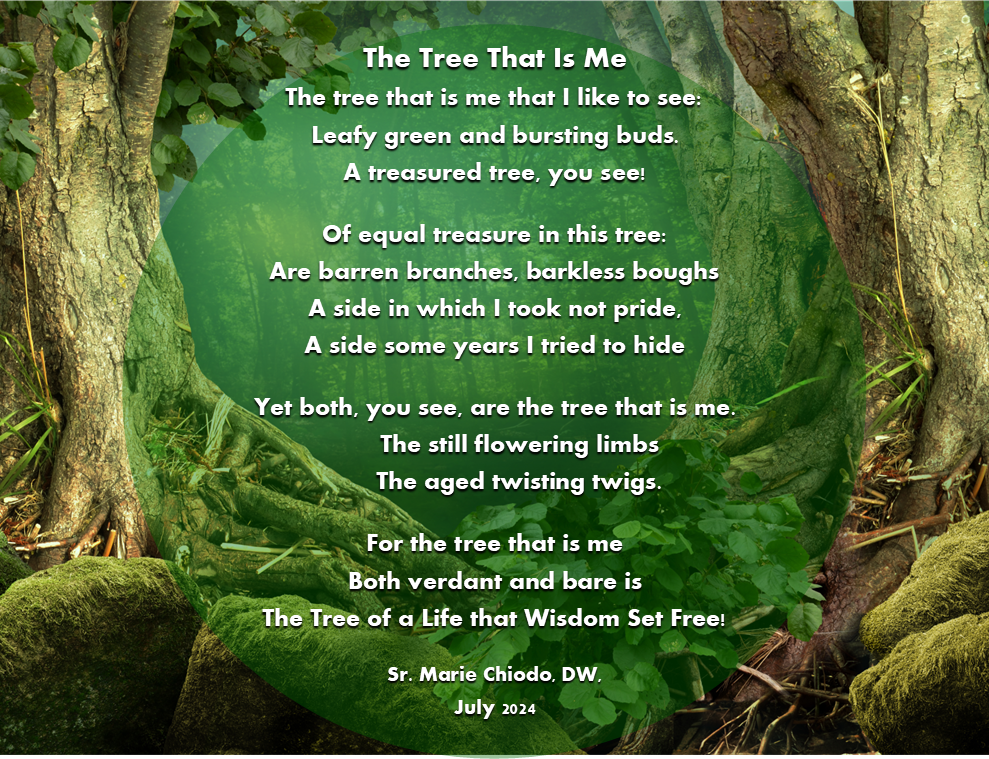
Poetry by Sr. Marie Chiodo, DW